Best Music Gadgets for Audiophiles
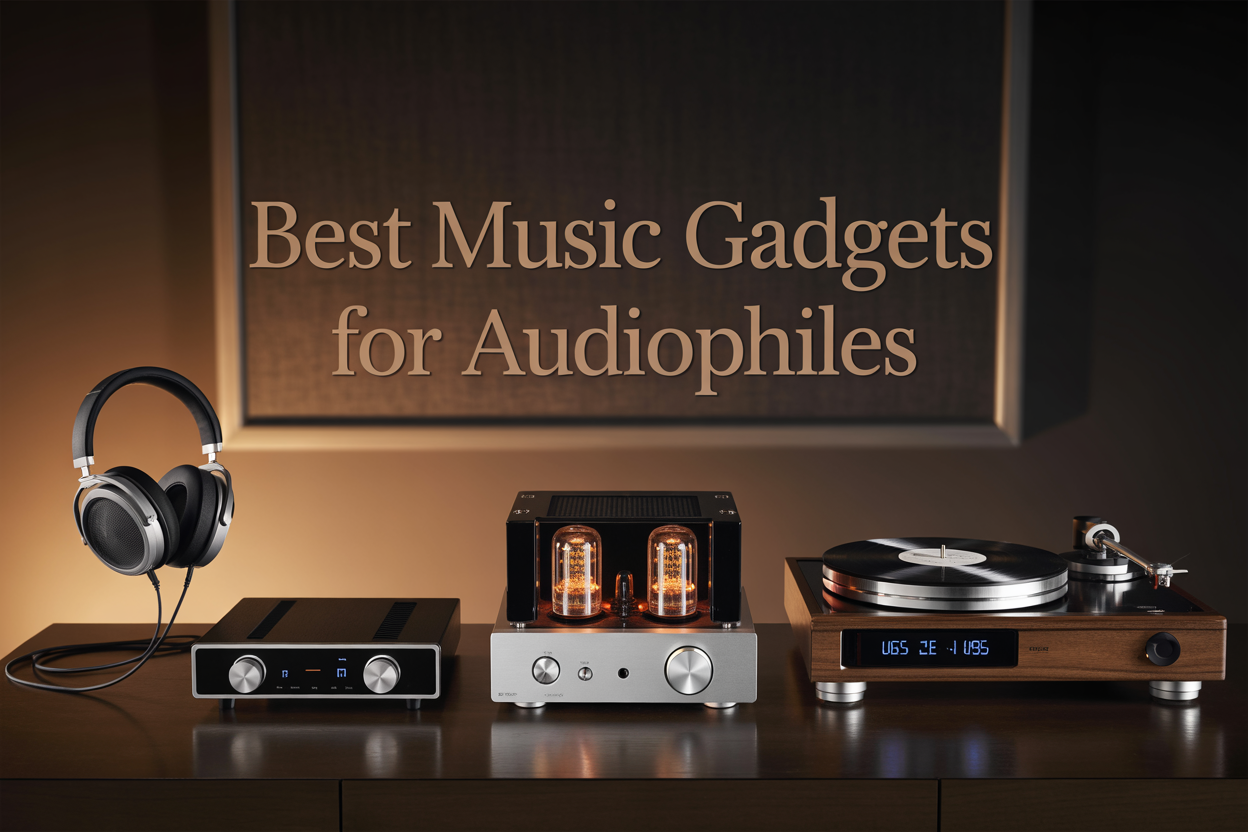
Serious music lovers know that standard consumer audio gear just doesn't cut it when you want to hear every detail in your favorite tracks. The best music gadgets for audiophiles can reveal layers of sound you never knew existed, turning your daily listening sessions into something truly special.
This guide is for dedicated music enthusiasts who want to upgrade their audio setup and experience music the way artists intended. We'll explore high-end headphones that deliver studio-quality sound, premium digital audio players that handle your lossless music files with precision, and high-fidelity amplifiers that give your audio the clean power it deserves.
Ready to discover the gear that separates casual listeners from true audio connoisseurs? Let's dive into the equipment that will transform how you hear music.
High-End Headphones That Transform Your Listening Experience

Open-Back Headphones for Studio-Quality Sound
Open-back headphones create an expansive soundstage that makes you feel like you're sitting in a concert hall rather than wearing headphones. The open design allows air to flow freely through the ear cups, eliminating the pressure buildup that can muddy bass frequencies and create an unnatural listening experience.
The Sennheiser HD800S stands as the gold standard, delivering breathtaking spatial accuracy with its massive 56mm drivers. The soundstage width rivals many high-end speakers, making every instrument placement crystal clear. Audio-Technica's ATH-R70x offers similar openness at a more accessible price point, with exceptionally balanced frequency response that reveals details you've never heard before in familiar tracks.
Beyerdynamic's DT990 Pro brings German engineering precision to the table, featuring robust construction that withstands decades of use while maintaining consistent performance. The slightly V-shaped sound signature adds excitement to music without sacrificing accuracy.
Closed-Back Options for Immersive Audio Isolation
Closed-back headphones excel in noisy environments and late-night listening sessions where sound leakage becomes a concern. The sealed design creates intimate, focused listening experiences that draw you deep into the music's emotional core.
The Focal Stellia represents the pinnacle of closed-back engineering, combining luxurious beryllium drivers with meticulous French craftsmanship. Each note carries remarkable weight and texture, from delicate piano keystrokes to thunderous orchestral crescendos.
Sony's MDR-Z1R delivers exceptional detail retrieval through its innovative 70mm drivers, creating surprisingly spacious sound for a closed design. The frequency response extends well beyond human hearing limits, capturing subtle harmonics that add richness to every recording.
Dan Clark Audio's Stealth offers planar magnetic technology in a closed package, eliminating the typical trade-offs between isolation and soundstage width.
Planar Magnetic Drivers for Pristine Detail
Planar magnetic headphones use ultra-thin diaphragms suspended between powerful magnets, creating lightning-fast transient response and minimal distortion across all frequencies. This technology excels at reproducing complex passages where multiple instruments play simultaneously.
The HiFiMAN Susvara pushes planar magnetic design to its absolute limits, requiring substantial amplification but rewarding listeners with unparalleled transparency. Every recording reveals new layers of information, from room acoustics to the subtle breath sounds between vocal phrases.
Audeze's LCD-X provides professional-grade accuracy favored by mixing engineers worldwide. The robust build quality ensures consistent performance across thousands of listening hours, while the neutral sound signature makes it perfect for critical listening sessions.
Electrostatic Headphones for Ultimate Clarity
Electrostatic headphones represent the most advanced transducer technology available, using electrically charged ultra-thin membranes that respond instantly to audio signals. The resulting sound quality approaches theoretical perfection, with distortion levels so low they become essentially unmeasurable.
The STAX SR-009S creates an almost supernatural listening experience where music appears to materialize directly inside your head. The complete absence of mechanical moving parts eliminates resonances and colorations that plague traditional driver designs. Classical music particularly benefits from this technology, as the delicate interplay between string sections becomes remarkably clear.
These headphones require dedicated electrostatic amplifiers, making them significant investments that transform your entire audio setup into a reference-grade system capable of revealing every nuance in your music collection.
Premium Digital Audio Players for Uncompressed Music

High-Resolution Audio Support and File Formats
Audiophiles know that compressed audio formats like MP3 simply don't cut it when you're chasing sonic perfection. Premium digital audio players support high-resolution formats that preserve every detail your ears crave. Look for players that handle FLAC, DSD, and PCM files up to 32-bit/384kHz resolution – these formats capture studio-quality recordings without the data loss that destroys musical nuance.
The best players support multiple high-res formats including ALAC, AIFF, and MQA. DSD support is particularly valuable for audiophiles who collect SACD rips or high-resolution downloads from labels like Blue Note and Acoustic Sounds. Native DSD playback delivers that analog warmth digital music often lacks.
File compatibility matters beyond just high-resolution formats. Top-tier players decode everything from standard MP3 and AAC to exotic formats like APE and WV. This flexibility means you can enjoy your entire collection regardless of how it was encoded.
Balanced Output for Professional Sound Quality
Balanced output connections separate serious audio players from consumer-grade devices. These players feature dedicated balanced headphone outputs using 2.5mm, 4.4mm, or XLR connectors that deliver cleaner signal transmission with reduced noise and crosstalk.
Balanced outputs provide several advantages over single-ended connections. The differential signal cancels electromagnetic interference, resulting in a blacker background that lets subtle details shine through. You'll hear improved stereo separation, tighter bass response, and extended frequency extremes that single-ended outputs simply can't match.
Many premium players offer both balanced and single-ended outputs simultaneously, letting you switch between different headphones or connect to various amplifiers without unplugging cables. This flexibility proves invaluable when comparing different components or sharing your music with others.
Expandable Storage for Massive Music Libraries
High-resolution audio files consume enormous amounts of storage space. A single DSD album can eat up several gigabytes, making expandable storage essential for serious collectors. The best audio players support multiple microSD card slots, some accommodating cards up to 1TB each.
Dual microSD card support essentially eliminates storage anxiety. You can organize your library across multiple cards – perhaps classical music on one card and jazz on another. Hot-swappable cards mean you can change your entire library instantly without powering down the device.
Internal storage varies widely among premium players, ranging from 64GB to 512GB. While generous internal storage is nice, microSD expansion provides better value and flexibility. Quality cards from SanDisk or Samsung maintain excellent read speeds that won't bottleneck audio playback, even with the largest high-resolution files.
High-Fidelity Amplifiers to Power Your Audio Setup

Tube Amplifiers for Warm, Natural Sound
Tube amplifiers represent the holy grail of audio reproduction for many audiophiles. These classic designs use vacuum tubes instead of transistors, creating that signature warm, rich sound that digital can't quite replicate. The magic happens when tubes introduce subtle harmonic distortions that actually make music sound more natural and engaging to our ears.
Popular models like the McIntosh MC275 and Audio Research VSi60 deliver exceptional performance with their glowing tubes creating an unmistakable presence in any listening room. Tube amps excel with acoustic instruments, vocals, and jazz recordings where that organic warmth really shines through. The trade-off comes in higher maintenance costs and power consumption, plus you'll need to replace tubes periodically.
Solid-State Amps for Clean, Precise Audio
Solid-state amplifiers deliver crystal-clear reproduction with minimal distortion and maximum power efficiency. These designs use transistors instead of tubes, resulting in tight bass response, extended frequency ranges, and reliable performance year after year.
Brands like Benchmark, Bryston, and Pass Labs have mastered solid-state technology to create amplifiers that reveal every detail in your recordings. The AHB2 from Benchmark practically eliminates measurable distortion, while Pass Labs brings musicality to their ultra-precise designs. Solid-state amps work brilliantly with electronic music, rock, and complex orchestral pieces where accuracy matters most.
Portable Headphone Amplifiers for On-the-Go Listening
Your smartphone's built-in amplifier simply can't drive high-impedance headphones properly. Portable headphone amps like the Chord Mojo 2 and iFi hip-dac3 transform your mobile listening experience by providing clean power and improved sound staging.
These compact devices connect between your phone and headphones, often including high-quality DAC sections for complete signal processing. Battery life typically ranges from 8-12 hours, and many models support high-resolution audio formats that your phone might struggle with alone.
Desktop DAC/Amp Combos for Complete Solutions
All-in-one desktop units combine digital-to-analog conversion with headphone amplification in sleek, space-saving designs. The Schiit Jotunheim 2 and FiiO K9 Pro represent excellent value propositions, handling everything from sensitive IEMs to power-hungry planar magnetic headphones.
These combos eliminate the guesswork of matching separate components while often costing less than buying individual pieces. Most include multiple inputs for connecting various sources and offer both single-ended and balanced outputs for maximum headphone compatibility.
Digital-to-Analog Converters for Pure Signal Processing

External DACs for Computer Audio Enhancement
Your computer's built-in sound card probably wasn't designed with audiophile standards in mind. Most laptops and desktops use basic audio chips that introduce noise, distortion, and compromise the integrity of your digital music files. External digital-to-analog converters solve this problem by taking over the crucial job of converting digital audio signals into analog waveforms that your headphones or speakers can reproduce.
Desktop DACs offer superior power supplies, better shielding from electromagnetic interference, and dedicated audio processing chips that far exceed what you'll find inside your computer. Popular models like the AudioQuest DragonFly series provide plug-and-play convenience while delivering noticeable improvements in clarity, soundstage, and dynamic range. For more serious setups, units from companies like Chord, Schiit, and Cambridge Audio offer multiple inputs, high-resolution support up to 768kHz/32-bit, and the ability to drive demanding headphones directly.
The difference becomes immediately apparent when you compare your laptop's headphone jack to a quality external DAC. Background hiss disappears, instruments gain better separation, and the overall presentation sounds more natural and engaging.
USB and Optical Connection Options
Modern DACs support multiple connection types, each with distinct advantages. USB connections have become the gold standard for computer audio because they can carry both audio data and power through a single cable. USB Audio Class 2.0 supports high-resolution formats without requiring special drivers, making setup straightforward across different operating systems.
Optical connections (TOSLINK) eliminate electrical noise completely by using light to transmit digital signals. This proves especially valuable in environments with lots of electromagnetic interference or when connecting to older audio equipment. Coaxial S/PDIF offers another digital option that many audiophiles prefer for its robust signal transmission and wider compatibility with vintage gear.
Some DACs include multiple input types simultaneously, letting you switch between your computer, CD transport, or streaming device without unplugging cables. Asynchronous USB implementation represents the premium approach, where the DAC controls timing instead of relying on the source device's potentially jittery clock signals.
Delta-Sigma vs R-2R Ladder Technology
Two fundamentally different approaches dominate DAC design, each producing distinct sonic characteristics. Delta-Sigma DACs use oversampling and noise-shaping techniques to achieve high resolution and excellent measured performance. These designs excel at extracting fine details from recordings and typically offer impressive specifications on paper.
R-2R ladder DACs take a more direct approach, using precision resistor networks that mirror how analog signals naturally behave. Fans of R-2R designs often describe their sound as more "musical" or "natural," with better timing and a more organic presentation that some find easier to listen to for extended periods.
The choice between these technologies often comes down to personal preference and system matching. Delta-Sigma DACs like those from ESS Sabre chipsets deliver razor-sharp detail and wide dynamic range, making them excellent for revealing every nuance in well-recorded material. R-2R designs from companies like Audio-GD and Holo Audio prioritize musical flow and tonal richness over absolute resolution.
Both approaches can sound exceptional in properly implemented designs, so your decision should depend on your musical preferences, associated equipment, and listening priorities rather than technical specifications alone.
Precision Turntables and Vinyl Accessories

Direct-Drive vs Belt-Drive Turntables
The drive system fundamentally shapes your turntable's performance. Direct-drive turntables connect the motor directly to the platter, delivering exceptional speed consistency and quick start-up times. DJ-favorite models like the Technics SL-1200 series showcase this technology's strength in maintaining perfect pitch stability, even during heavy use.
Belt-drive systems use an elastic belt to transfer motor power to the platter, naturally isolating vibrations from the motor. This design typically produces cleaner sound reproduction since motor noise doesn't transfer directly to your stylus. High-end options like the Rega Planar series demonstrate how belt-drive architecture can deliver audiophile-quality playback with minimal mechanical interference.
Motor placement matters significantly. Some manufacturers position motors away from the platter entirely, while others integrate them directly beneath. External motor designs offer superior isolation but require more complex belt arrangements.
High-Quality Cartridges and Styluses
Your cartridge translates physical groove patterns into electrical signals, making it arguably the most critical component in your vinyl chain. Moving magnet (MM) cartridges offer robust output levels and replaceable styluses, making them perfect for beginners. Audio-Technica's AT-VM95 series provides excellent tracking and detail retrieval at accessible prices.
Moving coil (MC) cartridges generate signal through coils attached directly to the stylus assembly, creating more dynamic response and finer detail resolution. However, they require careful handling and produce lower output levels, necessitating specialized phono preamps with higher gain settings.
Stylus profiles dramatically affect sound quality and record wear. Elliptical tips track grooves more accurately than conical designs, while advanced profiles like Shibata or microline shapes extract maximum information from your records. Diamond tips remain the gold standard for durability and performance.
Phono Preamps for Optimal Vinyl Playback
Cartridges produce extremely low-level signals requiring specialized amplification and equalization. Phono preamps apply the inverse RIAA curve while boosting signal levels to line output standards. Built-in phono stages in receivers often compromise sound quality compared to dedicated units.
Tube-based phono preamps like the Pro-Ject Tube Box series add harmonic warmth and musicality to your playback. Solid-state designs typically offer better signal-to-noise ratios and more accurate frequency response. Premium options provide adjustable gain settings to accommodate different cartridge types and loading options for optimal impedance matching.
Record Cleaning Systems for Pristine Sound
Clean records produce dramatically better sound quality and extend stylus life significantly. Manual cleaning with anti-static brushes removes surface dust before each play session. Carbon fiber brushes work best for light cleaning, while velvet pads handle deeper cleaning tasks.
Ultrasonic cleaning machines represent the ultimate in record maintenance. These systems use high-frequency sound waves to remove contaminants from deep within groove walls without physical contact. The Audio Desk Systeme and Degritter units offer professional-grade cleaning results at home.
Wet cleaning solutions break down oils and stubborn debris that dry brushes cannot remove. Record cleaning fluids should be alcohol-free to prevent damage to vinyl compounds. Vacuum-based systems like VPI models remove cleaning fluid completely, preventing residue buildup.
Isolation Platforms to Eliminate Vibration
Vibrations from footsteps, speakers, and environmental sources can cause skipping and degrade sound quality. Isolation platforms decouple your turntable from these disturbances using various damping technologies.
Sorbothane-based platforms absorb vibrations across wide frequency ranges while remaining affordable. Mass-loaded platforms use heavy materials to resist movement, while spring-based systems actively counteract vibrations. Advanced air-suspension platforms like those from Townshend Audio provide laboratory-grade isolation for ultimate performance.
Placement strategy matters as much as platform choice. Dedicated furniture designed for audio equipment often includes built-in isolation features. Wall-mounted shelves eliminate floor-borne vibrations entirely, though they require sturdy construction to handle turntable weight safely.

The world of high-end audio gear offers endless possibilities for elevating your music experience. From premium headphones that reveal every subtle detail in your favorite tracks to powerful amplifiers that breathe life into your sound system, each piece of equipment serves a specific purpose in creating audio perfection. Digital audio players free you from compressed files, while quality DACs ensure your digital music reaches its full potential. And for those who appreciate the warmth of analog sound, precision turntables paired with the right accessories bring vinyl records to their absolute best.
Investing in quality audio equipment isn't just about buying expensive gear – it's about finding the right combination of components that work together to match your listening preferences and budget. Start with one key piece that addresses your biggest audio concern, whether that's upgrading your headphones for better detail or adding an amplifier for more power. Your ears will thank you, and once you experience what proper audio equipment can do, you'll understand why audiophiles are so passionate about their setups.



0 Comments