Must-Have Podcasting Microphones & Gear
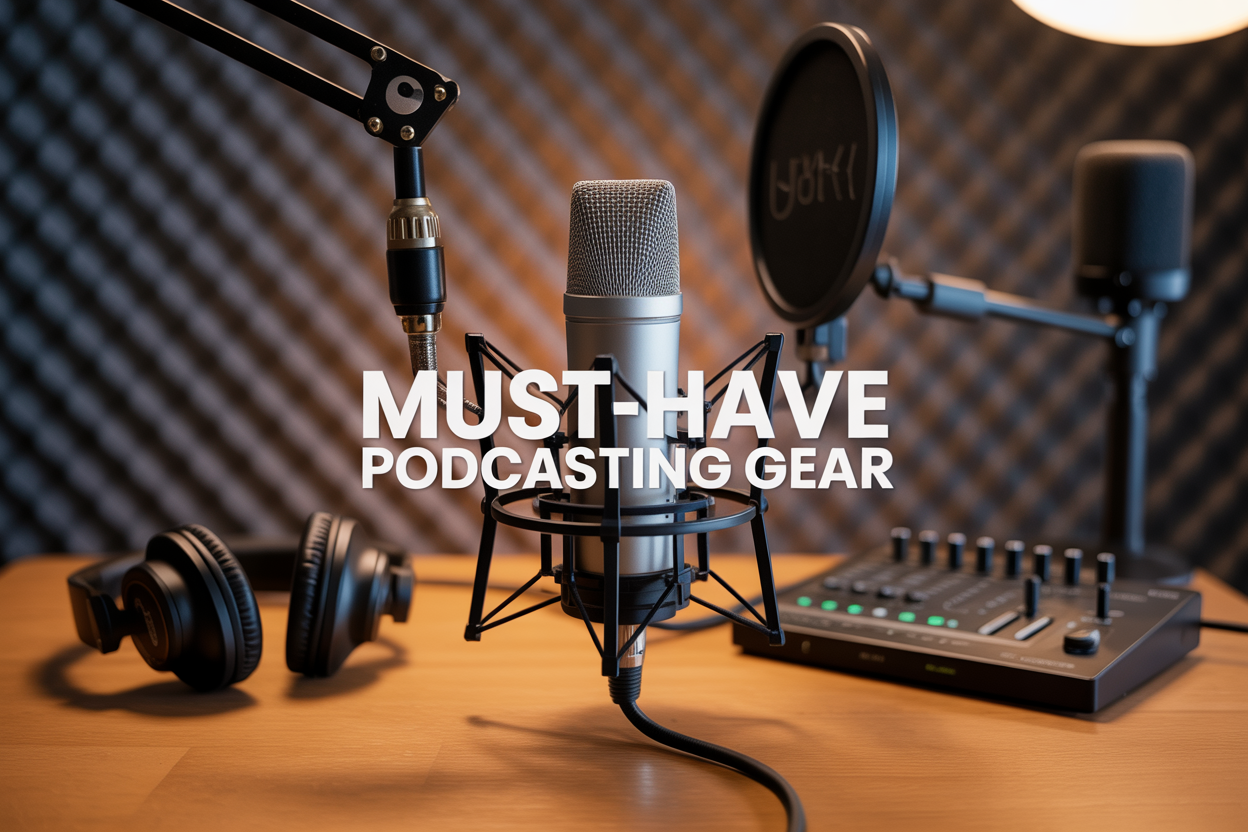
Getting great podcast audio doesn't have to break the bank or overwhelm you with technical jargon. This guide covers the best podcasting microphones and essential gear you need to sound professional, whether you're just starting out or ready to upgrade your home studio setup.
Perfect for new podcasters launching their first show and experienced hosts looking to improve their audio quality, we'll cut through the marketing noise to show you what actually matters for clear, engaging podcast sound.
You'll discover the key differences between USB and XLR microphones that can make or break your recording quality, plus learn which audio accessories and recording tools will give you the biggest bang for your buck. We'll also break down realistic budget ranges so you can invest smart and avoid costly mistakes that many podcasters make early on.
Essential Microphone Types for Professional Podcast Audio

Dynamic Microphones for Noisy Environments
Dynamic microphones represent the workhorses of the podcasting world, especially when you're dealing with less-than-perfect recording conditions. These robust devices excel at rejecting background noise while capturing your voice with remarkable clarity, making them the go-to choice for podcasters who record in home offices, shared spaces, or anywhere ambient sound might creep into your recordings.
The magic behind dynamic microphones lies in their construction. They use a moving coil attached to a diaphragm that generates electrical signals when sound waves hit it. This design makes them incredibly durable and naturally resistant to picking up unwanted sounds from your surroundings. Unlike their more sensitive counterparts, dynamic mics won't capture every keyboard click, air conditioning hum, or distant conversation happening in your space.
Best podcasting microphones in the dynamic category consistently deliver professional results without requiring extensive acoustic treatment of your recording space. The Shure SM7B stands as the gold standard, used by everyone from Joe Rogan to countless radio professionals. Its internal shock mounting and pop filter reduce handling noise and breath sounds, while its frequency response perfectly complements the human voice. The SM7B's ability to handle high sound pressure levels means you can speak closely without distortion, creating that intimate podcast sound listeners love.
The Electro-Voice RE20 offers another excellent option for professional podcast gear setups. Originally designed for broadcast radio, this microphone features Variable-D technology that minimizes the proximity effect – that bass buildup you get when speaking too close to most mics. This makes it incredibly forgiving for podcasters who tend to move around while talking or haven't mastered consistent microphone technique yet.
For those seeking affordable podcasting microphones without sacrificing quality, the Audio-Technica ATR2100x-USB provides exceptional value. This hybrid microphone offers both XLR and USB outputs, giving you flexibility as your setup evolves. Its dynamic capsule handles noisy environments well while maintaining clear vocal reproduction.
Dynamic microphones require more gain than other types, which means you'll need an audio interface or mixer with sufficient clean amplification. However, this characteristic actually works in your favor for noise rejection – the microphone won't pick up quiet background sounds that plague other microphone types.
Condenser Microphones for Studio-Quality Sound
Condenser microphones represent the pinnacle of audio sensitivity and detail capture, making them the preferred choice for podcast studio gear setups where acoustic control isn't an issue. These sophisticated devices use a thin diaphragm positioned close to a metal backplate, creating a capacitor that responds to the slightest sound pressure changes with incredible accuracy.
The sensitivity that makes condenser microphones exceptional for capturing vocal nuances also makes them demanding of their environment. They'll pick up everything – your voice, room reflections, air conditioning, traffic outside, and even the subtle hum of electronic devices. This characteristic makes them ideal for treated recording spaces but challenging for typical home podcast setups without proper acoustic considerations.
Top podcasting gear 2025 recommendations in the condenser category include the Audio-Technica AT2020, which has become a favorite among podcasters transitioning from entry-level equipment. Its cardioid pickup pattern focuses on sound directly in front while rejecting off-axis noise, and its extended frequency response captures the full richness of human speech with exceptional detail.
The Rode PodMic, while technically a dynamic microphone, deserves mention here because it bridges the gap between dynamic durability and condenser-like clarity. Specifically designed for podcast applications, it offers the detail you want from a condenser with the noise rejection of a dynamic microphone.
Large-diaphragm condensers like the Audio-Technica AT2020 or the AKG C214 provide that coveted "radio voice" quality many podcasters seek. Their larger capsules capture more detail across a wider frequency range, resulting in that full, professional sound you hear on major podcast productions.
However, condenser microphones require phantom power – typically 48 volts supplied by your audio interface or mixer. This adds complexity to your podcast microphone setup but the sonic benefits often justify the additional requirements for serious podcasters.
Small-diaphragm condensers offer different characteristics, with tighter pickup patterns and often better rejection of handling noise. The Shure SM81, while expensive, represents the professional standard for small-diaphragm condensers, delivering broadcast-quality results in controlled environments.
USB vs XLR Connection Options
The choice between USB and XLR connectivity represents one of the most significant decisions in your podcast mic and accessories selection process, affecting everything from audio quality to future upgrade potential. Each connection type serves different needs and budgets while offering distinct advantages and limitations.
USB microphones for podcasting provide the ultimate in plug-and-play convenience. These self-contained units include built-in analog-to-digital converters and often feature headphone monitoring, gain controls, and even mute buttons right on the microphone body. For beginners or solo podcasters, USB mics eliminate the need for additional interfaces while delivering surprisingly good results.
The Audio-Technica ATR2100x-USB exemplifies the versatility possible with modern USB microphones. Its dual-output design provides both USB and XLR connections, allowing you to start with simple USB recording and later incorporate it into a more complex XLR-based setup without replacing the microphone entirely.
Premium USB options like the Blue Yeti have gained popularity for their multiple pickup patterns and built-in monitoring capabilities. However, these features can become drawbacks in untreated spaces where the additional sensitivity picks up unwanted room noise and reflections.
XLR microphones for podcasts represent the professional standard, offering superior audio quality and incredible flexibility for complex setups. XLR connections carry balanced analog signals that resist interference and maintain quality over long cable runs. This makes them ideal for multi-microphone setups, remote recording scenarios, and professional studio environments.
The investment in XLR infrastructure pays dividends as your podcast grows. Professional audio interfaces provide superior preamps, multiple inputs for guest microphones, and routing options impossible with USB-only setups. Companies like Focusrite, PreSonus, and Zoom manufacture interfaces specifically designed for podcast applications.
XLR setups also enable the use of external preamps, compressors, and other signal processing gear that can dramatically improve your audio quality. The Cloudlifter CL-1 has become essential podcasting gear essentials for many dynamic microphone users, providing clean gain boost that allows quieter talkers to achieve professional levels without noise.
| Connection Type | Pros | Cons | Best For |
|---|---|---|---|
| USB | Plug-and-play simplicity, built-in monitoring, no additional gear required | Limited upgrade path, potential computer noise, single input | Solo podcasters, beginners, mobile recording |
| XLR | Superior audio quality, professional flexibility, upgrade potential | Requires audio interface, more complex setup, higher cost | Multi-host shows, professional productions, studio setups |
The decision often comes down to your current needs versus future ambitions. USB microphones excel for simple, single-person shows where convenience matters most. XLR systems shine when audio quality, multiple inputs, or professional features become priorities.
Lavalier Microphones for Mobile Recording
Lavalier microphones, also known as lapel mics, provide unmatched freedom and discretion for mobile podcast recording scenarios. These tiny powerhouses clip to clothing and capture remarkably clear audio while remaining virtually invisible, making them perfect for interviews, field recording, and situations where traditional handheld or desktop microphones would be impractical.
Modern wireless lavalier systems have revolutionized mobile podcasting by eliminating the constraints of cables while maintaining professional audio quality. The Rode Wireless GO II system exemplifies this evolution, offering dual-channel recording with built-in backup recording that saves your content even if wireless transmission fails. Its compact transmitters clip easily to clothing while the receiver mounts on cameras, phones, or recording devices.
Must-have podcast equipment for mobile scenarios increasingly includes lavalier options because they solve the fundamental challenge of capturing clean audio in unpredictable environments. Unlike shotgun microphones that require careful positioning and boom operators, lavalier mics maintain consistent pickup regardless of head movement or gesturing.
The Sennheiser AVX system represents the premium end of wireless lavalier technology, with digital transmission that automatically finds clear frequencies and adapts to interference. Its professional build quality and reliability make it suitable for high-stakes interviews where audio failure isn't an option.
Wired lavalier options provide budget-friendly alternatives for controlled recording situations. The Audio-Technica ATR3350iS offers remarkable value with its omnidirectional capsule and smartphone compatibility. While it requires careful cable management, its audio quality rivals systems costing several times more.
Beginner podcasting equipment lists should consider the unique challenges lavalier mics present. Clothing noise becomes a significant concern – fabrics rubbing against the microphone create unwanted sounds that can ruin otherwise perfect recordings. Proper mic placement, usually on lapels or shirt collars, requires practice to avoid these issues while maintaining optimal pickup.
Wind noise presents another challenge for outdoor recording with lavalier microphones. Quality windscreens become essential accessories, and some systems include specialized outdoor covers designed to minimize wind interference without affecting audio quality.
The Sony UWP-D series offers broadcast-quality wireless transmission with true diversity reception that virtually eliminates dropouts. Its metal construction and professional features make it suitable for documentary-style podcast productions where reliability matters more than size.
Podcast recording microphones in the lavalier category also include smartphone-specific options like the Rode SmartLav+, designed specifically for mobile journalism and podcasting applications. These specialized mics connect directly to phone headphone jacks or Lightning/USB-C ports, enabling high-quality recording with devices most people already carry.
Battery management becomes crucial with wireless lavalier systems. Quality systems provide 6-8 hours of operation, but having backup batteries and charging solutions prevents mid-interview disasters. Some newer systems offer USB-C charging and power delivery that can extend operation time indefinitely when connected to power banks.
The choice between omnidirectional and directional lavalier capsules affects pickup characteristics significantly. Omnidirectional patterns capture more natural sound but also pick up more ambient noise. Directional capsules focus on the wearer's voice while rejecting background sounds, making them better for noisy environments.
Professional lavalier techniques include using medical tape for secure mounting, routing cables to minimize visibility and handling noise, and coordinating multiple wireless systems to avoid frequency conflicts. The Lectrosonics Digital Hybrid systems used in film and television production represent the absolute pinnacle of lavalier technology, with features like encrypted digital transmission and advanced frequency coordination.
Best podcasting mic setup decisions for mobile recording often involve combining lavalier mics with portable recording devices like the Zoom H5 or H6, creating complete field recording systems that capture professional-quality audio anywhere. These combinations enable podcasters to conduct interviews in coffee shops, conferences, or outdoor locations while maintaining the audio standards expected by modern audiences.
The integration of lavalier microphones with modern smartphones and tablets has democratized high-quality mobile recording, making professional results accessible to podcasters at every level. Apps like Hindenburg Pro and Ferrite provide professional editing capabilities directly on mobile devices, creating complete mobile podcast production workflows that were impossible just a few years ago.
Top-Rated Microphone Brands and Models

Shure SM7B for Broadcasting Excellence
The Shure SM7B stands as the undisputed champion of professional podcast microphones, earning its legendary status through decades of use in broadcasting studios worldwide. This dynamic microphone has captured the voices of countless radio hosts, podcasters, and musicians, making it the gold standard for anyone serious about audio quality.
What makes the SM7B special starts with its exceptional dynamic capsule design. Unlike condenser microphones that pick up every sound in your room, the SM7B focuses intensely on what's directly in front of it. This characteristic makes it perfect for podcasters who don't have access to professionally treated recording spaces. You can record in your living room, home office, or even a slightly noisy environment, and the SM7B will still deliver clean, professional results.
The microphone's frequency response deserves special attention. Shure engineered the SM7B with a tailored response that enhances vocal clarity while maintaining natural warmth. The built-in pop filter eliminates those annoying plosive sounds that can ruin otherwise perfect recordings. The bass rolloff and presence boost switches give you additional control over your sound, allowing you to customize the microphone's response to match your voice and recording environment.
Professional podcasters consistently choose the SM7B because it handles gain requirements exceptionally well. While it needs substantial amplification due to its low output, this characteristic actually works in your favor. The microphone's low self-noise means you can crank up your preamp without introducing unwanted hiss or electronic noise. Popular podcasters like Joe Rogan have made the SM7B their signature microphone, contributing to its iconic status in the podcasting world.
The build quality of the SM7B reflects Shure's commitment to professional-grade equipment. The all-metal construction can withstand years of daily use, making it a worthy long-term investment. The internal shock mount system isolates the capsule from handling noise and vibrations, while the electromagnetic shielding protects against interference from computer monitors, phones, and other electronic devices.
Setting up the SM7B requires some consideration of your audio interface capabilities. You'll need a preamp that can provide at least 60dB of clean gain, though many podcasters find that 65-70dB works better. Popular choices include the Cloudlifter CL-1 inline preamp or audio interfaces with high-quality built-in preamps like the RME Babyface Pro or Universal Audio Apollo series.
| Shure SM7B Specifications | |
|---|---|
| Type | Dynamic |
| Polar Pattern | Cardioid |
| Frequency Response | 50Hz - 20kHz |
| Output Impedance | 150 ohms |
| Sensitivity | -59 dBV/Pa |
| Maximum SPL | 180 dB SPL |
| Weight | 1.69 lbs |
| Price Range | $400-450 |
Audio-Technica AT2020 for Budget-Conscious Creators
The Audio-Technica AT2020 represents the sweet spot where affordability meets professional quality, making it the perfect entry point for podcasters who want excellent sound without breaking their budget. This condenser microphone has earned respect across multiple industries, from podcasting to music production, proving that great audio doesn't always require a massive investment.
Audio-Technica designed the AT2020 with a large diaphragm condenser capsule that captures incredible detail and nuance in vocal recordings. The extended frequency response from 20Hz to 20kHz ensures your voice comes through with clarity and presence that rivals microphones costing significantly more. The cardioid polar pattern effectively reduces pickup of sounds from the sides and rear, helping isolate your voice even in less-than-ideal recording environments.
One of the AT2020's greatest strengths lies in its versatility. While many microphones excel in specific applications, the AT2020 performs admirably across various recording situations. Whether you're recording solo episodes, conducting interviews, or even dabbling in music, this microphone adapts to different vocal styles and recording techniques. The smooth, natural sound signature works particularly well for podcasters who want their authentic voice to shine through without heavy processing.
The microphone's technical specifications reveal why it punches above its weight class. The transformerless circuitry virtually eliminates low-frequency distortion and provides superior correlation of high-speed transients. This technical excellence translates into recordings that sound professional and polished, giving your podcast the audio quality that keeps listeners engaged.
Setup simplicity makes the AT2020 attractive for beginners and experienced podcasters alike. The microphone requires 48V phantom power, which most modern audio interfaces and mixers provide automatically. Unlike the SM7B's demanding gain requirements, the AT2020 works well with a wide range of preamps and interfaces, from budget-friendly options like the Focusrite Scarlett series to high-end professional gear.
The AT2020's condenser design does make it more sensitive to room acoustics compared to dynamic microphones. However, this sensitivity can work to your advantage if you have even basic acoustic treatment in your recording space. A few acoustic panels or recording in a closet full of clothes can transform your results dramatically. Many successful podcasters have built their entire shows around the AT2020, proving that room treatment often matters more than microphone price.
Build quality remains solid despite the affordable price point. Audio-Technica constructed the AT2020 with a robust metal housing that can handle regular use and occasional travel. The included stand mount and protective pouch show attention to the complete user experience, not just the microphone itself.
For podcasters just starting their journey, the AT2020 offers an excellent upgrade path. You can begin with a basic audio interface, then gradually improve your setup with better preamps, acoustic treatment, and additional gear as your podcast grows. The microphone's professional sound quality means you won't need to replace it as you advance in your podcasting skills.
| Audio-Technica AT2020 Specifications | |
|---|---|
| Type | Condenser |
| Polar Pattern | Cardioid |
| Frequency Response | 20Hz - 20kHz |
| Maximum SPL | 144 dB SPL |
| Sensitivity | -37 dBV/Pa |
| Self-noise | 20 dB SPL |
| Weight | 0.73 lbs |
| Price Range | $99-149 |
Rode PodMic for Dedicated Podcasting
The Rode PodMic emerges as a game-changer in the podcasting microphone landscape, representing the first microphone specifically engineered from the ground up for podcast production. Rode's engineers studied the unique requirements of podcast recording and created a microphone that addresses the specific challenges podcasters face daily.
The PodMic's dynamic design philosophy centers around broadcast-quality audio capture while maintaining the simplicity that podcasters demand. The internal pop shield virtually eliminates plosive sounds without requiring additional accessories, while the internal shock mounting reduces handling noise and vibrations from desk movements. This attention to podcast-specific details sets the PodMic apart from traditional broadcast microphones that were adapted for podcasting use.
Voice optimization represents the PodMic's strongest selling point. Rode tuned the frequency response specifically for spoken word content, with a gentle presence boost that adds clarity and intelligibility to human speech. The microphone excels at capturing the subtle nuances that make voices engaging while maintaining the warmth and richness that keeps listeners connected to your content. This voice-first approach means less post-production work and more natural-sounding recordings straight from the microphone.
The PodMic's gain structure strikes an ideal balance between the high-gain requirements of traditional broadcast microphones and the limited preamp capabilities of many podcasting setups. While it still requires solid amplification, most modern audio interfaces can drive the PodMic effectively without additional inline preamps. This accessibility makes professional-quality podcasting more attainable for creators working with modest budgets.
Rode's attention to the complete podcasting workflow shows in every aspect of the PodMic's design. The swing mount included with the microphone provides smooth, quiet positioning adjustments during recording. The robust yoke mount accommodates standard boom arms and desk stands, while the internal threading accepts standard microphone clips. These seemingly small details add up to a more professional and efficient recording experience.
The microphone's aesthetic design acknowledges that many podcasters record video content alongside their audio. The PodMic's sleek, modern appearance looks professional on camera while maintaining the classic broadcast microphone silhouette that audiences associate with quality podcast content. The all-black finish minimizes visual distractions, allowing viewers to focus on the speaker rather than the equipment.
Professional podcasters appreciate the PodMic's consistent performance across different recording environments. The tight cardioid pattern effectively isolates the speaker's voice while rejecting room noise and reflections. This characteristic proves invaluable for podcasters who record in home offices, shared spaces, or locations with challenging acoustics. The microphone's forgiving nature means you can maintain professional results even when recording conditions aren't perfect.
The PodMic integrates seamlessly into both simple and complex podcast production setups. Solo podcasters can connect directly to a single-channel interface for straightforward recording, while professional productions can incorporate multiple PodMics for panel discussions or interview formats. The microphone's phantom power-free operation simplifies technical requirements and reduces potential failure points in your recording chain.
Rode's reputation for reliability and customer support adds significant value to the PodMic investment. The company's extensive experience in broadcast and content creation markets translates into products that understand real-world usage demands. The PodMic benefits from this expertise, delivering consistent performance that podcasters can depend on for regular content creation.
The microphone's price point positions it as an accessible upgrade for podcasters ready to move beyond entry-level equipment but not prepared for the investment required by traditional broadcast microphones. This positioning makes the PodMic particularly attractive for podcasters who have outgrown their first microphone but want to ensure their next purchase will serve them well as their podcast grows and evolves.
| Rode PodMic Specifications | |
|---|---|
| Type | Dynamic |
| Polar Pattern | Cardioid |
| Frequency Response | 20Hz - 20kHz |
| Output Impedance | 320 ohms |
| Sensitivity | -57 dBV/Pa |
| Maximum SPL | 200 dB SPL |
| Self-noise | 20 dB SPL |
| Weight | 1.9 lbs |
| Price Range | $199-249 |
Critical Audio Equipment Beyond Microphones

Audio Interfaces for Multi-Channel Recording
When you're ready to take your podcast beyond basic USB microphone setups, an audio interface becomes your gateway to professional-grade recordings. Think of it as the bridge between your microphones and your computer, converting analog signals into digital audio that your recording software can work with.
The biggest advantage of investing in a quality audio interface is the ability to record multiple people simultaneously. Whether you're hosting co-hosts, conducting interviews, or recording panel discussions, an interface with multiple XLR inputs lets everyone have their own dedicated microphone channel. This creates cleaner recordings with better control over individual voice levels.
Most podcasters find that a 2-4 channel interface covers their needs perfectly. Popular models like the Focusrite Scarlett 2i2 or 4i4 offer excellent value with clean preamps and reliable performance. The Scarlett series has become synonymous with home studio setups because they deliver professional results without breaking the bank.
For those wanting to expand their podcasting gear essentials, interfaces like the Zoom PodTrak P4 are specifically designed for podcasters. This device includes built-in sound pads for adding intro music or sound effects during live recordings, plus dedicated headphone outputs for each guest.
Audio interfaces also provide phantom power for condenser microphones, giving you flexibility in microphone choices. The XLR connections deliver superior audio quality compared to USB alternatives, and the dedicated preamps ensure your microphones receive clean, noise-free amplification.
When selecting an interface, consider your long-term goals. Starting with a 4-channel interface might seem excessive for solo podcasts, but it provides room to grow without requiring another equipment upgrade later.
Closed-Back Headphones for Accurate Monitoring
Professional podcast audio relies heavily on what you hear during recording, making quality headphones non-negotiable equipment. Closed-back headphones are specifically designed to isolate external noise while preventing sound leakage that could contaminate your microphone recordings.
The difference between consumer headphones and professional monitoring headphones lies in their flat frequency response. Consumer headphones often enhance bass or treble to make music sound more exciting, but this coloration masks problems in your recordings. Professional headphones reveal your audio exactly as it sounds, letting you catch issues like background noise, mouth sounds, or inconsistent levels while you're still recording.
Sony MDR-7506 headphones have been an industry standard for decades, found in professional studios worldwide. They offer exceptional clarity and durability at a reasonable price point. The Audio-Technica ATH-M40x provides similar performance with a slightly warmer sound signature that many podcasters prefer for long recording sessions.
Comfort plays a crucial role when you're wearing headphones for extended periods. Look for models with adjustable headbands and cushioned ear cups that won't cause fatigue during marathon recording sessions. The Beyerdynamic DT 770 Pro excels in this area, with plush velour ear pads that remain comfortable even after hours of use.
Impedance matters when choosing headphones for your podcast microphone setup. Lower impedance headphones (32-80 ohms) work well with audio interfaces and mobile devices, while higher impedance models might require additional amplification. Most podcasting scenarios work best with lower impedance options that provide adequate volume levels from standard equipment.
Some podcasters prefer headphones with detachable cables, as these components tend to fail before the drivers themselves. Models like the Audio-Technica ATH-M50x offer this feature, potentially extending the lifespan of your investment.
Pop Filters and Windscreens for Clear Audio
Even the most expensive microphones can't eliminate the explosive sounds created when air from plosive consonants (P, B, T, K sounds) hits the microphone capsule directly. Pop filters and windscreens serve as your first line of defense against these audio artifacts that can ruin otherwise perfect recordings.
Pop filters, also called pop shields, consist of a fabric membrane stretched across a circular frame. They mount on flexible arms that position the filter between your mouth and the microphone. The fabric disperses air pressure while allowing sound waves to pass through relatively unimpeded. This simple barrier prevents plosives from creating those annoying "popping" sounds that plague amateur recordings.
Quality pop filters use multiple layers of fabric with different weave densities. The Aokeo Professional Microphone Pop Filter features dual-layer construction with different mesh densities that work together to catch air bursts while maintaining vocal clarity. The Stedman Corporation Proscreen XL uses a unique metal design instead of fabric, offering easy cleaning and longer lifespan.
Windscreens, typically made of foam, slip directly over the microphone capsule. While they're more compact than pop filters, they also provide less protection against strong plosives. However, windscreens excel at reducing wind noise and gentle breath sounds. They're particularly useful for dynamic microphones used in close-proximity recording situations.
The positioning of your pop filter dramatically affects its effectiveness. Place it 4-6 inches from your microphone, creating a barrier without muffling your voice. The filter should be large enough to cover the entire microphone capsule area, ensuring protection even if you move slightly during recording.
Some microphones, like the Electro-Voice RE20 or Shure SM7B, include built-in pop protection through internal shock mounts and capsule design. These microphones still benefit from external pop filters, but they're more forgiving if you occasionally forget to use one.
Double-layer pop filters provide superior protection for podcasters who speak with particularly explosive diction or record in challenging acoustic environments. The slight additional cost pays dividends in reduced post-production editing time.
Boom Arms and Shock Mounts for Stability
Microphone stands might seem like basic accessories, but they're fundamental to achieving professional podcast audio quality. Desktop stands that come with many USB microphones create several problems: they pick up vibrations from your desk, limit microphone positioning options, and often result in less-than-optimal recording angles.
Boom arms solve these issues by suspending your microphone in space, isolated from desk vibrations and positioned exactly where you need it. The InnoGear Microphone Stand offers excellent value with a sturdy scissor-arm design that accommodates most microphones. For heavier microphones, the Rode PSA1 provides superior build quality and smooth adjustment mechanisms that maintain their positioning over time.
Proper boom arm setup positions the microphone at mouth level, about 6-8 inches from your lips, without requiring you to lean forward or speak down into the microphone. This natural speaking position reduces vocal strain during long recording sessions and maintains consistent audio levels.
Shock mounts work in conjunction with boom arms to isolate your microphone from mechanical vibrations. These cradle-like devices suspend the microphone using elastic bands or rubber rings, preventing vibrations from traveling up the boom arm and into your recording. Even gentle movements like adjusting your position or touching your desk can create low-frequency rumble without proper shock mounting.
Different microphones require specific shock mounts designed for their size and weight. The Shure A25D works specifically with Shure microphones, while universal shock mounts like the Auphonix Shock Mount accommodate various microphone sizes through adjustable bands.
Some podcasters overlook the importance of cable management in their boom arm setup. Loose cables can create noise when they rub against the boom arm or desk during recording. Most quality boom arms include cable routing clips or internal cable management to keep everything tidy and quiet.
The investment in a quality boom arm and shock mount pays immediate dividends in recording quality. You'll notice cleaner audio with less handling noise and more consistent microphone positioning. This stability also speeds up your recording workflow since you won't need to constantly readjust microphone placement.
Acoustic Treatment Solutions for Home Studios
Room acoustics can make or break your podcast recordings, regardless of how expensive your microphone setup might be. Hard surfaces in typical home environments create reflections, echoes, and standing waves that muddy your audio and give recordings an amateur quality that no amount of post-production can fully correct.
Professional acoustic treatment doesn't require transforming your entire room into a recording studio. Strategic placement of absorptive materials can dramatically improve your recordings while maintaining the room's normal function. The goal isn't to eliminate all reflections, but to control them so your microphone captures mostly direct sound from your voice.
Acoustic foam panels represent the most common treatment approach. Companies like Auralex and Primacoustic manufacture panels specifically designed for home studios. However, placement matters more than quantity. Focus on the areas where sound reflections are strongest: the wall directly behind your microphone, the wall behind you, and the ceiling above your recording position.
Bass traps address low-frequency problems that foam panels can't handle effectively. These corner-mounted devices absorb the standing waves that create boomy, uneven bass response in small rooms. While less critical for voice-only podcasts, bass traps become important if you plan to include music or sound effects in your productions.
Moving blankets provide a budget-friendly alternative to professional acoustic panels. Hung on stands or draped over nearby furniture, they absorb reflections effectively, though they're less attractive and permanent than purpose-built solutions. Many podcasters use moving blankets for temporary setups or when recording in various locations.
Reflection filters mount directly behind your microphone, creating a localized acoustically treated zone. The sE Electronics Reflexion Filter Pro has become popular among podcasters because it provides significant acoustic improvement without requiring permanent room modifications. While not as effective as full room treatment, reflection filters offer practical benefits for shared spaces.
Natural room elements can also improve acoustics. Bookshelves filled with books, heavy curtains, upholstered furniture, and carpeting all help control reflections. The key is breaking up parallel surfaces and adding absorption where sound waves would otherwise bounce around freely.
Recording in smaller spaces often produces better results than large, empty rooms. Walk-in closets filled with clothes provide excellent natural acoustic treatment, which explains why many podcasters record in these unlikely locations. The clothes absorb reflections while the small space minimizes room tone and echo.
Acoustic treatment works best when combined with proper microphone technique. Even in treated rooms, maintaining consistent distance from your microphone and speaking directly into it (not off-axis) ensures the clearest possible recordings. The combination of good acoustics and proper technique creates the professional sound quality that distinguishes amateur podcasts from polished productions.
Remember that acoustic treatment is an investment in every future recording you make in that space. Unlike microphones or interfaces that might eventually need upgrading, proper room treatment continues improving your audio quality regardless of equipment changes. Start with basic absorption in key areas, then expand your treatment as your podcasting goals and budget allow.
Recording Software and Digital Tools

Free Recording Platforms for Beginners
Starting your podcast journey doesn't require expensive software investments. Several powerful free recording platforms deliver professional-quality results while helping newcomers learn the basics of audio production.
Audacity stands as the gold standard for free podcast recording software. This open-source platform has been empowering creators for over two decades, offering comprehensive recording and editing capabilities that rival many paid alternatives. The interface might look dated, but beneath that simple exterior lies robust functionality including multi-track recording, real-time effects processing, and advanced noise reduction tools.
Audacity excels at handling the core tasks every podcaster needs: recording multiple audio sources simultaneously, cutting and splicing clips, adjusting volume levels, and removing unwanted background noise. The software supports virtually every audio format you'll encounter, making it perfect for podcasters working with various microphone types and guest recording setups.
GarageBand transforms Mac users into audio producers with its intuitive drag-and-drop interface. Apple's free DAW includes professional-grade effects, virtual instruments, and podcast-specific templates that streamline the production process. The built-in podcast template automatically configures proper settings for speech recording, including EQ curves optimized for human voices and compression settings that maintain consistent audio levels.
What sets GarageBand apart is its seamless integration with the Apple ecosystem. You can start recording on your iPhone during an interview, continue editing on your iPad while commuting, and finish production on your Mac at home. The software includes Smart Controls that simplify complex audio processing tasks, making professional-sounding results accessible to complete beginners.
Anchor revolutionizes podcast creation by combining recording, hosting, and distribution into one free platform. The web-based interface eliminates software installation requirements while providing professional recording capabilities directly in your browser. Anchor's strength lies in its simplicity - you can record, edit, and publish episodes without leaving the platform.
The platform includes automatic audio optimization that enhances speech clarity and maintains consistent volume levels across your entire episode. Voice messages from listeners can be incorporated directly into episodes, creating interactive content that builds stronger audience connections. Anchor also handles podcast distribution to major platforms like Spotify, Apple Podcasts, and Google Podcasts automatically.
Reaper offers an extended 60-day free trial that many consider the most generous in the industry. This professional-grade software provides unlimited tracks, comprehensive MIDI support, and extensive customization options that grow with your skills. The learning curve is steeper than other free options, but Reaper's capabilities match expensive professional software.
The software excels in areas where free alternatives often struggle: low-latency monitoring, advanced automation features, and support for third-party plugins. Reaper's efficient coding means it runs smoothly on older computers, making it accessible to podcasters with limited hardware budgets.
Professional DAW Options for Advanced Editing
Professional Digital Audio Workstations transform basic recordings into polished, broadcast-ready content through sophisticated editing tools and advanced audio processing capabilities.
Pro Tools remains the industry standard for professional audio production, offering unmatched editing precision and comprehensive mixing capabilities. The software's advanced features include Elastic Audio for seamless time-stretching, comprehensive surround sound support, and industry-leading collaboration tools for remote podcast production teams.
Pro Tools excels in complex editing scenarios where multiple speakers, sound effects, and music tracks require precise timing alignment. The software's clip-based editing system allows for non-destructive modifications, meaning you can experiment with different versions without losing original recordings. Advanced features like automatic dialogue replacement (ADR) and sophisticated noise reduction make it invaluable for professional podcast studios handling high-profile shows.
The subscription model provides access to continuous updates and cloud-based collaboration features. Teams can work on the same project simultaneously, with changes synchronized in real-time across different locations. This capability proves invaluable for podcast networks managing multiple shows with distributed production teams.
Logic Pro delivers professional-grade capabilities specifically optimized for Mac users, combining powerful recording tools with an extensive library of high-quality effects and virtual instruments. The software includes Flex Time for precise audio timing corrections and comprehensive pitch correction tools that maintain natural-sounding speech patterns.
Logic Pro's Sculpture and ChromaVerb plugins add professional polish to podcast audio, while the built-in DeEsser removes harsh sibilant sounds that can make speech uncomfortable to listen to. The software's advanced compressor options include vintage emulations that add warmth and character to voice recordings.
Channel EQ provides surgical precision for frequency adjustments, allowing producers to eliminate problematic resonances while enhancing clarity and presence. Logic Pro's automation capabilities enable dynamic processing changes throughout episodes, creating professional-sounding productions that maintain listener engagement.
Adobe Audition integrates seamlessly with Creative Cloud workflows while offering specialized features for speech-based content. The software's Spectral Frequency Display provides visual representation of audio content, making it easy to identify and remove unwanted sounds like mouth clicks, paper rustling, or HVAC noise.
Audition's Essential Sound panel simplifies professional audio processing through intelligent presets specifically designed for dialogue, music, sound effects, and ambience. These presets automatically apply appropriate EQ curves, compression settings, and noise reduction parameters while maintaining full manual control for fine-tuning.
The software excels in restoration tasks common to podcast production. Advanced noise reduction algorithms can remove consistent background noise without affecting speech quality, while the Dehum effect eliminates power line interference that plagues many home recording setups. Audition's integration with Premiere Pro and After Effects makes it perfect for podcasters expanding into video content.
Cubase provides comprehensive MIDI capabilities alongside powerful audio editing tools, making it ideal for podcasters incorporating original music or complex sound design elements. The software's advanced quantization features ensure perfect timing between different audio elements, while comprehensive mixing capabilities rival dedicated mixing consoles.
VariAudio technology allows for pitch and timing corrections that sound completely natural, perfect for fixing minor vocal imperfections without obvious processing artifacts. Cubase's extensive plugin library includes professional-grade reverbs, delays, and modulation effects that add production value to podcast content.
The software's Expression Maps enable realistic virtual instrument performances when creating custom intro music or sound effects. Advanced MIDI editing capabilities support complex compositions, making Cubase valuable for podcasters producing narrative shows with extensive original scoring.
Real-Time Audio Processing Plugins
Real-time processing plugins enhance live recording quality and streamline post-production workflows by applying effects during the recording process rather than afterward.
VST and AU Plugins form the backbone of modern audio processing, providing specialized tools for every aspect of speech enhancement and audio correction. These plugins integrate seamlessly with host DAW software, expanding capabilities far beyond built-in effects.
FabFilter Pro-Q 3 revolutionizes equalization with its intuitive interface and surgical precision. The plugin's dynamic EQ capabilities automatically adjust frequency response based on input levels, preventing harsh sibilants while maintaining speech clarity. Advanced features like mid-side processing enable precise stereo imaging control, essential for podcasts featuring multiple speakers.
The plugin's spectrum analyzer provides real-time frequency visualization, making it easy to identify problematic resonances or frequency buildup common in home recording environments. Match EQ functionality can automatically analyze reference recordings and apply similar tonal characteristics to your podcast audio.
Waves Renaissance Compressor delivers vintage analog warmth while providing modern precision controls. The plugin's Opto and Electro modes emulate classic hardware compressors, adding character and presence to voice recordings. Advanced look-ahead processing prevents unwanted pumping effects while maintaining transparent compression.
Parallel compression capabilities allow for maintaining natural dynamics while adding density and impact to speech. The plugin's vintage modeling adds subtle harmonic enhancement that makes voices sound more engaging and present in the mix.
iZotope RX plugins provide industry-leading restoration capabilities for cleaning up problematic recordings. The DeNoise plugin removes background noise with remarkable transparency, while DeClick eliminates mouth sounds and microphone handling noise automatically. Spectral Repair can remove isolated sounds like cell phone interference or sudden loud noises without affecting surrounding audio.
RX's Voice DeNoise specifically targets speech recordings, using advanced machine learning algorithms to distinguish between voice and unwanted background sounds. The plugin maintains speech intelligibility while removing distracting environmental noise that would otherwise require extensive manual editing.
Universal Audio UAD plugins require dedicated DSP hardware but deliver unmatched analog emulation quality. The 1176 Classic Limiter Collection provides multiple variations of the legendary hardware compressor, each adding distinct character to voice recordings. The Teletronix LA-2A leveling amplifier delivers smooth, musical compression perfect for speech applications.
UAD's Neve plugins recreate the sound of classic British mixing consoles, adding warmth and presence that makes voices sound more authoritative and engaging. The API Vision Channel Strip combines EQ, compression, and gating in a single plugin that emulates classic American console design.
Celemony Melodyne provides advanced pitch correction capabilities that maintain natural speech patterns while correcting minor vocal imperfections. Unlike traditional pitch correction tools, Melodyne analyzes audio polyphonically, allowing for corrections that sound completely transparent.
The software's DNA (Direct Note Access) technology enables editing individual notes within complex audio, perfect for fixing specific words or phrases without affecting surrounding content. Advanced formant correction maintains natural vocal character while adjusting pitch, preventing the artificial sound common with other correction tools.
Plugin Hosting Solutions like Plogue Bidule or Blue Cat's Connector enable real-time plugin processing during recording, reducing post-production requirements while ensuring consistent audio quality. These solutions route audio through plugin chains before reaching your DAW, allowing for monitoring processed audio during performance.
Advanced routing capabilities enable complex processing chains that would be impossible with traditional hardware setups. Multiple plugin instances can run simultaneously with precise latency compensation, ensuring perfect synchronization between processed and direct audio signals.
Budget Considerations and Investment Strategy

Starter Setups Under $200
Building your first podcast recording setup doesn't require breaking the bank. Smart shoppers can assemble a complete beginner podcasting equipment package that delivers professional-sounding results without exceeding a modest budget.
The Audio-Technica ATR2100x-USB stands as the gold standard for affordable podcasting microphones under $200. This dual-output microphone works as both a USB and XLR mic, offering incredible flexibility for growing podcasters. You can start recording directly to your computer via USB and later upgrade to an audio interface without changing microphones. The ATR2100x-USB typically retails for $169 and includes a built-in headphone monitor, adjustable gain control, and excellent noise rejection.
For those seeking an even more budget-friendly option, the Samson Q2U represents exceptional value at around $70. This dynamic microphone mirrors the legendary Shure SM58's design while providing both USB and XLR connectivity. The Q2U delivers broadcast-quality audio and includes a desktop stand, windscreen, and both USB and XLR cables in the box.
USB microphones dominate the starter category because they eliminate the need for additional audio interfaces. The Blue Yeti, despite being somewhat overused, remains a solid choice at $100 for solo podcasters who need versatility. However, the Audio-Technica AT2020USB+ offers superior sound quality for the same price point, making it a smarter investment for serious beginners.
Building a complete starter kit requires more than just a microphone. Budget-conscious podcasters should allocate funds across several essential components:
| Component | Recommended Product | Price Range |
|---|---|---|
| Microphone | Samson Q2U or ATR2100x-USB | $70-169 |
| Headphones | Sony MDR-7506 | $90-110 |
| Pop Filter | Aokeo Professional | $15-20 |
| Boom Arm | InnoGear Microphone Stand | $25-35 |
| Acoustic Treatment | Auralex Foam Panels (12-pack) | $40-50 |
This configuration totals between $240-384, but smart shopping during sales can bring the complete setup under $200. Many podcasters start with just the microphone and headphones, then gradually add accessories as their show grows.
The key to maximizing a starter budget lies in prioritizing components that directly impact audio quality. A $70 Samson Q2U with $30 closed-back headphones produces infinitely better results than a $100 USB microphone without proper monitoring capabilities.
Recording software shouldn't consume budget dollars when starting out. Audacity provides free, professional-grade editing capabilities that rival paid alternatives. GarageBand comes free with Mac computers and offers intuitive podcast production tools. These options allow beginners to invest their entire budget in hardware rather than software licenses.
Mid-Range Professional Kits
Professional podcast gear in the $500-1500 range opens up significant quality improvements and expanded capabilities. This budget tier allows podcasters to build systems that rival commercial radio stations while maintaining cost-effectiveness.
The Shure SM7B, priced around $400, represents the industry standard for professional podcasting microphones. This dynamic microphone appears in virtually every major podcast studio and radio station worldwide. Its exceptional rejection of background noise, combined with a warm, broadcast-ready sound signature, makes it the go-to choice for serious podcasters. The SM7B requires significant gain, necessitating either a high-quality audio interface or external preamp.
Rode's PodMic offers similar performance to the SM7B at $199, making it an attractive alternative for budget-conscious professionals. This microphone was designed specifically for podcasting, featuring optimized frequency response for speech and built-in pop protection. The PodMic pairs exceptionally well with the Rodecaster Pro, creating a streamlined podcast production system.
Audio interfaces become critical components in mid-range setups. The Focusrite Scarlett 2i2 (3rd Gen) at $170 provides clean preamps, reliable drivers, and enough gain for most dynamic microphones. For podcasters planning multi-host shows, the Scarlett 4i4 offers four inputs at $230, enabling simultaneous recording of multiple participants.
The Zoom PodTrak P4 deserves special mention as a podcast-specific audio interface. Priced at $200, it includes dedicated headphone monitoring for each participant, sound pads for intro music and effects, and smartphone integration for remote guest calls. This specialized device simplifies podcast production compared to traditional audio interfaces.
Podcast microphone setup complexity increases in the mid-range tier, but so does flexibility and sound quality. XLR microphones require more cables, stands, and accessories, but they provide superior noise rejection and professional connectivity options.
Essential mid-range kit components include:
-
Primary Microphone: Shure SM7B or Rode PodMic ($200-400)
-
Audio Interface: Focusrite Scarlett 2i2 or Zoom PodTrak P4 ($170-200)
-
Headphones: Audio-Technica ATH-M50x or Sennheiser HD280 Pro ($150-170)
-
Boom Arms: Rode PSA1 or Heil PL-2T ($100-150 each)
-
Pop Filters: Stedman Proscreen XL ($40 each)
-
Cables: Mogami Gold Studio XLR ($50-75 each)
-
Acoustic Treatment: Primacoustic London Panels ($200-300)
Mid-range budgets also accommodate external preamps for microphones requiring substantial gain. The Klark Teknik CT-1 provides 60dB of clean gain for $50, while the FetHead offers 27dB of ultra-low-noise amplification for $90. These inline preamps can transform challenging microphones like the SM7B into plug-and-play solutions.
Room acoustics become increasingly important as microphone sensitivity improves. Mid-range budgets should allocate $200-500 for acoustic treatment, including absorption panels, bass traps, and reflection filters. Properly treated spaces can make a $200 microphone sound better than a $400 microphone in an untreated room.
Cloud-based recording platforms like Riverside.fm or SquadCast become viable options at this budget level, enabling high-quality remote interviews and eliminating the need for complex local recording setups when hosting remote guests.
High-End Studio Configurations
Top podcasting gear 2025 reaches professional broadcast standards in the $2000+ category, where every component contributes to creating pristine audio quality that rivals major media networks.
The Electro-Voice RE20 and Shure SM7dB represent the pinnacle of broadcast microphones. The RE20, used by NPR and major radio stations nationwide, provides unmatched consistency and professional sound signature at $450. The newer SM7dB includes built-in digital processing and Shure's proprietary algorithms, offering the classic SM7B sound with modern conveniences at $500.
Condenser microphones enter consideration at this budget level for controlled studio environments. The Rode Procaster, specifically designed for broadcast applications, delivers condenser-like detail with dynamic microphone noise rejection at $229. For ultimate audio quality in treated spaces, the Neumann U87 Ai at $3200 represents the gold standard of studio condenser microphones.
High-end audio interfaces provide transparent preamps, extensive connectivity, and professional monitoring capabilities. The RME Babyface Pro FS offers reference-quality converters and preamps in a compact package at $750. For larger productions, the Universal Audio Apollo Twin X provides DSP processing for real-time effects and the renowned UAD plugin ecosystem at $900.
Must-have podcast equipment in professional configurations extends beyond basic recording gear. Outboard processors become essential for consistent, broadcast-ready sound:
-
Compressor/Limiter: DBX 286s Voice Processor ($180) or Warm Audio WA-2A ($900)
-
EQ: Warm Audio EQP-WA Pultec-style EQ ($400)
-
Monitor Controller: Mackie Big Knob Studio+ ($200)
-
Reference Monitors: Yamaha HS8 ($350 each) or Genelec 8040B ($1200 each)
-
Subwoofer: Yamaha HS8S ($450) for accurate low-frequency monitoring
Professional mixing consoles designed for broadcast applications offer superior control and reliability. The Mackie DL32R provides 32-channel digital mixing with iPad control at $2000, while the Allen & Heath SQ-5 offers professional live sound capabilities for $3000.
High-end configurations prioritize signal chain optimization. Premium cables from manufacturers like Mogami, Canare, or custom builders ensure signal integrity across long cable runs. Power conditioning using Furman or Monster power systems protects equipment and reduces electrical interference.
Acoustic treatment reaches architectural levels in professional studios. Companies like Primacoustic, Auralex, and RPG provide comprehensive room analysis and treatment plans costing $2000-10000 depending on space size and requirements. Proper acoustic design includes bass trapping, absorption, diffusion, and isolation systems.
Redundancy becomes critical in professional environments. Dual recording systems using separate interfaces prevent data loss during important interviews. Cloud-based backup systems and local storage arrays ensure content protection across multiple failure points.
Professional studios often incorporate video capabilities for platforms like YouTube and Spotify Video. Multi-camera setups, professional lighting, and video mixing equipment can add $5000-20000 to studio configurations but provide additional content monetization opportunities.
Upgrade Path Planning for Growing Podcasters
Smart podcasters view their equipment purchases as building blocks rather than isolated purchases. Strategic podcast studio gear acquisition prevents wasteful spending and ensures each upgrade delivers meaningful improvements.
The most effective upgrade path begins with microphone selection that accommodates future expansion. Starting with USB/XLR hybrid microphones like the Audio-Technica ATR2100x-USB or Samson Q2U allows immediate USB recording while preserving the option to upgrade to professional audio interfaces later. This approach eliminates the need to replace microphones when upgrading other system components.
Phase One typically focuses on core recording capabilities: a quality microphone, reliable headphones, and basic acoustic treatment. This foundation enables consistent content creation while establishing show format and audience. Budget allocation should prioritize microphone quality over accessories during this phase.
Phase Two introduces audio interfaces and XLR connectivity. The transition from USB to XLR recording provides gain staging control, multiple input capabilities, and professional connectivity options. Podcasters should choose audio interfaces with more inputs than currently needed, anticipating future co-host additions or instrument integration.
Phase Three expands monitoring and processing capabilities. Reference monitors, outboard processors, and comprehensive acoustic treatment transform home studios into professional production environments. This phase typically occurs after establishing consistent revenue streams or audience growth metrics.
Phase Four incorporates advanced production tools: mixing consoles, external preamps, and specialized processors. These upgrades target specific audio characteristics or workflow improvements rather than basic quality enhancement. Professional producers often skip directly to this phase based on commercial requirements.
Long-term upgrade planning should consider technological advancement cycles. USB microphones face obsolescence as interface technology improves, while XLR microphones remain compatible across decades of equipment evolution. Investing in XLR connectivity provides longer equipment lifespan and broader compatibility.
Budget allocation strategies vary based on show monetization and growth patterns. Hobbyist podcasters benefit from gradual upgrades spread across years, while commercial productions require immediate professional-grade equipment. Revenue-generating shows can justify equipment financing or business loans for comprehensive studio builds.
Used equipment markets offer significant savings for growing podcasters. Professional studios regularly upgrade equipment, creating opportunities for purchasing broadcast-quality gear at substantial discounts. However, buyers should verify warranty status and component condition before purchasing used audio equipment.
Equipment standardization across industry professionals provides upgrade guidance. Following established broadcast standards ensures compatibility with professional collaborators and commercial facilities. Choosing equipment used by major podcasting networks and radio stations provides confidence in long-term viability and support availability.
Technology convergence trends influence upgrade planning decisions. Audio-over-IP systems, cloud-based processing, and AI-enhanced production tools represent emerging technologies that may reshape podcast production workflows. Early adopters should balance cutting-edge features against proven reliability for critical production applications.
Scalability considerations become crucial as shows grow beyond single hosts. Multi-host setups require additional microphones, monitoring systems, and mixing capabilities. Planning for guest accommodation, remote recording integration, and live streaming capabilities prevents costly system overhauls during rapid growth periods.
Successful upgrade paths maintain backward compatibility while enabling forward progression. Each equipment purchase should improve current capabilities while supporting future expansion plans. This strategic approach maximizes investment value and prevents the costly mistakes common among rapidly growing podcast productions.

Finding the right podcasting setup doesn't have to break the bank or overwhelm you with endless options. Dynamic and condenser microphones each serve different recording environments, while trusted brands like Shure, Audio-Technica, and Rode consistently deliver professional-quality sound. Remember that your microphone is just one piece of the puzzle – audio interfaces, headphones, and reliable recording software all work together to create that crisp, engaging sound your listeners expect.
Start with a solid foundation by investing in a quality microphone that fits your space and budget, then build your setup gradually as your podcast grows. The best gear is the equipment you'll actually use consistently, so choose tools that match your current needs rather than chasing the most expensive options. Your audience cares more about compelling content than perfect acoustics, but having reliable, clear audio will keep them coming back for every episode.



0 Comments