Must-Have Lighting for Video Shoots
Good lighting can make or break your video content, turning amateur footage into professional-looking productions. This guide is for content creators, small business owners, and aspiring videographers who want to upgrade their video quality without breaking the bank.
We'll walk you through the essential video lighting equipment every shooter needs, starting with key light solutions that form the foundation of any professional video lighting setup. You'll discover practical fill light techniques that eliminate unflattering shadows and learn how portable video lights can transform any location into a professional studio. We'll also cover budget-friendly lighting options that deliver professional results, proving you don't need expensive gear to create stunning videos.
From basic three point lighting setup principles to advanced background lighting tricks, this video shoot lighting guide gives you everything needed to light your subjects like a pro.
Essential Key Light Solutions for Professional Video Quality
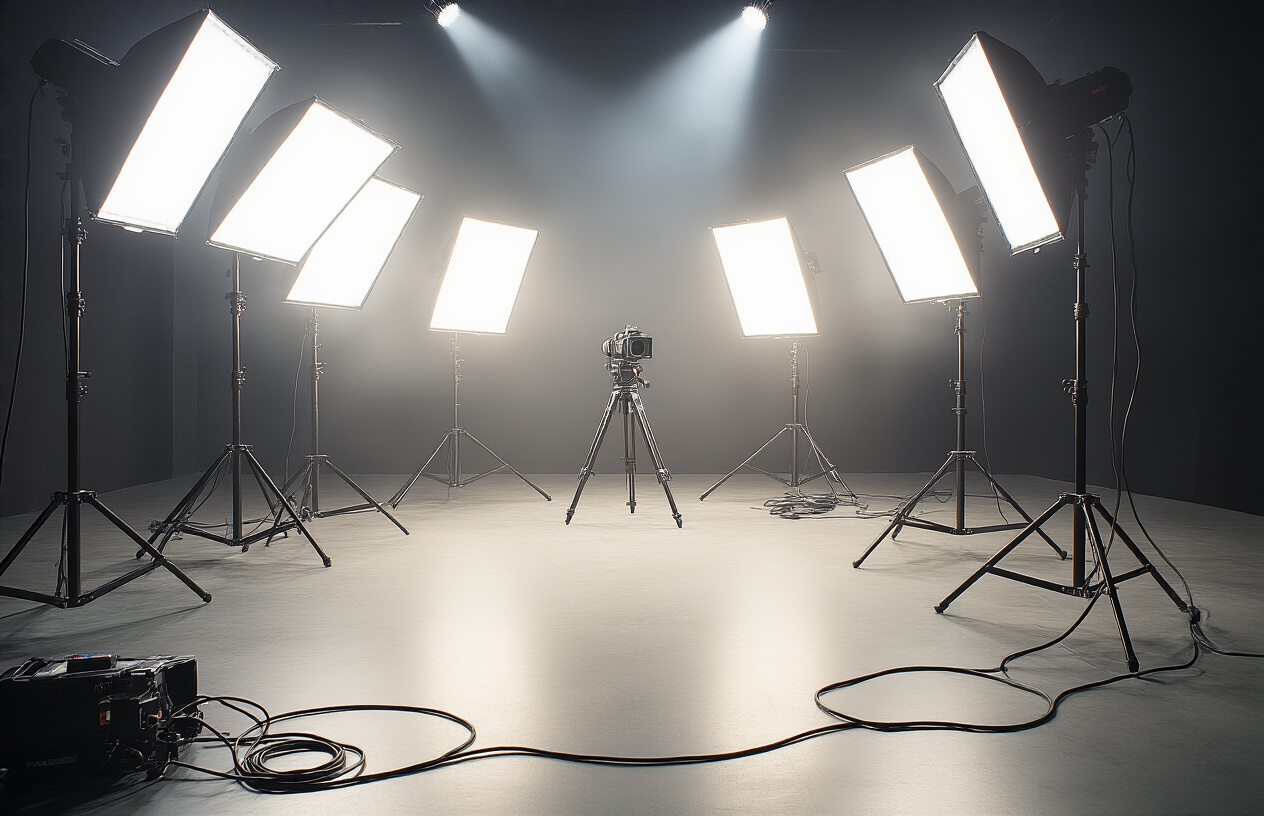
Three-point lighting setup fundamentals
The three-point lighting setup forms the backbone of professional video lighting setup. This tried-and-true technique uses three distinct light sources: key light, fill light, and back light. Your key light serves as the main source, positioned at a 45-degree angle from your subject to create depth and dimension. The key light for video production should be your strongest light source, typically placed slightly above eye level to avoid unflattering shadows under the chin.
Position your key light about 3-6 feet from your subject, depending on the desired intensity and your room size. This primary light creates the mood and establishes the overall exposure for your shot. The angle matters - too straight-on creates flat lighting, while too extreme an angle produces dramatic shadows that might not suit corporate or interview content.
LED panel lights for consistent color temperature
LED lights for videography have revolutionized video lighting equipment with their consistent color temperature output. Unlike traditional tungsten bulbs that fluctuate in warmth throughout their lifespan, LED panels maintain steady color temperature from first use to last. Most professional LED panels offer bi-color functionality, allowing you to adjust between 3200K tungsten and 5600K daylight temperatures.
Look for panels with high CRI (Color Rendering Index) ratings above 95 for accurate color reproduction. Quality LED panels display actual color temperature readings on their control panels, eliminating guesswork. Popular options include the Aputure AL-M9 for compact shoots and larger panels like the Godox LED1000Y for studio work.
The power efficiency of LED technology means longer battery life for location shoots and reduced heat output compared to traditional hot lights. This keeps your talent comfortable during extended recording sessions.
Softbox attachments for flattering skin tones
Softbox attachments transform harsh direct light into beautifully diffused illumination that flatters skin tones. The larger the softbox relative to your subject, the softer and more even the light becomes. A 24x24 inch softbox works well for single-person interviews, while larger 36x48 inch options suit group shots or full-body framing.
Softboxes create smooth light falloff across faces, minimizing blemishes and reducing harsh shadows in eye sockets and under noses. The rectangular shape produces natural-looking catchlights in eyes that mirror window lighting. Many affordable video lighting solutions include softbox attachments, making this professional technique accessible to budget-conscious creators.
Quick-setup softboxes with umbrella-style ribs save time during location shoots. Look for models with removable front diffusion panels - you can remove them for slightly harder light or double them up for extra soft illumination.
Adjustable brightness controls for versatile shooting
Modern video lighting equipment features precise brightness controls that adapt to various shooting scenarios. Dimming capabilities let you fine-tune exposure without moving lights or changing camera settings. This flexibility proves invaluable when shooting in mixed lighting conditions or adjusting for different talent skin tones.
Budget video lighting kit options now include stepless dimming from 0-100%, previously found only in expensive professional gear. Digital displays show exact brightness percentages, making it easy to replicate lighting setups across multiple shooting days.
Remote control options add convenience during solo shoots where you need to adjust lighting while positioned behind the camera. Some LED panels connect via smartphone apps, offering wireless control of brightness, color temperature, and special effects from anywhere in the room.
Quality dimming systems maintain consistent color temperature across the entire brightness range, preventing the color shifts that plague cheaper alternatives.
Fill Light Options to Eliminate Harsh Shadows
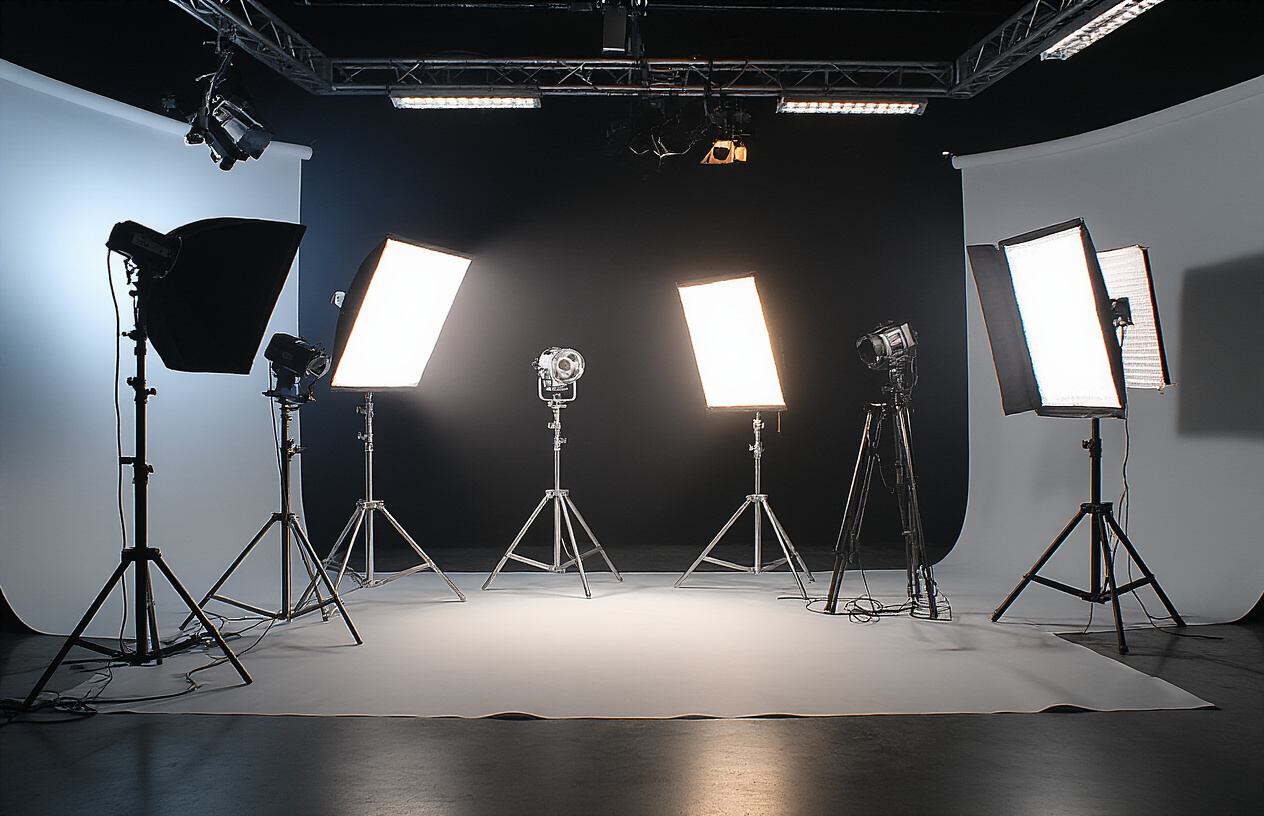
Reflector Panels for Natural Light Bounce
Reflector panels serve as the most cost-effective fill light solution in any professional video lighting setup. These versatile tools redirect existing light to brighten shadowed areas without adding extra power consumption or heat to your set. Five-in-one reflectors offer incredible flexibility with white, silver, gold, black, and translucent surfaces in a single package.
White surfaces provide gentle, neutral fill that works perfectly for most skin tones and maintains color accuracy. Silver reflectors deliver more intensity with a slightly cooler tone, making them ideal for outdoor shoots or when you need stronger fill light. Gold reflectors add warmth to the image, creating a sunset-like glow that's particularly flattering for portraits and beauty work.
Position reflectors at a 45-degree angle opposite your key light to achieve optimal shadow reduction. The distance between the reflector and subject determines the intensity of the fill - closer placement creates stronger fill, while moving it back provides subtler shadow control. For maximum effectiveness, have an assistant hold the reflector or invest in a sturdy reflector arm that clamps to your light stand.
Ring Lights for Even Facial Illumination
Ring lights have become synonymous with professional video lighting equipment due to their unique ability to create shadowless illumination. The circular design places light sources evenly around the camera lens, eliminating the harsh shadows that typically form under the nose, chin, and eye sockets when using traditional key lights.
Modern LED ring lights offer variable color temperature control, allowing you to match ambient lighting conditions or create specific moods. Look for models with dimming capabilities from 1-100% brightness, giving you precise control over the intensity. Professional ring lights feature CRI ratings above 95, ensuring accurate color reproduction that won't require extensive correction in post-production.
The signature circular catchlight that ring lights create in the subject's eyes adds a professional polish to talking head videos, interviews, and beauty content. Position the ring light directly behind your camera at eye level with the subject for the most flattering results. Larger ring lights (18-24 inches) provide softer, more even coverage, while smaller units (10-14 inches) work well for close-up work and tight spaces.
Diffusion Materials for Softer Light Quality
Diffusion materials transform harsh, direct lighting into soft, flattering illumination that's essential for professional video production. Softboxes represent the gold standard for light diffusion, featuring white fabric that spreads light evenly while containing spill. The larger the softbox, the softer the light quality - a 36-inch softbox creates dramatically different results compared to a 12-inch model.
Diffusion fabrics like 216 White Diffusion or Tough Spun provide varying degrees of softening when placed in front of LED panels or tungsten lights. These materials reduce light output by 0.5 to 2 stops while eliminating hotspots and creating gradual falloff. For budget video lighting solutions, shower curtain liners or white bedsheets can serve as makeshift diffusion, though they lack the fire-resistant properties and precise light transmission of professional materials.
Bounce cards and foam core boards offer another diffusion approach by reflecting light off white surfaces rather than passing it through materials. This technique maintains more light output while still providing soft, even coverage. Position bounce surfaces at varying distances to control the spread and intensity of your fill light techniques.
Background and Accent Lighting Techniques
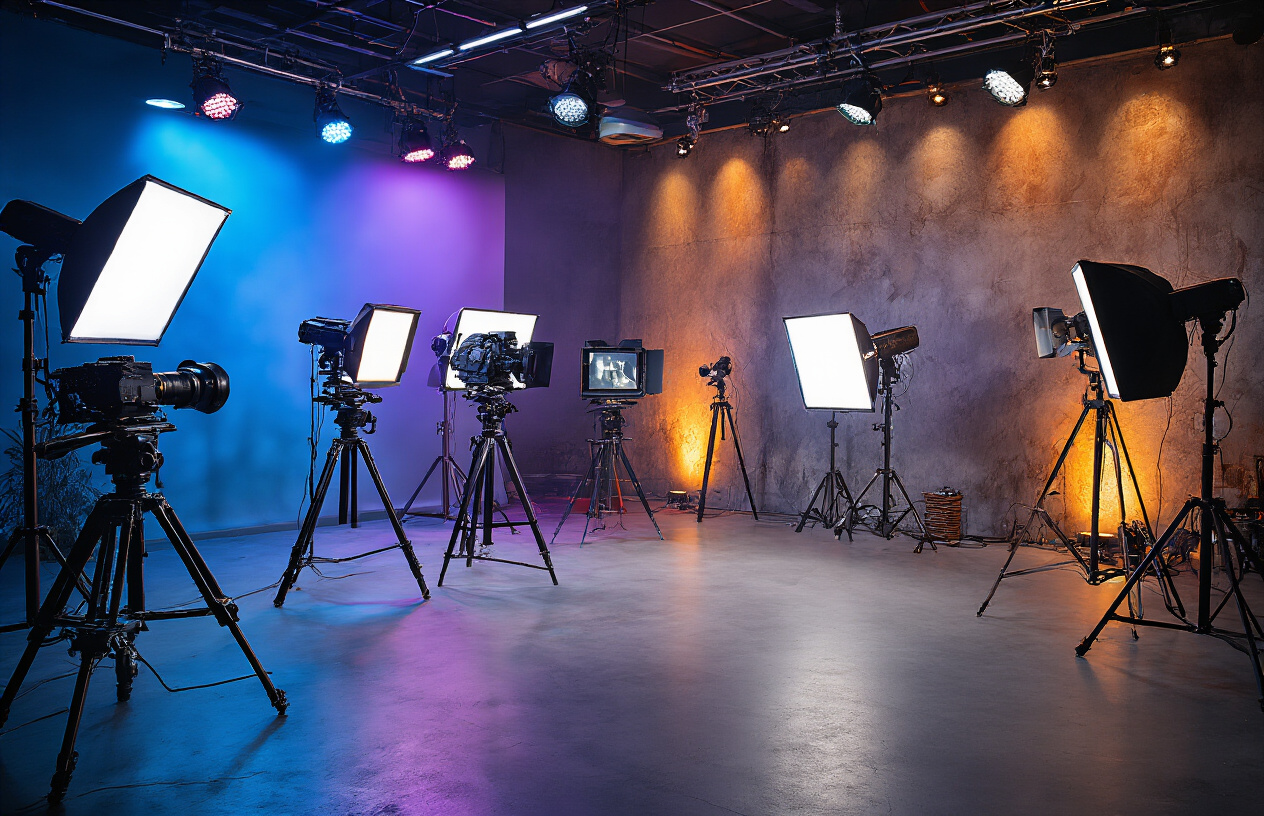
Hair lights to separate subjects from backgrounds
Hair lights work like magic to make your subjects pop off the screen. Place these lights behind and slightly above your subject, creating a subtle rim of light that separates them from the background. This professional video lighting setup technique prevents your talent from blending into the scene, especially when shooting against darker backgrounds.
Position your hair light at about a 45-degree angle from directly behind your subject. Use a small LED panel or a focused spotlight for this purpose. Keep the intensity low – you want a gentle outline, not a harsh halo effect. Adjust the angle to avoid light spill onto your subject's face or the camera lens.
Color-changing RGB lights for creative effects
RGB lights transform ordinary scenes into visually striking content. These video lighting equipment pieces let you dial in any color temperature or hue to match your creative vision. Use them to create mood, represent different times of day, or add brand colors to corporate videos.
Popular RGB options include tube lights, panel lights, and compact fixtures that can double as accent pieces. Many models offer smartphone app control, making color adjustments quick during shoots. Pair warm amber tones with cool blues for dynamic contrast, or use subtle color shifts to enhance storytelling.
Practical lights to enhance scene atmosphere
Practical lights are visible light sources within your frame – table lamps, neon signs, candles, or computer screens. These elements add authenticity and depth to your scenes while contributing to your overall lighting design. Smart filmmakers use practicals as part of their three point lighting setup strategy.
Choose practicals that complement your story and color palette. Replace standard bulbs with daylight-balanced or tungsten bulbs to match your primary lighting. Control their intensity with dimmers or by adjusting your camera settings. Practical lights work especially well for interviews, narrative content, and product demonstrations.
Gobos and barn doors for precise light control
Gobos (patterns) and barn doors give you surgical precision over light placement. Barn doors attach to your lights and feature adjustable flaps that shape the light beam, preventing unwanted spill and creating clean edges. Gobos project patterns or textures onto backgrounds and surfaces.
Use barn doors to flag light off walls, prevent lens flares, or create dramatic shadows. Cookie gobos (patterns with holes) project interesting textures, while solid gobos create sharp shadow lines. These budget video lighting kit accessories cost little but dramatically improve your production value by giving you professional-level control over every beam of light.
Portable Lighting Gear for Location Shoots
Battery-powered LED panels for mobility
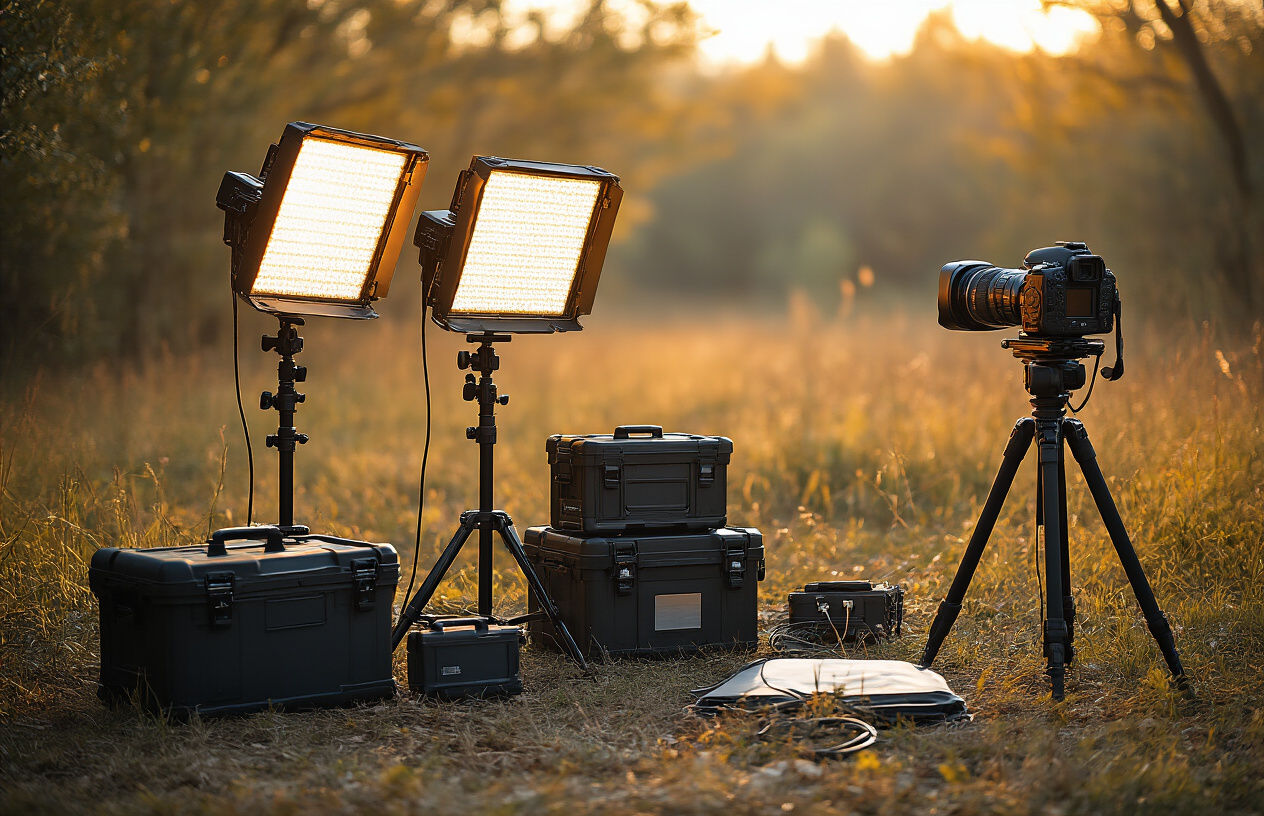
Battery-powered LED panels have revolutionized location shooting by eliminating the constant hunt for power outlets. These portable video lights pack serious punch while weighing next to nothing, making them perfect for run-and-gun productions or remote locations where traditional power sources aren't available.
Modern LED panels offer impressive battery life - many quality units run for 2-4 hours at full brightness and can stretch to 8+ hours when dimmed. Look for panels with V-mount or Gold mount battery compatibility, as these professional battery systems provide longer runtime and faster swapping capabilities during shoots.
Color temperature control sets top-tier panels apart from basic models. Units with bi-color LEDs let you dial in anything from warm tungsten (3200K) to cool daylight (5600K) without gels or filters. This flexibility proves invaluable when matching existing lighting conditions or creating specific moods on location.
Power output matters too. A 100-watt LED panel delivers enough brightness for close-up interviews, while 300+ watt units can serve as your primary key light for video production even in challenging outdoor conditions. Many panels also feature wireless control via smartphone apps, letting you adjust brightness and color temperature from behind the camera without interrupting talent.
The best video lighting equipment includes panels with TLCI ratings above 95, ensuring accurate color reproduction that won't require extensive color correction in post-production.
Lightweight light stands and mounting solutions
Traditional heavy-duty stands become your worst enemy during location shoots. Every pound matters when you're hauling gear up stairs, across fields, or into tight spaces. Carbon fiber stands offer the perfect balance of stability and portability - they're roughly 40% lighter than aluminum equivalents while maintaining impressive strength.
Compact stand design makes a huge difference. Look for stands that collapse to under 30 inches and weigh less than 4 pounds per unit. Some innovative designs feature reverse-folding legs that create an even smaller footprint when packed. Quick-release mechanisms save precious time during setup and breakdown - especially valuable during golden hour shoots where every minute counts.
Mounting solutions extend far beyond traditional stands. C-clamps with ball heads attach lights to railings, tables, or car doors. Suction cup mounts work great on windows or smooth surfaces. Magnetic mounts grab onto metal surfaces instantly. These alternative mounting options often prove more stable than stands in windy conditions or cramped spaces.
Multi-purpose accessories maximize your kit's versatility. Extension arms let you boom lights over talent or position them in tight corners. Swivel adapters provide 360-degree rotation for precise light placement. Spigot adapters convert standard camera tripods into light stands, reducing the total gear you need to carry.
| Mount Type | Weight Capacity | Best Use Case | Setup Time |
|---|---|---|---|
| C-Clamp | 5-15 lbs | Tables, railings | 30 seconds |
| Suction Cup | 3-8 lbs | Windows, cars | 15 seconds |
| Magnetic | 2-10 lbs | Metal surfaces | 5 seconds |
| Compact Stand | 10-25 lbs | General use | 2 minutes |
Compact umbrella and softbox modifiers
Raw LED panels create harsh, unflattering light that screams "amateur production." Softbox and umbrella modifiers transform these point sources into beautiful, diffused illumination that flatters subjects naturally. The challenge lies in finding modifiers that don't triple your pack weight or setup time.
Collapsible softboxes designed specifically for LED panels solve this problem elegantly. Quality units fold down to pizza-box size while providing professional-grade light diffusion. Speed rings or direct-mount systems attach to panels in seconds without tools. Fabric quality matters - look for modifiers using ripstop nylon or similar materials that won't tear during repeated folding and unfolding.
Umbrella modifiers offer the fastest setup of any diffusion method. Shoot-through umbrellas create soft, even lighting perfect for interviews, while reflective umbrellas provide more directional control with slightly higher output. Compact umbrella designs collapse to under 18 inches and weigh less than one pound, making them ideal for budget video lighting kit scenarios where every item must justify its space.
Honeycomb grids and barn doors control light spill without adding significant bulk. Magnetic mounting systems make swapping modifiers quick and silent - crucial during live recording situations. Some manufacturers offer modular systems where the same LED panel works with umbrellas, softboxes, and grids using identical mounting hardware.
Size directly impacts portability and light quality. A 24-inch softbox provides excellent diffusion for single subjects while packing reasonably small. Larger 36-inch modifiers create more flattering light but quickly become unwieldy during handheld shooting or tight location work.
Budget-Friendly Lighting Equipment That Delivers Results
DIY lighting solutions using household items
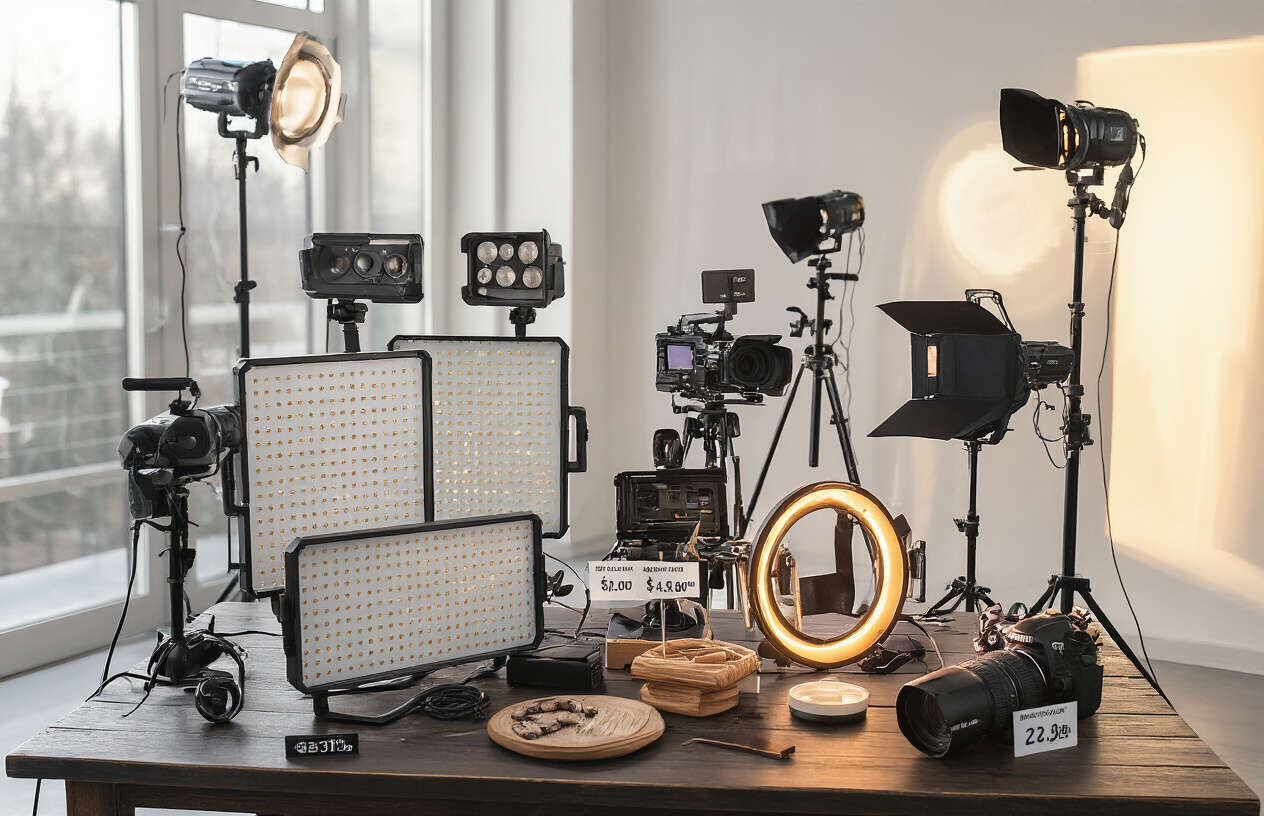
Creating professional-looking video lighting doesn't always require expensive equipment. Your home is packed with items that can transform into effective lighting tools. Desk lamps with adjustable necks make excellent key lights when paired with daylight bulbs. Position them at 45-degree angles to your subject for flattering illumination.
White bedsheets or shower curtains work as fantastic diffusers to soften harsh light sources. Simply hang them between your light and subject to eliminate unflattering shadows. Aluminum foil can be crumpled and smoothed to create textured reflectors, or kept smooth for clean bounce lighting.
Reading lamps with flexible arms become instant fill lights, while string lights can add warm background ambiance. Even your smartphone's flashlight, when bounced off a white wall or ceiling, creates surprisingly good supplemental lighting for close-up shots.
Paper lanterns from party supplies make excellent soft light modifiers when you place bulbs inside them. The key is experimenting with placement and using multiple household items together to build your affordable video lighting setup.
Affordable LED strip lights for background effects
LED strip lights have revolutionized budget video lighting kit options for creators seeking professional-looking backgrounds without breaking the bank. These versatile strips typically cost under $30 and offer RGB color changing capabilities that would have cost thousands just a few years ago.
Basic RGB strips can be mounted behind subjects to create colored rim lighting or accent lighting that separates them from the background. Smart LED strips with app control allow you to adjust colors and intensity in real-time during filming, giving you incredible flexibility for different moods and scenes.
For gradient effects, place strips at different heights behind translucent materials like white fabric or frosted acrylic panels. This creates smooth color washes that look incredibly professional on camera. USB-powered strips are particularly useful for location shoots since they can run off portable power banks.
| Strip Type | Price Range | Features | Best Use |
|---|---|---|---|
| Basic RGB | $15-25 | Color changing, remote control | Background accents |
| Smart WiFi | $25-40 | App control, scheduling, music sync | Dynamic effects |
| Professional | $40-80 | Higher CRI, consistent color | Key/fill lighting |
Many strips come with mounting clips and adhesive backing, making installation quick and temporary for rental locations.
Natural window light optimization techniques
Windows provide the most beautiful, free lighting source available to video creators. North-facing windows offer consistent, soft light throughout the day without harsh directional shadows. This makes them perfect for interviews and talking head videos where you need even illumination on your subject's face.
The secret to maximizing window light lies in controlling and modifying it. Sheer curtains act as natural diffusers, softening direct sunlight that might otherwise create unflattering shadows. White foam boards or even large pieces of cardboard covered in aluminum foil can bounce window light back onto your subject to fill in shadows.
Time of day dramatically affects window light quality. The golden hour just after sunrise or before sunset provides warm, flattering light that makes everyone look great on camera. Overcast days actually offer some of the best window lighting conditions because clouds act as massive natural softboxes.
Position your subject at a 45-degree angle to the window rather than directly facing it. This creates dimensional lighting that adds depth and interest to your shots. For fill light, place a white poster board opposite the window to bounce light back onto the shadow side of your subject's face.
Cost-effective lighting starter kits for beginners
Entry-level portable video lights kits designed specifically for beginners typically range from $100-300 and include everything needed for basic three point lighting setup. These kits usually feature LED panels or softbox lights with adjustable color temperature, allowing you to match different lighting conditions.
Popular starter kits include two key lights, light stands, and basic diffusion materials. Look for kits with LED lights that offer both daylight (5600K) and tungsten (3200K) color temperatures. This flexibility helps you match existing lighting conditions whether shooting indoors or outdoors.
Many affordable video lighting solutions now include battery-powered options, making them truly portable for location work. Panels that accept both AC power and rechargeable batteries give you maximum flexibility for different shooting scenarios.
When choosing your first budget video lighting kit, prioritize lights with high CRI (Color Rendering Index) ratings above 90. This ensures colors look natural and skin tones appear flattering on camera. Adjustable brightness controls are essential for fine-tuning your lighting setup as you learn proper video lighting equipment techniques.
Consider kits that include basic light modifiers like softboxes or umbrellas. These accessories help create professional-looking results immediately, even as you're learning fundamental lighting principles for video production.
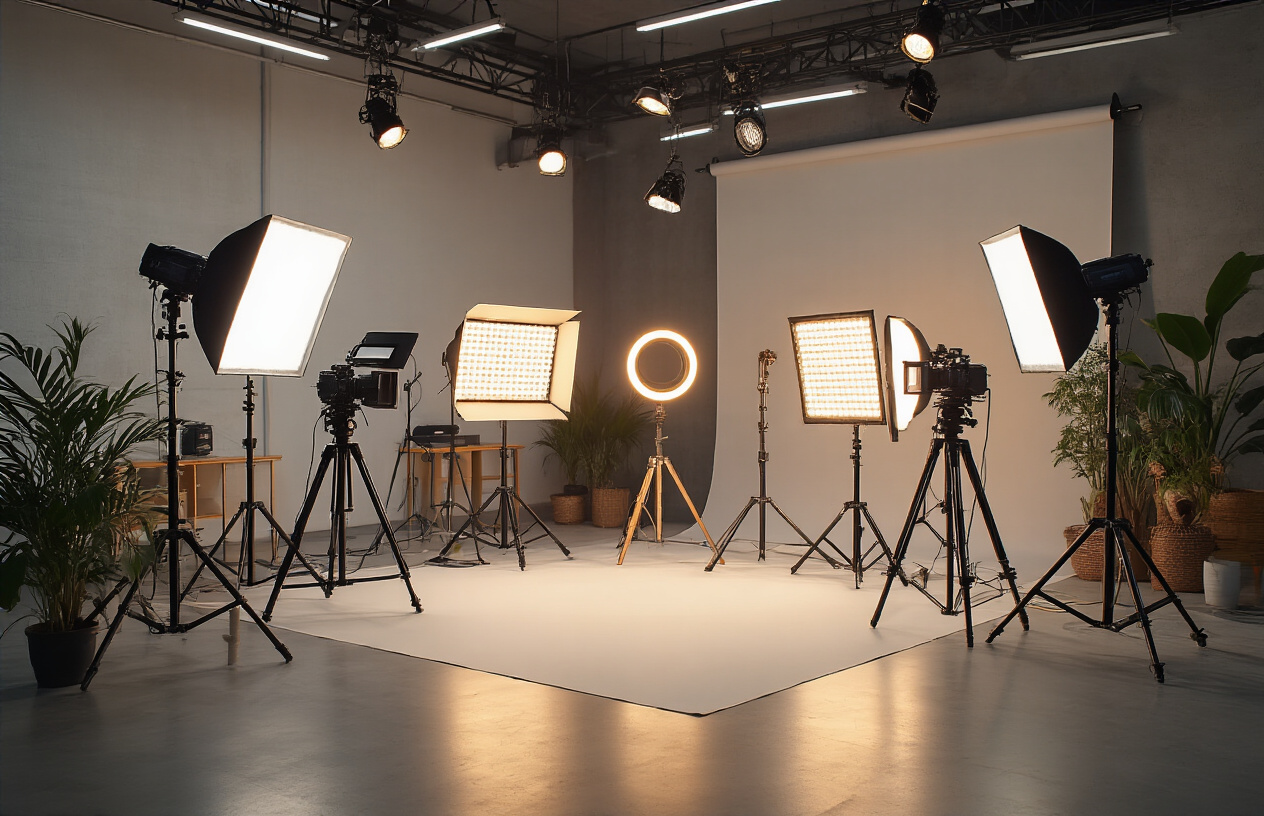
Getting the right lighting setup can make or break your video project, and the good news is you don't need to spend a fortune to achieve professional results. From nailing your key light to softening those harsh shadows with proper fill lighting, each piece of your lighting puzzle plays a crucial role in creating that polished, professional look viewers expect.
Ready to take your video quality to the next level? Start with one solid key light and build your kit from there. Your audience will notice the difference immediately, and you'll wonder why you waited so long to invest in proper lighting. Remember, great lighting isn't just about expensive gear – it's about understanding how light works and making smart choices that fit your budget and shooting style.



0 Comments