Power Banks for Long Road Trips
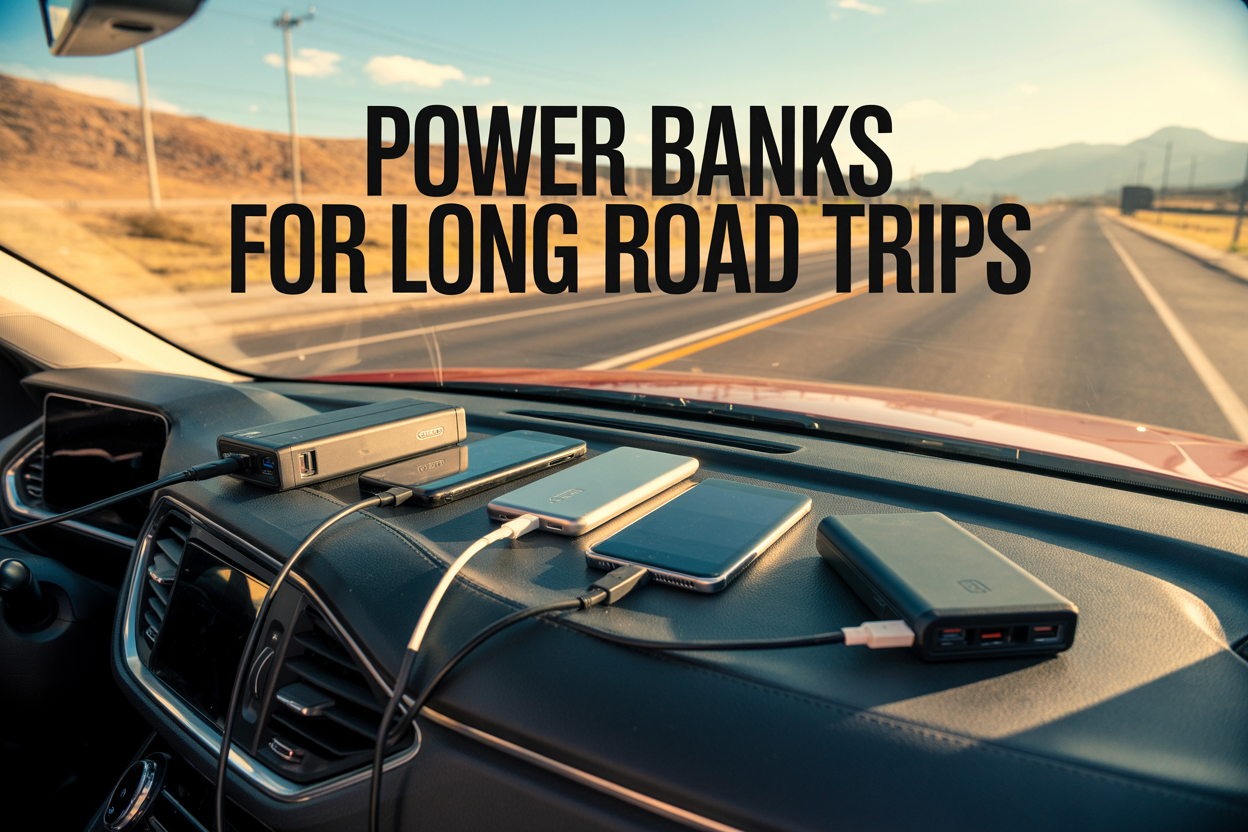
Long road trips can drain your devices faster than you think. Power banks for road trips become essential when you're driving for hours, camping off-grid, or exploring areas with limited charging options.
This guide is for road trip enthusiasts, RV travelers, and anyone planning extended car journeys who needs reliable portable power. Road trip charging solutions can make the difference between staying connected and being stranded without communication or navigation.
We'll cover the essential features that make power banks road trip ready, including durability, fast-charging capabilities, and multiple device support. You'll also learn how to choose the right capacity for your specific trip duration and discover the best power bank types for vehicle-based travel, from compact options to mobile power stations for trips that demand serious juice.
Essential Features That Make Power Banks Road Trip Ready
High-Capacity Battery Storage for Extended Use
When you're planning a long road trip, your power bank needs to be more than just a quick phone boost. The best power banks for road trips pack serious capacity, typically ranging from 20,000mAh to 50,000mAh or higher. These portable chargers for long drives can keep multiple devices running for days without needing a recharge themselves.
A 20,000mAh power bank can charge most smartphones 4-6 times, while a 30,000mAh unit pushes that to 7-9 full charges. For families traveling together, consider 40,000mAh+ models that can handle tablets, cameras, GPS units, and gaming devices simultaneously. Some road warriors even invest in 100,000mAh+ mobile power stations for trips that take them far from electrical outlets.
The key is matching capacity to your trip length and device count. A weekend getaway might only need 15,000-20,000mAh, but cross-country adventures demand serious juice. Remember that actual usable capacity is typically 60-70% of the stated rating due to conversion losses.
Multiple Device Charging Ports for Family Needs
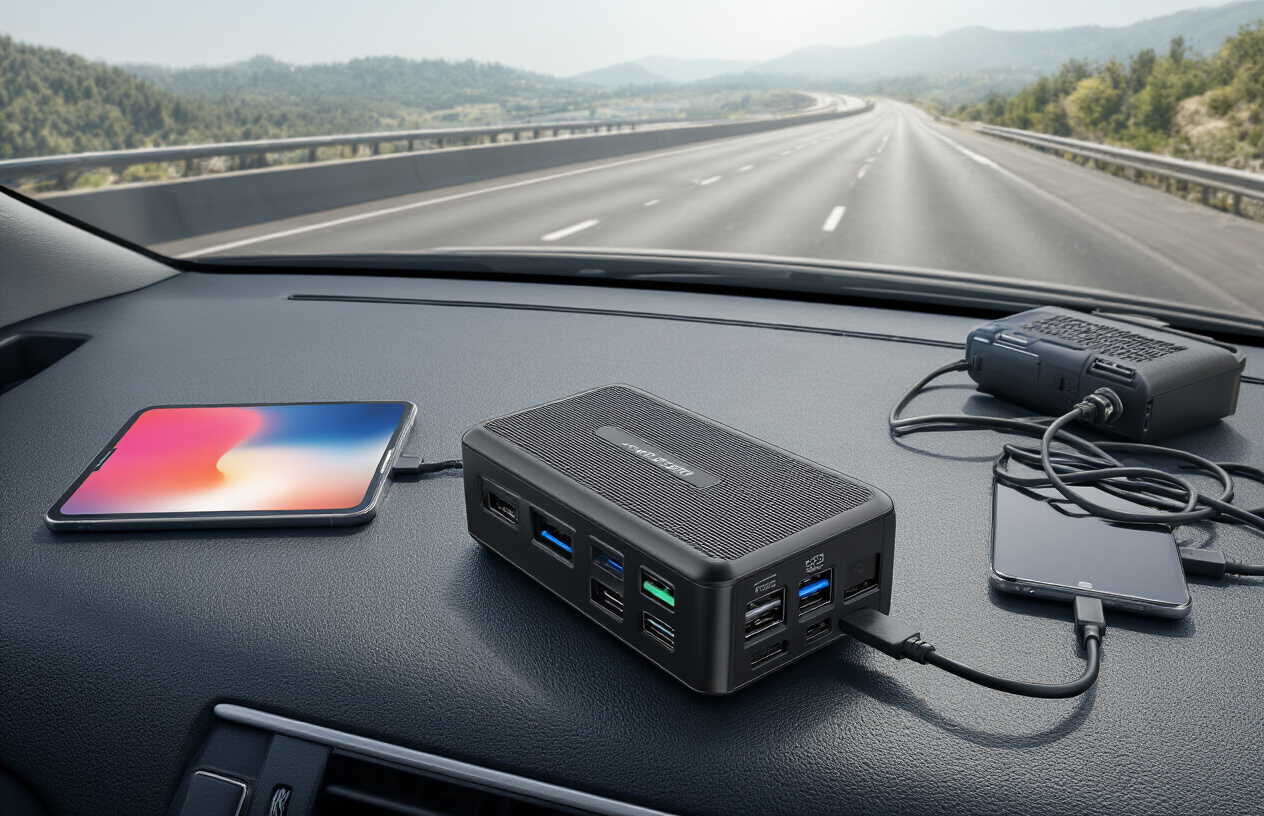
Modern families hit the road with an arsenal of electronic devices. The best power bank for car travel features multiple USB ports - ideally 3-4 ports minimum - to keep everyone's gear charged simultaneously. Look for a mix of USB-A and USB-C ports to accommodate different device types.
Smart port allocation makes a huge difference during travel. High-end travel portable battery packs include dedicated fast-charging ports alongside standard charging options. This means dad's tablet can fast-charge while the kids' devices charge at normal speeds without interference.
Port configuration matters too. Some power banks offer:
-
2x USB-A ports (standard charging)
-
2x USB-C ports (fast charging and input)
-
1x wireless charging pad
-
1x DC output for larger devices
Multi-port designs prevent the classic road trip arguments about charging priorities. Everyone can plug in at once, keeping the peace and the devices powered.
Fast Charging Technology to Minimize Downtime
Time is precious on road trips, and waiting hours for devices to charge kills momentum. Vehicle power banks with fast charging technology can top off phones in 30-60 minutes instead of 2-3 hours. Look for Power Delivery (PD) and Quick Charge (QC) compatibility.
USB-C Power Delivery is the gold standard, delivering up to 100W of power to compatible devices. This charges laptops, tablets, and phones at maximum speed. Quick Charge 3.0/4.0 technology works with many Android devices for rapid charging over USB-A ports.
Some long distance travel power banks include:
-
65W USB-C PD for laptops
-
18W Quick Charge for Android phones
-
12W standard charging for older devices
-
Pass-through charging (charge the power bank while it charges your devices)
Fast charging means quick stops at rest areas can top off your entire device arsenal in under an hour.
Durable Construction for Travel Conditions
Road trips are tough on gear. Your power bank needs to survive temperature swings, vibrations, dust, and the occasional drop. Car charging accessories face unique challenges that home-use models can't handle.
Quality outdoor adventure power banks feature:
-
Reinforced corners and shock-absorbing bumpers
-
Operating temperature ranges from -10°F to 140°F
-
Heavy-duty cable connections that won't wiggle loose
The casing material matters significantly. Aluminum housings dissipate heat better than plastic but add weight. Rubberized grips prevent sliding around your vehicle during travel. Some models include carabiners or mounting points for secure attachment.
Internal protection circuits prevent overheating, overcharging, and short circuits - critical safety features when devices charge unattended in hot vehicles. Look for certifications like UL, FCC, and CE that verify safety standards compliance.
Built-in LED flashlights and emergency features make these power banks true road trip companions, ready for roadside emergencies or impromptu camping stops.
Choosing the Right Capacity for Your Trip Duration
Understanding mAh Requirements for Different Devices
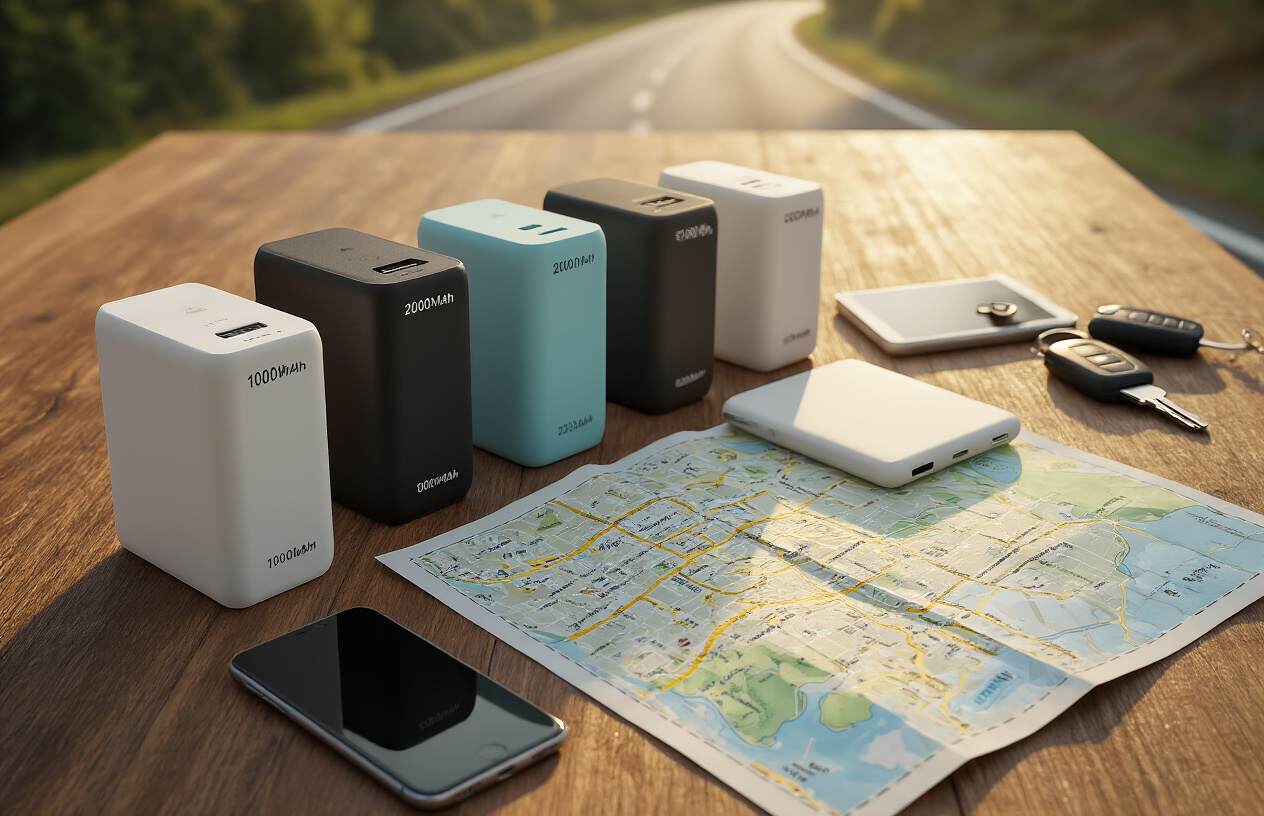
Your smartphone typically needs 3,000-4,000 mAh for a complete charge, while tablets demand 6,000-10,000 mAh depending on screen size and battery capacity. Laptops require the most power, often needing 20,000-50,000 mAh for a full charge cycle. GPS devices and dash cams usually consume 1,000-2,000 mAh per full charge.
When selecting power banks for road trips, consider that most devices lose charge differently during travel. Your phone works harder in areas with poor cell coverage, GPS navigation drains battery faster than normal usage, and multiple charging cycles throughout the day compound power needs.
Here's a practical breakdown of daily power consumption:
| Device Type | Average Daily Usage | mAh Required |
|---|---|---|
| Smartphone | Heavy navigation/calls | 6,000-8,000 mAh |
| Tablet | Entertainment/mapping | 4,000-6,000 mAh |
| Action Camera | Recording/transfers | 2,000-3,000 mAh |
| Wireless Earbuds | 8 hours use | 500-800 mAh |
Calculating Power Needs Based on Trip Length
Weekend getaways (2-3 days) typically require 20,000-30,000 mAh capacity to keep essential devices charged. Week-long road trips need 40,000-60,000 mAh, especially when camping or staying in remote locations without reliable charging access.
For cross-country adventures lasting 10+ days, consider 60,000+ mAh capacity or multiple portable chargers for long drives. Factor in power loss during conversion - most power banks deliver 65-75% of their rated capacity due to voltage conversion and heat loss.
Calculate your trip needs using this formula:
-
Daily device consumption × trip days × 1.3 (efficiency loss) = minimum required capacity
Remember that travel portable battery packs discharge slowly when not in use, losing roughly 5-10% capacity monthly. Pack extra capacity for unexpected delays or detours.
Balancing Size and Weight with Battery Capacity
High-capacity power banks often weigh 2-4 pounds and measure similar to thick hardcover books. While 50,000+ mAh units provide maximum power, they consume significant luggage space and add weight to your travel load.
Consider these practical trade-offs:
-
Compact units (10,000-20,000 mAh): Easy to carry, fit in cup holders, ideal for daily top-ups
-
Mid-range options (25,000-40,000 mAh): Balance power and portability, good for most road trips
-
High-capacity stations (50,000+ mAh): Best for extended camping or multiple device charging
Smart travelers often choose two smaller units over one large power bank. This strategy provides backup redundancy and distributes weight better across luggage. Multiple car charging accessories also allow simultaneous device charging, reducing overall charging time during stops.
Best Power Bank Types for Vehicle-Based Travel
Solar-Powered Banks for Unlimited Charging
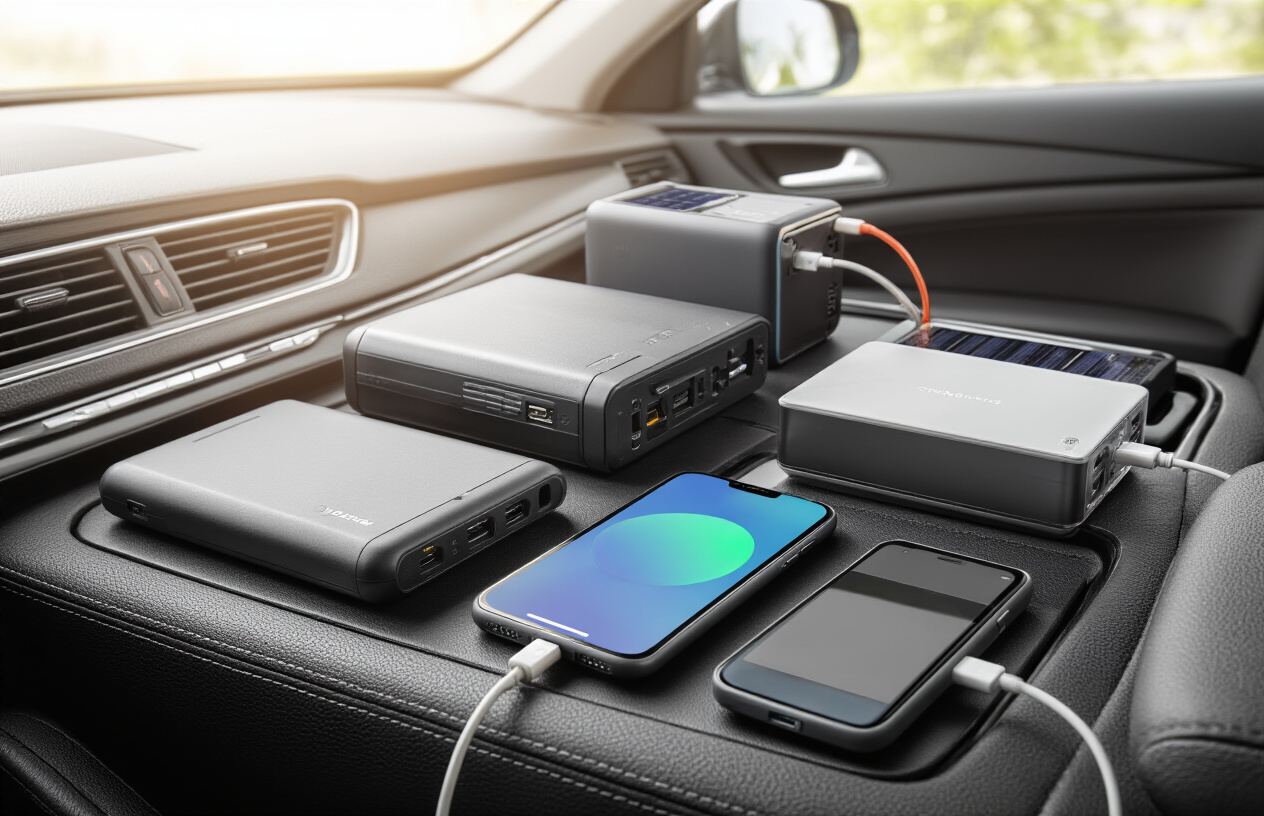
Solar power banks transform your vehicle into a mobile charging station that never runs out of juice. These portable chargers for long drives harness sunlight to keep your devices powered throughout your journey. Modern solar power banks feature high-efficiency panels that work even in overcast conditions, making them perfect for cross-country adventures.
The best solar power banks for car travel combine multiple charging methods. You can charge them via your vehicle's outlet while driving and switch to solar when parked. Look for models with 20,000mAh or higher capacity paired with foldable solar panels for maximum efficiency.
Key advantages of solar power banks:
-
Renewable energy source
-
Work in remote locations without power access
-
Reduce dependency on vehicle charging
-
Environmentally friendly option
Popular brands like Anker and RAVPower offer rugged solar models that withstand temperature fluctuations and road vibrations.
High-Capacity Portable Chargers for Maximum Power
When planning extended road trips, high-capacity power banks become your lifeline for keeping multiple devices charged simultaneously. These mobile power stations for trips typically range from 20,000mAh to 50,000mAh, providing enough juice to charge smartphones, tablets, and even small laptops multiple times.
Vehicle power banks in this category often feature multiple USB ports, allowing you to charge several devices at once. The Anker PowerCore series and RAVPower models excel in this space, offering fast-charging capabilities that match your devices' maximum input speeds.
Capacity comparison for different trip lengths:
| Trip Duration | Recommended Capacity | Device Charges |
|---|---|---|
| 1-2 days | 10,000-15,000mAh | 3-5 phone charges |
| 3-5 days | 20,000-25,000mAh | 6-8 phone charges |
| 1+ weeks | 30,000-50,000mAh | 10+ phone charges |
These road trip charging solutions often include digital displays showing remaining power, charging status, and output levels. Some models even support pass-through charging, letting you charge the power bank while it charges your devices.
Car Adapter Compatible Models for Convenient Recharging
The smartest travel portable battery packs work seamlessly with your vehicle's charging system. These models feature DC input ports that connect directly to your car's 12V outlet, charging at speeds up to three times faster than standard USB charging.
Look for power banks with dedicated car charging cables or those compatible with standard car adapters. The best power bank for car travel should charge completely during a 4-6 hour drive, ensuring you start each day with full capacity.
Essential features for car-compatible power banks:
-
DC input (12V/24V compatibility)
-
LED indicators for charging status
-
Auto-shutoff protection
-
Temperature regulation
-
Compact design for dashboard storage
Brands like Goal Zero and Jackery specialize in car charging accessories that integrate perfectly with vehicle electrical systems. These models often include multiple charging options, from standard USB to quick-charge protocols.
Wireless Charging Banks for Modern Device Compatibility
Wireless charging power banks eliminate cable clutter in your vehicle while providing convenient charging for compatible devices. These long distance travel power banks feature Qi wireless charging pads on top, allowing you to simply place your phone down for automatic charging.
Modern wireless power banks support charging speeds up to 15W, matching the capabilities of premium smartphones. They maintain traditional wired charging ports alongside wireless functionality, giving you flexibility for different device types.
Benefits of wireless charging during road trips:
-
Reduced cable management
-
Quick device placement and removal
-
Compatible with phone cases up to 5mm thick
-
Simultaneous wired and wireless charging
The best outdoor adventure power banks with wireless capability include safety features like foreign object detection and temperature monitoring. Models from Samsung, Belkin, and Mophie offer reliable wireless charging combined with substantial battery capacity, making them perfect companions for extended vehicle-based adventures.
These wireless-enabled power banks typically feature non-slip surfaces and magnetic alignment guides, ensuring your devices stay securely positioned even on bumpy roads.
Safety Considerations for Long-Distance Travel
Temperature Management in Hot Vehicle Environments
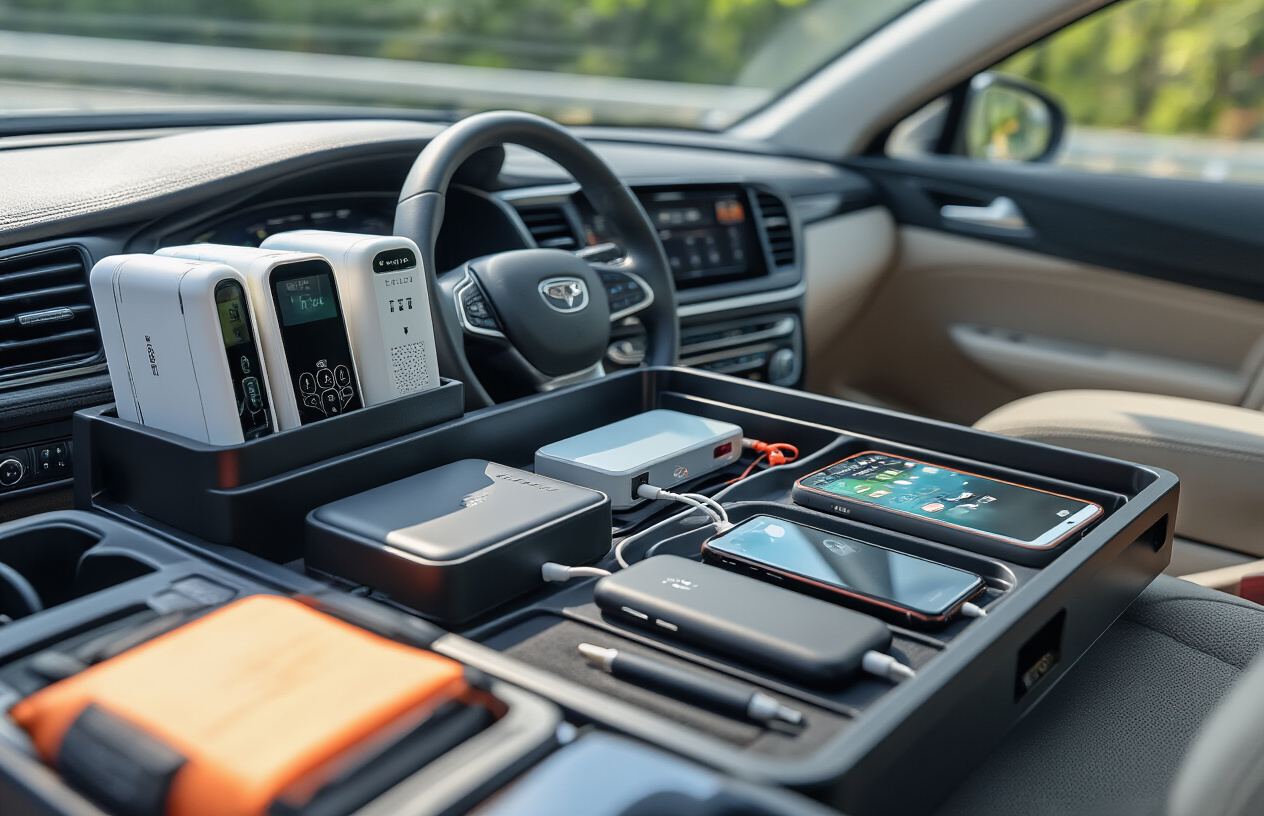
Your power bank can become a ticking time bomb when exposed to extreme heat inside vehicles during summer road trips. Most portable chargers for long drives have operating temperatures between 32°F and 104°F (0°C to 40°C), but parked cars can reach internal temperatures of 140°F or higher within hours.
Heat causes lithium-ion batteries to degrade rapidly and can trigger thermal runaway - a dangerous condition where the battery overheats uncontrollably. Keep your road trip charging solutions out of direct sunlight and avoid storing them in glove compartments, dashboards, or rear window areas where temperatures spike highest.
Smart storage solutions include:
-
Under-seat compartments with air circulation
-
Center console areas away from heating vents
-
Trunk spaces with temperature-regulating organizers
-
Insulated travel cases with reflective materials
Many best power bank for car travel models include built-in temperature sensors that automatically shut down charging when overheating occurs. Look for units with thermal protection features and LED indicators that warn of temperature issues.
Proper Storage and Handling During Transit
Securing your vehicle power banks prevents damage from sudden stops, sharp turns, and road vibrations that plague long-distance journeys. Loose power banks become projectiles during accidents, potentially causing injury to passengers.
Create dedicated charging stations using:
-
Velcro strips attached to console surfaces
-
Mesh organizers with elastic retention straps
-
Padded pouches with carabiner clips
-
Custom-fitted charging docks for specific models
Protect charging ports from dust and debris by using rubber caps or storing units in sealed pouches when not actively charging devices. Road dust and moisture can corrode connections and reduce charging efficiency over time.
Handle power banks with clean, dry hands to prevent oil transfer and moisture buildup. Avoid dropping or subjecting units to impact shock, especially when batteries are fully charged and more susceptible to damage.
Airline Regulations for Cross-Country Flights
Flying with travel portable battery packs requires understanding TSA and international aviation regulations that vary by capacity and lithium content. The Federal Aviation Administration allows power banks in carry-on luggage only - never in checked baggage due to fire risk.
Current TSA Guidelines:
-
Power banks under 100Wh: Generally permitted without approval
-
Power banks 100-160Wh: Require airline approval (typically 2 maximum)
-
Power banks over 160Wh: Prohibited on passenger aircraft
Calculate watt-hours using the formula: mAh × voltage ÷ 1000 = Wh. A typical 26,800mAh power bank at 3.7V equals 99.16Wh, falling within acceptable limits.
| Capacity (mAh) | Voltage | Watt-Hours | TSA Status |
|---|---|---|---|
| 10,000 | 3.7V | 37Wh | Approved |
| 20,000 | 3.7V | 74Wh | Approved |
| 26,800 | 3.7V | 99.16Wh | Approved |
| 50,000 | 3.7V | 185Wh | Prohibited |
International flights may have stricter requirements. Some airlines limit total lithium battery capacity per passenger or require advance notification for higher-capacity units. Always check specific airline policies before departure, especially for connecting flights through different countries with varying regulations.
Top-Rated Power Banks for Road Warriors
Budget-Friendly Options Under $50
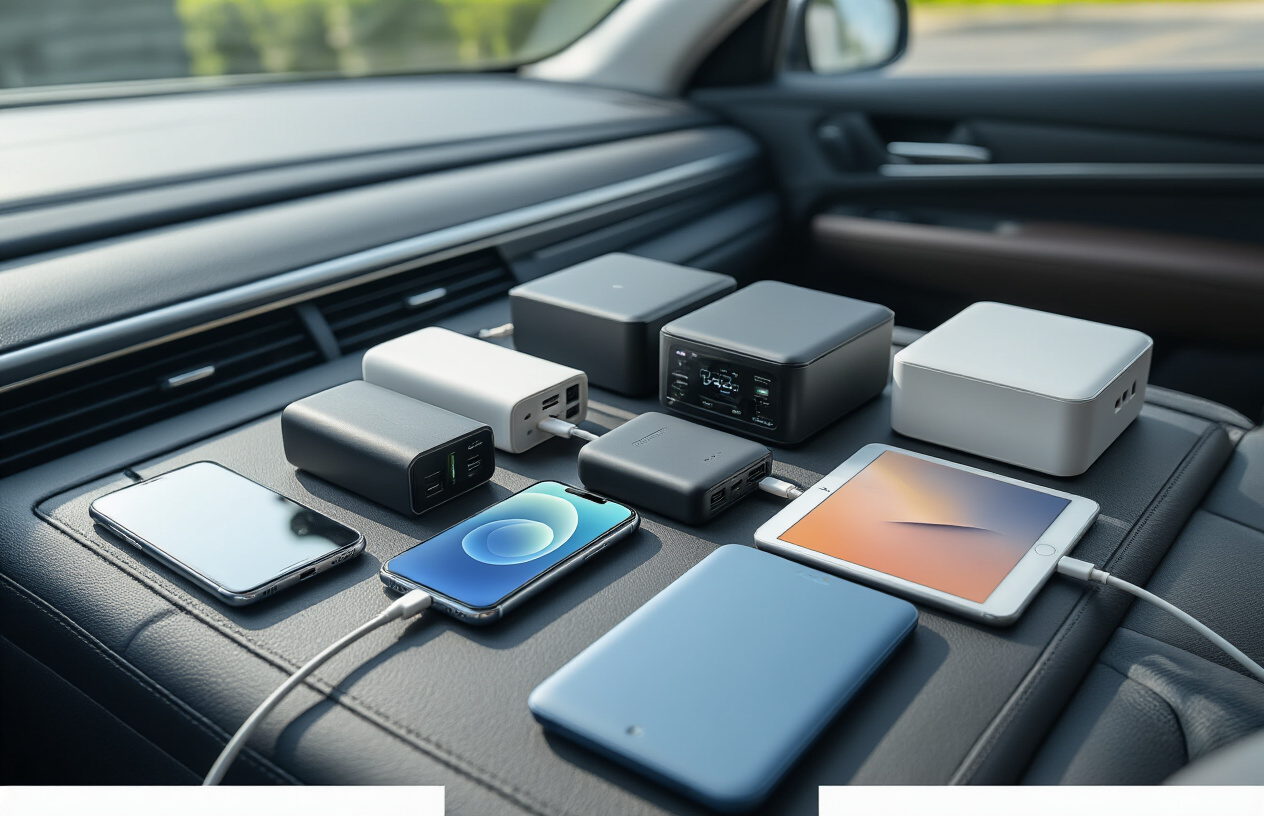
Finding reliable power banks for road trips without breaking the bank is totally doable. The Anker PowerCore 10000 consistently ranks as a top choice for budget-conscious travelers, offering 10,000mAh capacity with dual USB ports for around $30. This compact powerhouse can charge most smartphones 2-3 times and fits perfectly in your car's glove compartment.
Another solid pick is the INIU Portable Charger 20000mAh, which delivers exceptional value at under $40. What makes this portable charger for long drives special is its triple output ports and USB-C compatibility, meaning you can simultaneously charge multiple devices. The built-in LED flashlight adds extra utility during nighttime stops or emergencies.
For those wanting wireless convenience on a budget, the Charmast Wireless Power Bank combines 26,800mAh capacity with Qi wireless charging capabilities for around $45. The digital display shows exact battery percentage, helping you plan charging stops more effectively during extended journeys.
| Power Bank | Capacity | Price | Key Features |
|---|---|---|---|
| Anker PowerCore 10000 | 10,000mAh | ~$30 | Dual USB, Compact size |
| INIU Portable Charger | 20,000mAh | ~$40 | Triple ports, USB-C |
| Charmast Wireless | 26,800mAh | ~$45 | Wireless charging, Display |
Mid-Range Models with Advanced Features
Stepping up to the $50-100 range unlocks car charging accessories with professional-grade features. The RAVPower 60W PD Pioneer stands out with its 20,000mAh capacity and Power Delivery technology that can fast-charge laptops, tablets, and phones simultaneously. The built-in AC outlet makes it perfect for powering small electronics like cameras or portable fans during rest stops.
Aukey's Omnia Mix 20000mAh offers impressive versatility with both wireless charging and a 65W USB-C port capable of charging MacBooks. The sleek design includes a digital display and multiple safety protections, making it ideal for business travelers who need reliable power for work devices.
The Zendure SuperTank deserves mention for its aircraft-grade aluminum construction and 27,000mAh capacity. What sets this best power bank for car travel apart is its hub functionality - you can charge four devices simultaneously while the power bank itself charges, eliminating downtime during hotel stops.
These mid-range options typically include advanced safety features like temperature monitoring, short-circuit protection, and intelligent charging that automatically adjusts power output based on connected devices.
Premium High-Capacity Solutions for Extended Adventures
When your road trip spans weeks or takes you far from civilization, premium mobile power stations for trips become essential investments. The Goal Zero Yeti 500X represents the gold standard for serious adventurers, offering 505Wh capacity with multiple output options including AC outlets, USB-C PD, and 12V ports. This unit can power laptops for days or keep a mini-fridge running during extended camping stops.
Jackery's Explorer 500 provides similar capabilities with superior portability. Weighing just 13.3 pounds, it delivers 518Wh through pure sine wave AC outlets, making it safe for sensitive electronics. The LCD screen provides detailed power consumption data, helping you manage energy usage during multi-day adventures.
For road warriors prioritizing maximum capacity, the Bluetti AC200P offers an impressive 2000Wh capacity with 2000W AC output. While heavier at 56 pounds, it can power full-size appliances and serves as a complete off-grid solution for RV travelers or extended camping expeditions.
| Premium Model | Capacity | Weight | Best For |
|---|---|---|---|
| Goal Zero Yeti 500X | 505Wh | 12.9 lbs | Electronics, cameras |
| Jackery Explorer 500 | 518Wh | 13.3 lbs | Laptops, CPAP machines |
| Bluetti AC200P | 2000Wh | 56 lbs | RV living, major appliances |
Compact Travel-Sized Alternatives
Space constraints in packed vehicles demand ultra-compact travel portable battery packs that don't compromise on performance. The Anker PowerCore Slim 10000 measures just 0.55 inches thick, sliding easily into laptop bags or door pockets. Despite its slim profile, it delivers 10,000mAh capacity with PowerIQ technology for optimized charging speeds.
Mophie's Powerstation Plus Mini excels in the ultra-portable category with integrated cables for both Lightning and USB-C devices. At 6,000mAh capacity, it's perfect for emergency phone charges without adding bulk to your travel setup. The soft-touch finish prevents sliding around on car surfaces.
For minimalists, the AUKEY Sprint Go Mini packs 5,000mAh into a credit card-sized form factor. The built-in USB-C cable eliminates the need for separate charging cables, making it ideal for day trips or as a backup to larger power banks.
The key advantage of compact models lies in their convenience - you're more likely to actually bring and use them because they don't compete for precious cargo space with snacks, luggage, and other road trip essentials.
Solar-Enhanced Models for Off-Grid Exploration
Solar-powered options transform your road trip charging solutions into self-sustaining energy systems perfect for extended outdoor adventures. The BigBlue 28W Solar Charger with integrated power bank provides continuous charging during daylight hours. Its foldable design attaches easily to backpacks or car roofs, making it ideal for hiking breaks or beach stops.
Goal Zero's Nomad series takes solar integration seriously with the Nomad 20 pairing perfectly with their Venture 30 power bank. This combination provides 7,800mAh storage with efficient monocrystalline solar panels that work even in partially cloudy conditions. The rugged construction handles outdoor conditions that would damage standard power banks.
For serious outdoor adventure power banks, the BLAVOR Qi Wireless Solar Power Bank combines 20,000mAh capacity with dual solar panels and wireless charging capabilities. The integrated compass and LED flashlight add survival features that outdoor enthusiasts appreciate during remote camping.
Solar models require planning and realistic expectations - they work best as supplementary charging for extended trips rather than primary power sources. Position them on dashboards during driving hours to maintain charge levels, then deploy the solar panels during stops for additional power generation.
The effectiveness of solar charging depends heavily on weather conditions and positioning, but for adventurers exploring national parks or remote areas, these vehicle power banks provide invaluable energy independence when traditional charging options aren't available.
Maximizing Power Bank Performance During Your Journey
Pre-Trip Charging and Testing Strategies
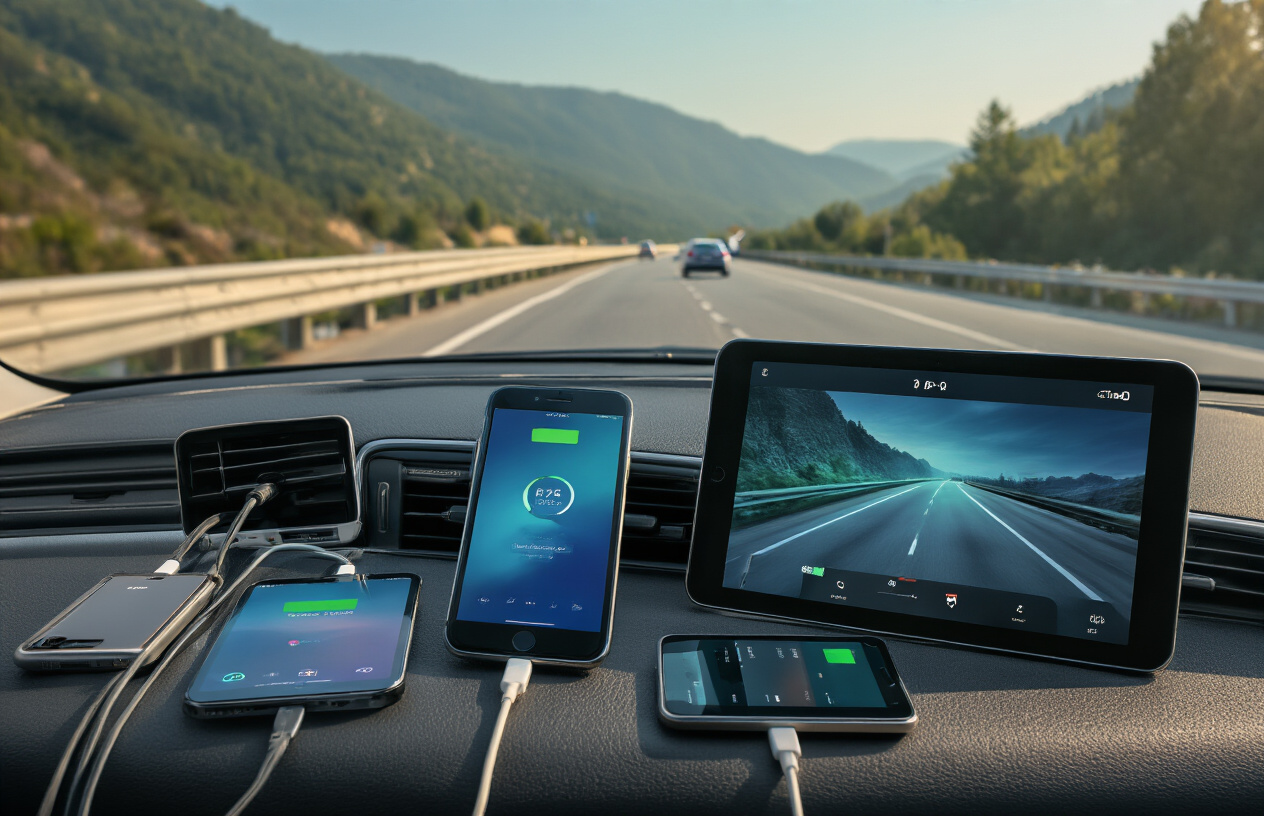
Before hitting the road, fully charge all your power banks for road trips at least 24 hours in advance. This gives you time to identify any units that won't hold a charge properly. Test each portable charger by connecting your devices and monitoring how quickly they charge - a healthy power bank should deliver consistent power output without overheating.
Create a charging checklist that includes your power bank's current capacity level, the last time it was used, and which devices it pairs with best. Most travel portable battery packs lose about 5-10% of their charge monthly when stored, so factor this into your pre-departure routine.
Run a full discharge and recharge cycle on older power banks to recalibrate their battery indicators. This ensures the LED display or app readings accurately reflect remaining power during your journey. Store your charged units in moderate temperatures - extreme heat or cold can reduce their effectiveness before you even start driving.
Efficient Device Management to Extend Battery Life
Smart device management doubles your power bank's usefulness during long drives. Enable airplane mode on devices you're not actively using, then turn on just WiFi or Bluetooth as needed. This simple trick can extend your phone's battery life by 50-70%, meaning fewer charges needed from your car charging accessories.
Reduce screen brightness to 30-40% and disable location services for apps that don't require them. Navigation apps need GPS, but social media apps don't need to track your location constantly. Close background apps that refresh data automatically - they drain power even when you're not using them.
Use power-saving modes strategically. Most smartphones have battery-saving features that limit background activity and reduce performance slightly. Activate these when your device hits 50% battery rather than waiting until it's critically low. This approach maximizes the efficiency of your road trip charging solutions.
Consider charging priority levels for your devices. Phones and navigation systems take precedence over tablets and gaming devices. Charge essential electronics first, then move to entertainment devices during longer stops.
Strategic Recharging Stops and Techniques
Plan power bank recharging around meal breaks and overnight stays rather than dedicated charging stops. Most restaurants, gas stations, and hotels offer accessible outlets, making it easy to top off your mobile power stations for trips while you eat or rest.
Fast-charging compatible power banks work best during shorter stops. Look for units that support USB-C Power Delivery or Qualcomm Quick Charge - these can gain 30-50% capacity in just 30 minutes. Regular USB charging works fine for overnight stops but isn't practical for quick roadside breaks.
Rotate your power banks strategically. Use one while charging another in your vehicle's 12V outlet or through a car inverter. This rotation system ensures you always have backup power available, even during the longest stretches between stops.
Temperature management becomes critical during recharging. Don't charge power banks in direct sunlight or leave them on hot surfaces like your dashboard. Heat reduces charging efficiency and can damage the internal batteries. If your car gets hot while parked, bring your long distance travel power banks inside with you during meal stops.

Long road trips become so much easier when you've got reliable power on hand. The key is finding a power bank with the right capacity for your journey length, solid safety features, and compatibility with your devices. Whether you need to keep phones charged for navigation, power tablets for entertainment, or juice up cameras for capturing memories, the right power bank keeps you connected without worry.
Don't wait until your phone dies in the middle of nowhere to realize how important backup power can be. Invest in a quality power bank before your next adventure and follow smart charging practices to get the most out of it. Your future self will thank you when you're miles from the nearest outlet but still have all the power you need to navigate, communicate, and document your epic road trip.



0 Comments