Gadgets That Feel Straight Out of Sci-Fi
Gadgets That Feel Straight Out of Sci-Fi
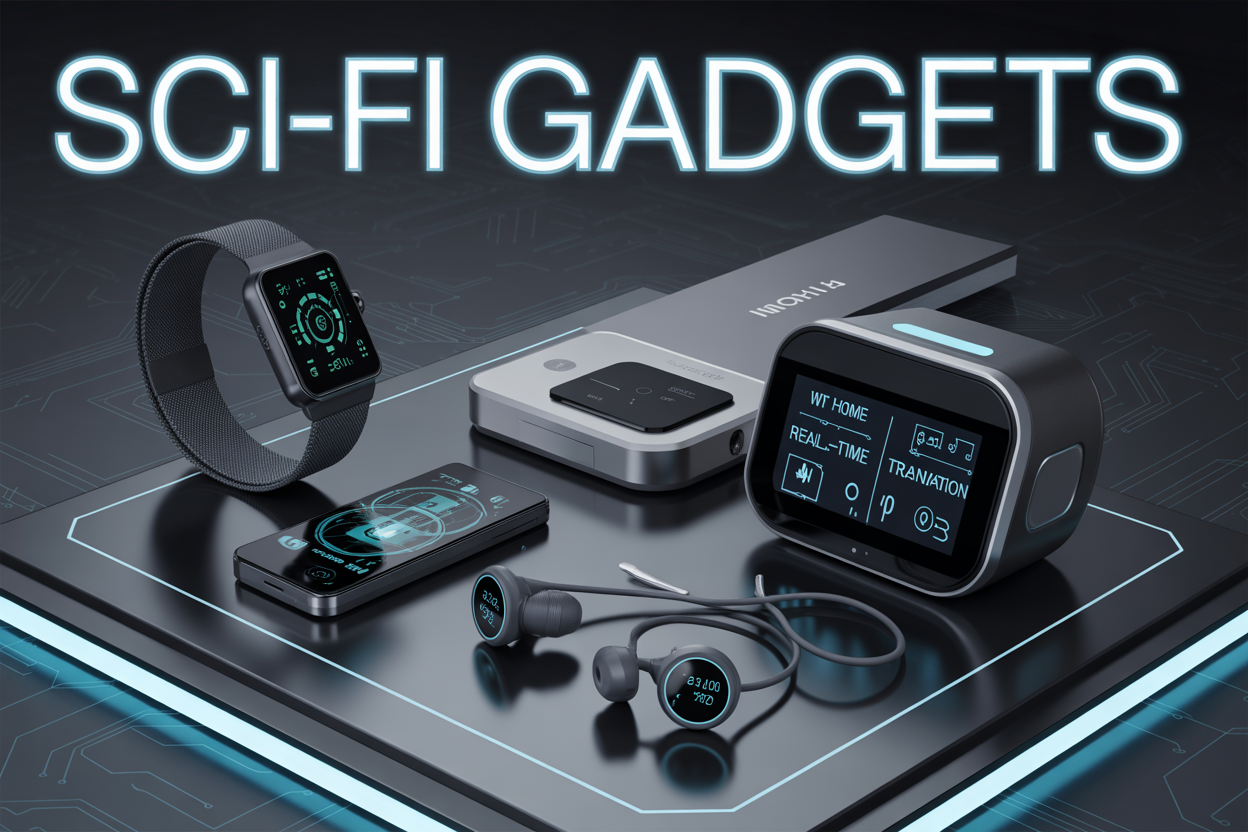
The future is already here, and it's sitting right in your pocket, on your wrist, and throughout your home. These futuristic gadgets have jumped straight from the pages of science fiction novels into our daily lives, transforming how we work, live, and connect with the world around us.
This guide is for tech enthusiasts, early adopters, and anyone curious about the cutting-edge consumer electronics reshaping our reality. You'll discover the most impressive sci-fi gadgets 2024 has to offer and learn how these innovations are changing everything from healthcare to transportation.
We'll explore wearable tech devices that turn your body into a powerful interface, smart home automation systems that seem to read your mind, and futuristic transportation options that make flying cars feel almost ordinary. You'll also see how real-time language translation is breaking down communication barriers and advanced healthcare technology is extending human capabilities in ways that would have seemed impossible just a decade ago.
These aren't concepts for tomorrow—they're the sci-fi technology you can experience today.
Wearable Technology That Enhances Your Body
Smart Contact Lenses That Display Information
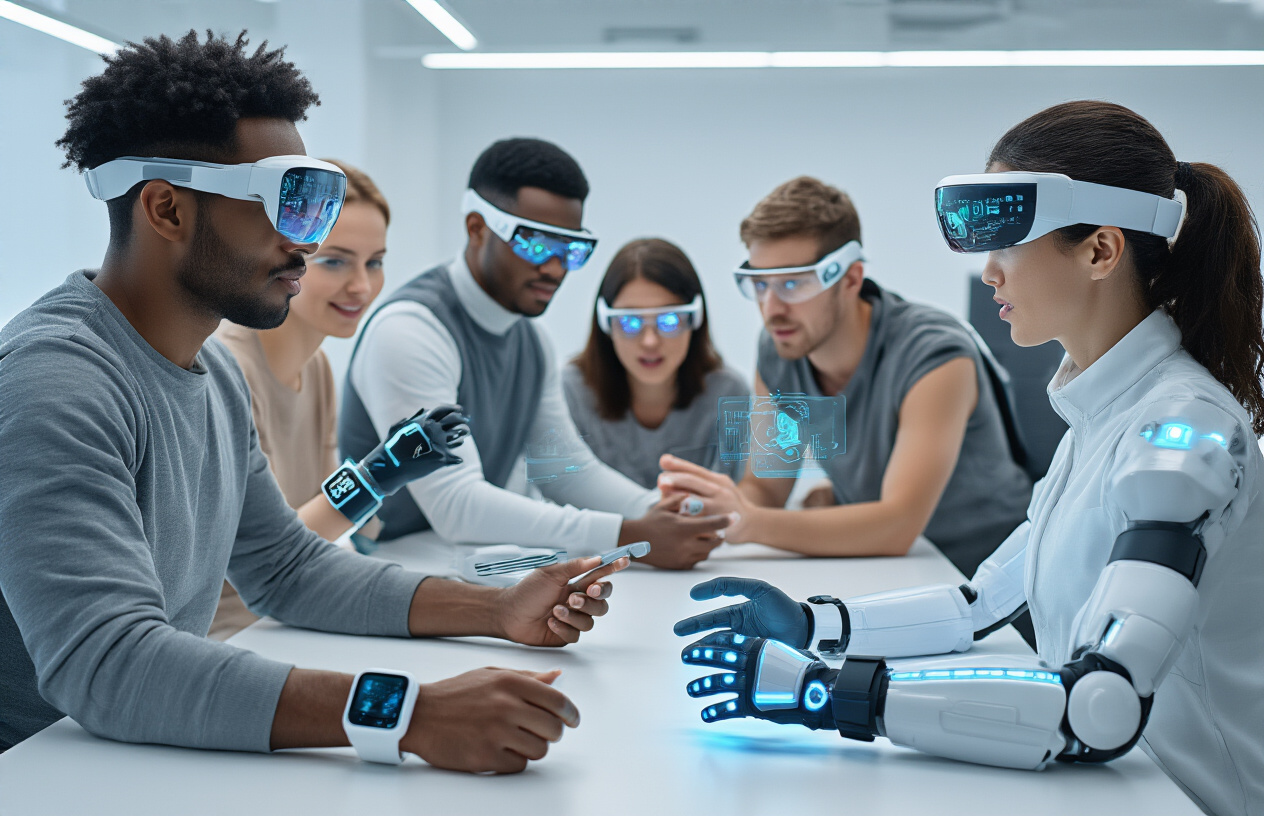
Smart contact lenses represent one of the most mind-blowing advances in wearable tech devices. Companies like Mojo Vision have developed prototypes that project micro-displays directly onto your retina, creating augmented reality experiences without bulky headsets. These futuristic gadgets can overlay navigation arrows, incoming messages, or weather updates right in your field of vision.
The lenses contain microscopic LEDs, sensors, and wireless communication chips smaller than a grain of rice. Users control the interface through eye movements, making interactions feel completely natural. Imagine walking through a foreign city with real-time translations appearing as you look at street signs, or having your calendar appointments float discretely in the corner of your vision during meetings.
Current prototypes can display simple graphics and text, but developers are working toward full-color displays with video capabilities. Battery life remains a challenge, with most designs lasting only a few hours, but wireless charging technology built into special cases offers practical solutions.
Neural Interface Headbands for Mind Control
Brain-computer interfaces have moved beyond science fiction into consumer reality. Companies like NextMind and Emotiv create headbands that read electrical signals from your brain, translating thoughts into digital commands. These devices detect neural patterns associated with specific intentions, allowing users to control computers, smart home systems, or gaming environments using pure mental focus.
The technology works by placing electrodes against your scalp to capture electroencephalogram (EEG) signals. Machine learning algorithms decode these patterns, recognizing when you're concentrating on moving a cursor left or right, or focusing on a particular object on screen. Training takes about 30 minutes as the system learns your unique brain patterns.
Gaming applications showcase the most impressive capabilities. Players can cast spells in fantasy games or pilot virtual aircraft using only their thoughts. The headbands also show promise for accessibility, helping individuals with limited mobility interact with technology in revolutionary ways.
Exoskeleton Suits That Boost Physical Strength
Powered exoskeletons have transitioned from military research labs to consumer markets, offering superhuman strength for everyday tasks. Companies like Sarcos Robotics and Ekso Bionics manufacture suits that multiply human lifting capacity by 20 times or more. These sci-fi gadgets 2024 incorporate hydraulic actuators, sensors, and AI-powered movement prediction to amplify your natural motions.
The suits detect muscle tension and joint movement through embedded sensors, then provide assistive force at precisely the right moment. Workers can lift 200-pound objects as easily as picking up a coffee cup, while the suit handles the actual weight. Battery packs typically provide 8 hours of operation, making them practical for full work shifts.
Modern exoskeletons weigh between 40-60 pounds but distribute their weight efficiently across the user's body. The sensation feels like having invisible assistance rather than wearing heavy equipment. Safety systems prevent dangerous movements and automatically engage protective features if the user loses balance.
| Exoskeleton Model | Lift Capacity | Battery Life | Weight |
|---|---|---|---|
| Sarcos Guardian XO | 200 lbs | 8 hours | 48 lbs |
| Ekso EVO | 60 lbs | 6 hours | 42 lbs |
| SuitX MAX | 120 lbs | 8 hours | 55 lbs |
Biometric Monitoring Patches That Track Health Invisibly
Flexible electronic patches represent the future of health monitoring, replacing bulky fitness trackers with nearly invisible sensors. These ultra-thin devices stick to your skin like temporary tattoos while continuously monitoring vital signs, hydration levels, blood glucose, and even stress hormones through sweat analysis.
Companies like Abbott and Dexcom have pioneered glucose-monitoring patches for diabetics, but advanced healthcare technology now extends to comprehensive health tracking. The patches contain flexible circuits printed on biodegradable materials, making them comfortable for weeks of continuous wear.
Cutting-edge consumer electronics in this space can detect early signs of illness, dehydration, or fatigue before you notice symptoms. The data streams wirelessly to smartphone apps, creating detailed health profiles that help optimize diet, exercise, and sleep patterns. Some patches even deliver medication through the skin based on real-time biometric readings.
The patches connect to broader health ecosystems, sharing data with doctors, fitness apps, or insurance providers. Privacy controls let users decide what information to share and with whom, maintaining personal health data security while enabling personalized healthcare insights.
Home Automation Systems That Anticipate Your Needs
AI-Powered Voice Assistants That Learn Your Preferences
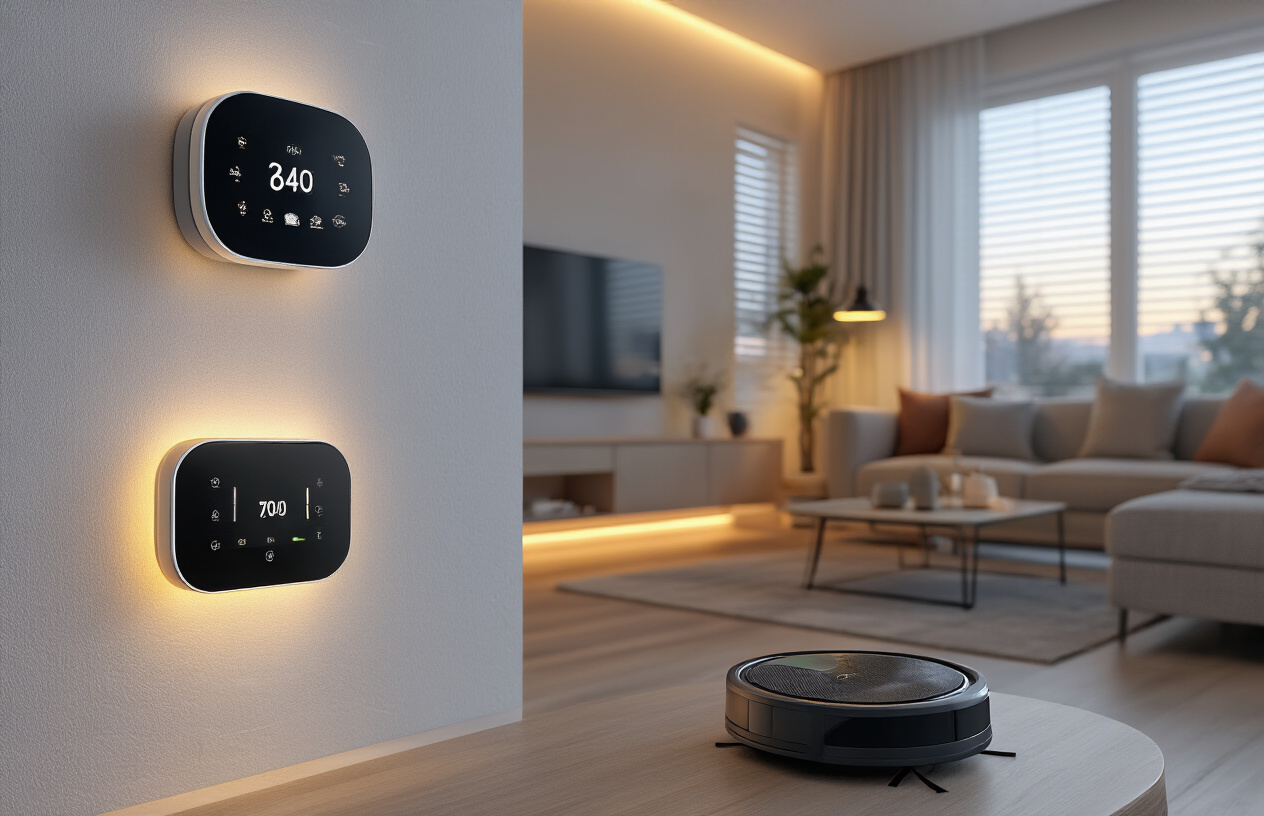
Today's smart home automation goes way beyond just turning lights on and off with voice commands. The latest AI-powered voice assistants are getting scary good at predicting what you want before you even ask. These futuristic gadgets analyze your daily patterns, learning when you typically wake up, what temperature you prefer during different times of day, and even which music matches your mood based on your calendar.
Amazon's Alexa and Google Assistant now integrate with machine learning algorithms that track your habits over months, creating personalized automation routines. Your assistant might start brewing coffee at 6:47 AM because that's when you usually shuffle to the kitchen, or automatically dim the living room lights when your favorite Netflix show starts. Some systems even detect stress levels in your voice and respond by playing calming music or adjusting room ambiance.
The real sci-fi magic happens when these systems connect with other smart home devices. Your voice assistant can coordinate with smart thermostats, security cameras, and even your car to create seamless daily experiences. Walking into your home triggers a chain reaction - lights adjust to your preferred brightness, temperature shifts to your comfort zone, and your favorite playlist begins streaming through wireless speakers.
Holographic Display Panels for Entertainment
Holographic technology has jumped from Star Wars fantasies into actual consumer products. These cutting-edge consumer electronics create floating 3D images that you can view without special glasses or headsets. Companies like Looking Glass Factory and Voxon Photonics have developed holographic displays that project stunning visuals into mid-air.
These displays work using light field technology, creating images that appear to have real depth and dimension. You can walk around them and see different angles, just like viewing a real object. Gaming becomes incredibly immersive when characters and environments literally pop out of the screen. Movie nights transform into theater-like experiences where scenes unfold in your living room.
| Feature | Traditional TV | Holographic Display |
|---|---|---|
| Viewing Angle | Fixed perspective | 360-degree viewing |
| Depth Perception | Flat image | True 3D projection |
| Interaction | Remote control only | Gesture and voice control |
| Price Range | $300-$3,000 | $3,000-$50,000 |
Current models range from small desktop units perfect for product demonstrations to large panels suitable for home entertainment systems. While still expensive, prices are dropping as the technology matures and manufacturing scales up.
Robotic Butlers That Handle Daily Tasks
Robotic butlers aren't just cleaning floors anymore - they're becoming full-service household assistants that handle complex tasks with remarkable intelligence. Modern robots like Amazon's Astro and Samsung's Bot Handy can navigate your home, recognize family members, and perform dozens of different functions.
These advanced robots combine computer vision, machine learning, and sophisticated sensors to understand their environment. They can fetch items from different rooms, deliver messages between family members, and even help with cooking by following recipe instructions. Some models feature articulated arms that can fold laundry, load dishwashers, and organize closets.
Security features make these robots valuable guardians too. They patrol your home when you're away, sending alerts about unusual activity directly to your smartphone. Built-in cameras and microphones let you check on pets, kids, or elderly relatives remotely. Voice recognition ensures they only respond to authorized family members.
The most impressive models can learn your household's unique routines and preferences. They remember where you typically leave your keys, when you usually take medication, and which family members need reminders about daily tasks. Battery life has improved dramatically, with many robots operating 8-12 hours between charges while automatically returning to their docking stations when needed.
Transportation Gadgets That Defy Traditional Limits
Personal Flying Vehicles for Urban Commuting
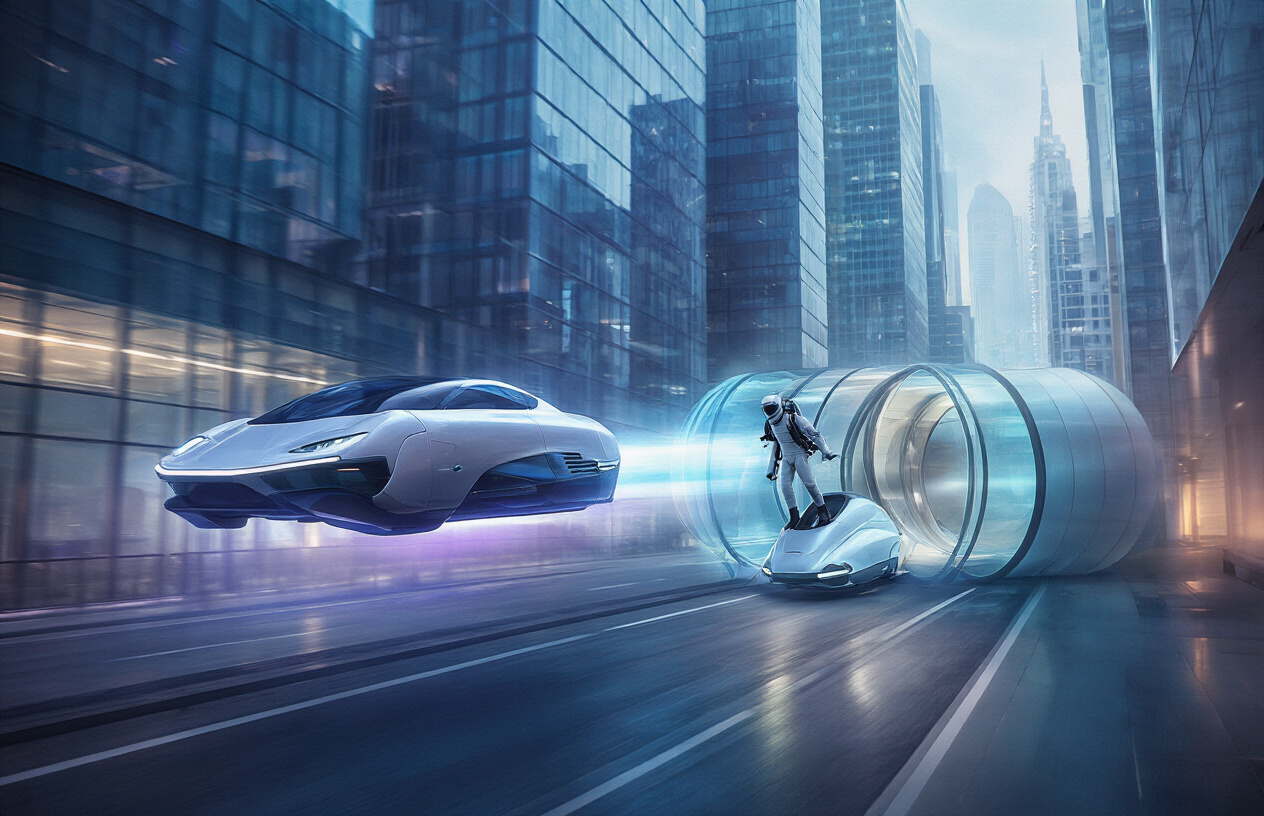
Electric vertical takeoff and landing aircraft (eVTOLs) are no longer just concepts from futuristic movies. Companies like Joby Aviation and EHang have developed fully functional air taxis that can transport passengers across cities in minutes rather than hours. These futuristic transportation devices feature multiple rotors for stability and use advanced battery technology for emission-free flight.
The Jetson ONE represents the consumer end of personal aviation, offering individuals their own flying vehicle. This single-seat aircraft can reach speeds of 63 mph and fly for up to 20 minutes on a single charge. While still requiring pilot training, it shows how personal air travel is becoming accessible to everyday users.
Urban air mobility companies are already conducting test flights in cities like Dubai and Singapore. These sci-fi technology demonstrations prove that flying cars aren't decades away – they're happening now.
Magnetic Levitation Hoverboards
Real magnetic levitation technology has moved beyond science fiction into practical applications. The Lexus Hoverboard uses liquid nitrogen-cooled superconductors to achieve true hovering over specially designed magnetic tracks. While limited to specific surfaces, this cutting-edge consumer electronics breakthrough represents a genuine hoverboard experience.
Arx Pax has developed magnetic field architecture that creates hovering platforms for various applications. Their technology can lift objects weighing several tons, opening possibilities for hoverboards that work on more surfaces than traditional magnetic systems.
These devices demonstrate how futuristic gadgets are pushing the boundaries of what we thought possible, even if they're not quite ready for everyday use on any surface.
Self-Driving Cars With Predictive Navigation
Autonomous vehicles have evolved beyond simple lane-keeping to predictive intelligence systems. Tesla's Full Self-Driving capability uses neural networks to anticipate traffic patterns, pedestrian behavior, and road conditions before they become apparent to human drivers. The system learns from millions of miles of real-world driving data to make split-second decisions.
Waymo's robotaxis in Phoenix and San Francisco represent the current pinnacle of self-driving technology. These vehicles navigate complex urban environments without human intervention, using advanced sensors and machine learning algorithms that feel straight out of sci-fi.
The most impressive feature is predictive navigation – these cars don't just react to current conditions but anticipate future scenarios. They might slow down before a child's ball appears from behind a parked car or change lanes before a vehicle ahead signals to merge.
Teleportation Pods for Instant Travel
While true matter teleportation remains theoretical, several companies are developing systems that feel remarkably close to this sci-fi dream. Hyperloop technology creates pods that travel through low-pressure tubes at speeds exceeding 600 mph, effectively teleporting passengers between cities in minutes.
Virgin Hyperloop has successfully tested human passengers in their pod system, demonstrating the viability of near-instantaneous long-distance travel. The experience inside the pod – smooth, silent, and incredibly fast – creates the sensation of teleportation even though it's technically high-speed ground transportation.
SpaceX's proposed point-to-point rocket travel would enable passengers to travel anywhere on Earth in under an hour, making intercontinental travel feel like teleportation compared to current flight times.
Underwater Breathing Apparatus for Extended Diving
Artificial gill technology has made remarkable advances, with devices like the Triton rebreather extracting oxygen directly from water. While current versions have limitations, they represent a significant step toward unlimited underwater breathing capability.
The SCORKL provides 10 minutes of underwater breathing in a device smaller than a water bottle. More advanced systems like the Amphibio use a special material that can extract dissolved oxygen from water, potentially allowing for extended underwater exploration without traditional scuba gear.
These futuristic transportation aids for underwater exploration demonstrate how sci-fi gadgets 2024 are revolutionizing not just how we move through air and on land, but also how we navigate underwater environments. The technology brings us closer to the science fiction dream of breathing underwater like fish.
Communication Devices That Break Language Barriers
Real-Time Universal Translation Earbuds
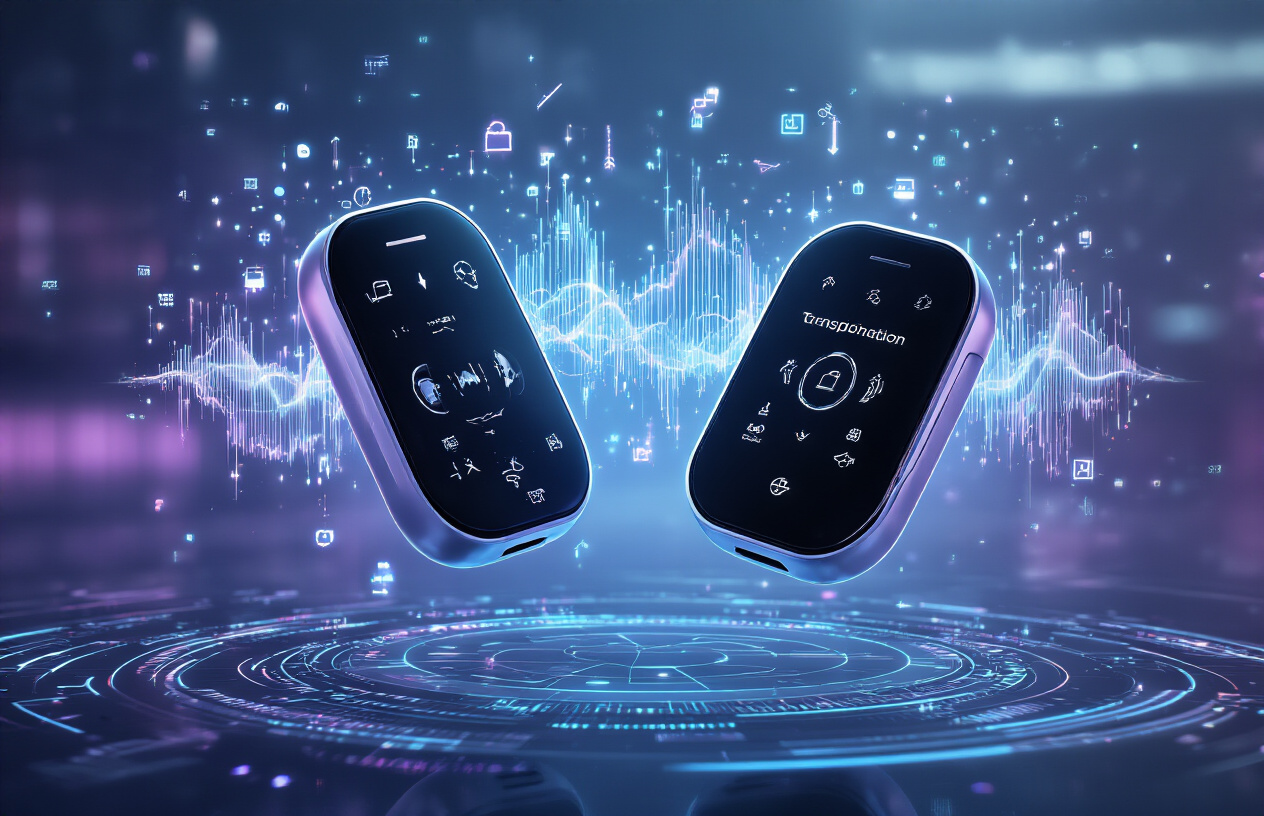
Imagine having a conversation with someone who speaks zero English while you know nothing of their language, yet understanding every word perfectly. Real-time language translation earbuds make this possible, turning sci-fi dreams into everyday reality. These futuristic gadgets work by capturing spoken words, processing them through advanced AI algorithms, and delivering translations directly into your ears within milliseconds.
Companies like Google, Microsoft, and emerging tech startups have developed translation earbuds that support dozens of languages. The technology combines speech recognition, natural language processing, and machine learning to deliver surprisingly accurate translations. Some models can handle complex conversations, slang, and even cultural nuances that traditional translation apps miss completely.
The most impressive versions offer bidirectional translation, meaning both parties can speak naturally in their native languages while hearing everything translated in real-time. Battery life typically ranges from 4-8 hours, with charging cases providing additional power throughout the day. Many models also function as regular wireless earbuds for music and calls when translation isn't needed.
Holographic Video Calling Systems
Video calls have evolved beyond flat screens into three-dimensional holographic displays that make remote participants appear physically present. These cutting-edge consumer electronics project life-sized, realistic holograms of people into your space, creating meetings and conversations that feel genuinely face-to-face.
Several tech giants have unveiled working prototypes that use advanced projection technology, depth sensors, and spatial computing to create convincing holographic displays. The systems capture participants from multiple angles using specialized cameras and reconstruct their image as a floating hologram visible from 360 degrees.
Current implementations require dedicated hardware setups with multiple projectors, cameras, and processing units. However, miniaturization is happening rapidly. Some companies are developing portable holographic display units about the size of a laptop that can project smaller but still impressive holograms for personal use.
| Feature | Current Technology | Holographic Systems |
|---|---|---|
| Presence | Flat screen | 3D life-size projection |
| Interaction | Limited gestures | Natural body language |
| Eye Contact | Impossible | Maintained naturally |
| Setup | Single device | Multiple sensors/projectors |
Telepathic Communication Implants
Brain-computer interfaces have progressed from medical applications to experimental communication systems that read thoughts and transmit them directly between minds. These sci-fi technology implants represent the ultimate evolution of human communication, potentially eliminating the need for spoken or written language entirely.
Companies like Neuralink, Synchron, and academic research institutions are developing neural implants that can decode specific thought patterns related to intended speech. Early versions allow paralyzed patients to type by thinking about letters or words. The next step involves transmitting these decoded thoughts to another person's brain implant, creating direct mind-to-mind communication.
Current experimental systems require surgical implantation of tiny electrodes into brain tissue. The implants monitor neural activity in speech-related brain regions and use machine learning algorithms to interpret the patterns. While still in early development, successful tests have demonstrated basic word and image transmission between participants.
Future technology trends suggest these implants could eventually enable:
-
Instant sharing of complex ideas and emotions
-
Direct knowledge transfer between individuals
-
Silent communication across any distance
-
Enhanced memory sharing and collective intelligence
-
Integration with digital devices through thought alone
Safety concerns, ethical considerations, and the need for extensive testing mean widespread adoption remains years away. However, the potential to revolutionize human communication makes telepathic implants one of the most exciting sci-fi gadgets 2024 developments to watch.
Healthcare Technology That Extends Human Capabilities
Portable DNA Scanners for Instant Health Analysis
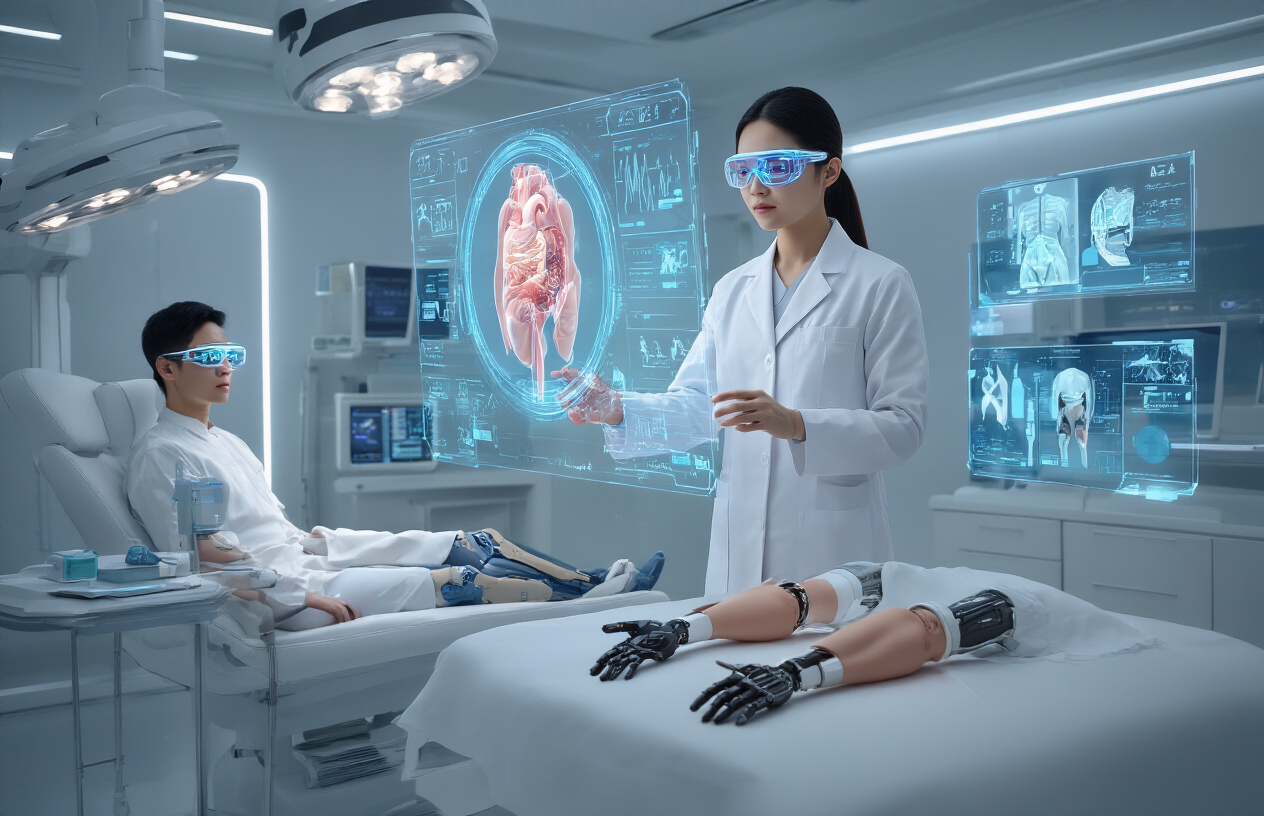
Picture being able to get a complete genetic health report in minutes rather than waiting weeks for lab results. Portable DNA scanners are making this sci-fi dream a reality. These handheld devices can analyze your genetic material on the spot, identifying everything from disease predispositions to drug sensitivities. The Oxford Nanopore MinION, about the size of a smartphone, sequences DNA in real-time and costs a fraction of traditional lab equipment.
These futuristic gadgets work by threading DNA through tiny protein pores, measuring electrical changes as genetic material passes through. Medical professionals can now diagnose infections, identify pathogens, or screen for genetic disorders during a single appointment. Emergency responders use them to quickly identify biological threats or unknown substances at crime scenes.
The technology extends beyond healthcare into personalized medicine. Your DNA scanner could recommend the perfect diet, exercise routine, or even which medications work best for your genetic makeup. Some models connect to smartphone apps, building comprehensive health profiles over time.
Regenerative Medicine Devices That Heal Wounds
Bioprinters and tissue regeneration machines sound like something from a medical drama, but they're already healing real patients. These advanced healthcare technology devices grow new skin, bone, and even organs using your own cells as building blocks. The NOVACART system creates replacement cartilage from a patient's own cells, eliminating rejection risks.
Portable wound healing devices use electrical stimulation, light therapy, or stem cell activation to dramatically speed recovery. The WoundClot device applies plant-based polymers that form instant blood clots, stopping severe bleeding in seconds. Meanwhile, bioprinting pens let surgeons "draw" living cells directly onto damaged tissue during operations.
| Device Type | Function | Recovery Time Improvement |
|---|---|---|
| Bioprinters | Create living tissue | 50-80% faster |
| Electrical Stimulation | Accelerate cell growth | 40-60% faster |
| Stem Cell Activators | Trigger natural healing | 30-70% faster |
Mind-Reading Machines That Detect Mental Health Issues
Brain-computer interfaces now decode thoughts and emotions with startling accuracy. These sci-fi technology devices read electrical patterns in your brain, identifying depression, anxiety, ADHD, and other mental health conditions before symptoms become obvious. The Emotiv EPOC headset monitors brain waves and translates them into actionable mental health data.
Companies like Neuralink and Kernel develop implantable chips that monitor neural activity 24/7. These devices catch early warning signs of mental health episodes, allowing for immediate intervention. Some systems can even predict mood changes hours or days in advance, sending alerts to healthcare providers or loved ones.
Non-invasive options include EEG headbands that track sleep patterns, stress levels, and cognitive performance. The Muse meditation headband provides real-time feedback about your brain's calm and focus states. Athletes use similar devices to optimize mental performance and detect concussion symptoms instantly.
Nano-Robots That Repair Cellular Damage
Microscopic robots swimming through your bloodstream, fixing problems at the cellular level, represent the ultimate fusion of cutting-edge consumer electronics and medicine. These nanobots target cancer cells, clear arterial blockages, and repair damaged DNA with surgical precision.
Researchers have successfully tested nanobots that deliver chemotherapy drugs directly to tumor sites while leaving healthy cells untouched. Other designs act as microscopic plumbers, clearing cholesterol buildup from blood vessels or removing toxins from organs. The robots navigate using chemical signals, magnetic fields, or even light guidance systems.
Current prototypes include DNA origami robots that unfold when they encounter specific disease markers, releasing therapeutic payloads exactly where needed. Magnetic nanobots controlled by external fields can be steered to precise locations in the body. While most are still in clinical trials, some simple versions already treat eye diseases and blood clots in patients.
These future technology trends promise to revolutionize medicine by working at scales impossible for traditional treatments, offering hope for previously incurable conditions while minimizing side effects through targeted precision therapy.
The gadgets shaping our world today would have seemed impossible just decades ago. Wearable tech that boosts our physical abilities, smart homes that know what we need before we ask, and transportation that breaks free from old-school constraints are all becoming part of everyday life. Language barriers crumble with instant translation devices, while medical technology pushes the boundaries of what our bodies can achieve and recover from.
These innovations aren't just cool toys or flashy upgrades – they're fundamentally changing how we live, work, and connect with each other. The sci-fi future we dreamed about is happening right now, one breakthrough at a time. Keep your eyes open for the next wave of these amazing technologies, because chances are, something even more mind-blowing is just around the corner.



0 Comments