Must-Have Smart Home Security Devices
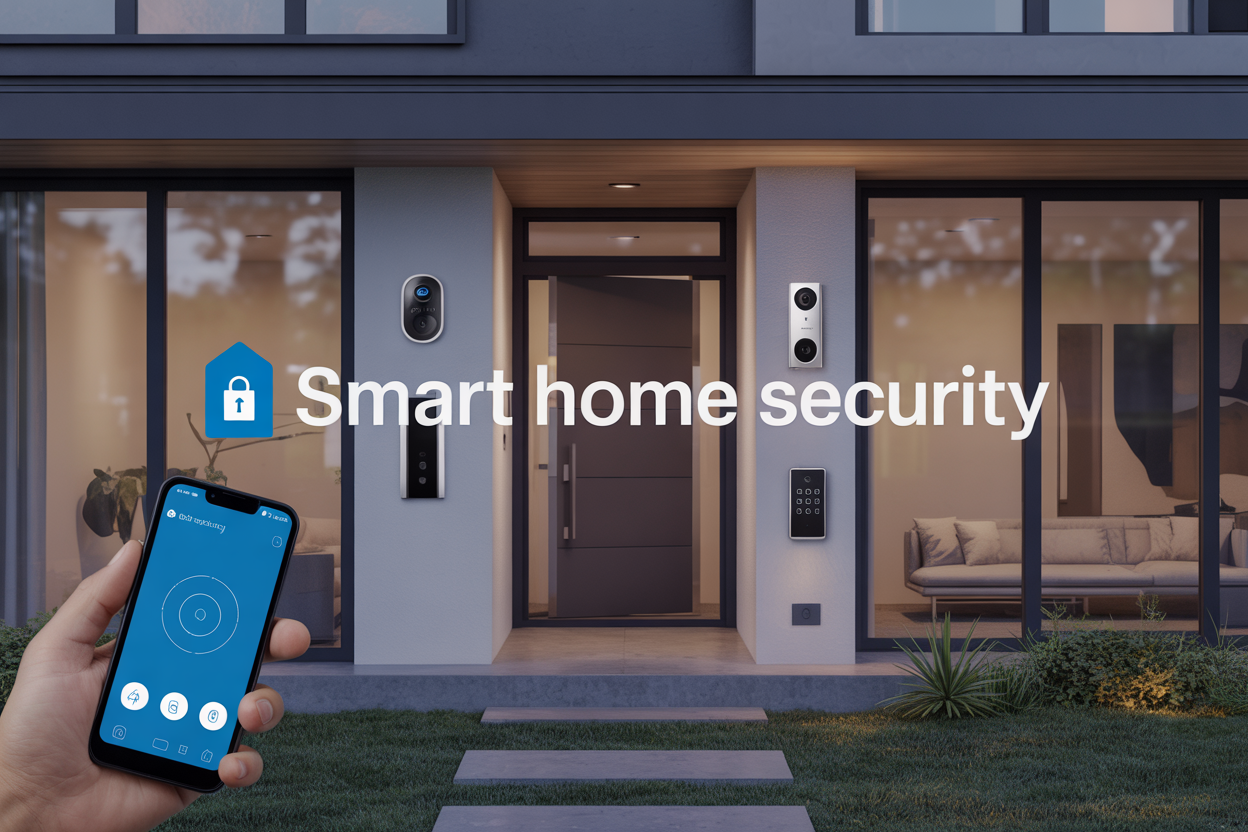
Smart home security devices give homeowners peace of mind while protecting what matters most. Whether you're a new homeowner wanting to secure your first property, a busy parent juggling family schedules, or someone who travels frequently for work, the right security setup can make all the difference.
This guide covers the essential devices every smart home needs. We'll explore doorbell cameras and smart locks that protect your entry points, plus interior sensors that monitor activity inside your home. You'll also discover how smart detectors can alert you to dangers like fires or gas leaks before they become emergencies.
Smart Doorbell Cameras for Enhanced Entry Protection
Two-way Audio Communication with Visitors
Modern smart doorbell cameras revolutionize how you interact with visitors, whether you're home or thousands of miles away. The built-in microphone and speaker system allows real-time conversations through your smartphone app, creating a seamless communication experience. You can greet delivery drivers, provide specific instructions for package placement, or even redirect solicitors without physically answering the door.
The audio quality has improved dramatically in recent models, with noise cancellation technology filtering out wind, traffic, and other background sounds. Many devices offer adjustable volume controls and audio recording capabilities, so you can review conversations later if needed. Some premium models include pre-recorded quick responses like "Please leave the package by the door" or "I'll be right there," perfect for busy moments when you can't engage in a full conversation.
Motion Detection and Instant Smartphone Alerts
Smart doorbell cameras use advanced PIR (passive infrared) sensors and computer vision algorithms to detect movement within customizable zones. You can set specific detection areas, focusing on your front steps while ignoring street traffic or swaying trees that might trigger false alarms. The sensitivity settings are adjustable, allowing you to fine-tune detection based on your specific environment.
Push notifications arrive on your phone within seconds of motion detection, complete with thumbnail images or short video clips. Most devices offer different alert types - distinguishing between people, packages, animals, and vehicles. You can customize notification schedules, receiving alerts only during specific hours or when you're away from home. Battery-powered models often include smart scheduling to conserve power while maintaining security coverage.
Night Vision Capabilities for 24/7 Monitoring
Infrared LEDs and advanced image sensors provide crystal-clear footage even in complete darkness, typically offering visibility up to 25-30 feet. The automatic day/night switching seamlessly transitions between color and infrared modes based on ambient light conditions. High-end models feature color night vision using built-in spotlights or starlight sensors, maintaining full-color video quality in low-light situations.
The night vision quality varies significantly between models - look for devices with at least 1080p resolution and wide dynamic range (WDR) technology for balanced exposure in challenging lighting conditions. Some cameras include adjustable infrared intensity, preventing overexposure of nearby objects while maintaining visibility of distant areas.
Cloud Storage for Video Evidence and Playback
Cloud storage transforms your doorbell camera into a comprehensive security system, automatically uploading and organizing video clips based on motion events or doorbell presses. Most manufacturers offer tiered subscription plans, typically ranging from 7-day basic storage to 60-day premium options with unlimited video history.
The cloud-based system provides several advantages over local storage: videos remain safe even if the device is stolen or damaged, you can access footage from anywhere with internet connectivity, and automatic backup prevents data loss. Advanced plans often include features like person detection, facial recognition, and smart alerts that learn your preferences over time. Video compression technology optimizes upload speeds while maintaining quality, and most services allow easy sharing of specific clips with law enforcement or insurance companies when needed.
Indoor Security Cameras for Complete Home Surveillance
Live streaming and remote monitoring capabilities
Modern indoor security cameras transform your smartphone into a powerful monitoring center, letting you keep tabs on your home from anywhere in the world. These cameras connect to your Wi-Fi network and stream high-definition video directly to your phone, tablet, or computer through dedicated apps. Whether you're at work, on vacation, or just running errands, you can check in on your kids, pets, or elderly family members with a simple tap.
The best indoor cameras offer crystal-clear 1080p or 4K video quality, ensuring you can see every detail even in low-light conditions. Many models include two-way audio, so you can communicate with people or pets at home. Night vision capabilities use infrared technology to maintain clear visibility in complete darkness, while some advanced models feature color night vision for even better detail recognition.
Real-time alerts send notifications to your phone whenever motion is detected, so you're immediately aware of any activity. Cloud storage options automatically save video clips, creating a searchable history of events. Local storage through microSD cards provides an additional backup option and eliminates monthly subscription fees for basic recording needs.
AI-powered person and pet detection features
Smart indoor cameras now use artificial intelligence to distinguish between different types of movement, dramatically reducing false alarms from shadows, curtains, or changing light conditions. Advanced algorithms can identify whether detected motion comes from a person, pet, or general movement, sending specific notifications based on what triggered the alert.
Person detection technology recognizes human shapes and movements, alerting you only when actual people enter the camera's view. This feature proves invaluable for parents monitoring children's activities or homeowners wanting to know when someone enters specific rooms. Some cameras can even distinguish between familiar faces and strangers through facial recognition technology.
Pet detection helps pet owners monitor their furry friends without getting overwhelmed by constant movement alerts. These smart cameras learn to recognize your pets' typical behavior patterns and can even send cute notifications when your dog or cat enters the room. Advanced models track pet activity levels and can alert you to unusual behavior that might indicate health issues.
Package detection identifies when deliveries arrive, sending immediate notifications so you can secure packages quickly. This feature works alongside person detection to provide comprehensive monitoring of your home's entry points and high-traffic areas.
Pan, tilt, and zoom functionality for full room coverage
Pan-tilt-zoom (PTZ) cameras offer unparalleled flexibility in monitoring large spaces or tracking movement throughout a room. These motorized cameras can rotate horizontally (pan) up to 360 degrees and vertically (tilt) to cover every angle, eliminating blind spots that fixed cameras might miss. You control these movements remotely through your smartphone app, allowing you to investigate sounds or follow activity in real-time.
Optical zoom capabilities let you magnify specific areas without losing image quality, perfect for reading text, identifying faces, or examining details across the room. Digital zoom extends this capability even further, though with some quality reduction at maximum magnification levels. Many PTZ cameras offer preset positions, so you can quickly jump between favorite viewing angles like the front door, play area, or pet's favorite sleeping spot.
Auto-tracking features use motion detection combined with PTZ functionality to automatically follow moving subjects around the room. When the camera detects a person or pet, it smoothly adjusts its position to keep them in frame, providing continuous coverage without manual intervention. This technology proves especially useful for monitoring active children or pets who don't stay in one place.
Privacy modes allow PTZ cameras to automatically point away from sensitive areas or turn off recording during specific times, respecting family members' privacy while maintaining security coverage when needed.
Smart Door Locks for Keyless Access Control
Biometric Fingerprint and Facial Recognition Technology
Modern smart door locks have evolved beyond traditional keypads to include cutting-edge biometric authentication systems. Fingerprint recognition technology uses advanced optical or capacitive sensors that scan and store up to 100 unique fingerprints, creating a personalized access database for family members and trusted individuals. These systems work remarkably well in various weather conditions and can distinguish between live fingers and fake replicas through sophisticated liveness detection algorithms.
Facial recognition takes security a step further by using 3D mapping technology and infrared sensors to create detailed facial templates. High-end models can recognize faces even in low-light conditions or when wearing accessories like glasses or hats. The technology continuously learns and adapts to subtle changes in appearance over time, ensuring consistent performance.
Biometric locks eliminate the risk of lost keys or forgotten codes while providing lightning-fast access in under two seconds. Many models combine multiple biometric methods, allowing users to choose their preferred authentication method based on convenience and security preferences.
Remote Locking and Unlocking from Anywhere
Smart door locks connected to your home Wi-Fi network offer unprecedented control over your home's primary entry point. Through dedicated smartphone apps, homeowners can lock or unlock their doors from anywhere in the world with internet connectivity. This feature proves invaluable when you're at work and realize you forgot to lock the door, or when you need to grant access to family members who arrive home unexpectedly.
Real-time notifications keep you informed about every door activity. You'll receive instant alerts when someone enters or exits, along with timestamps and user identification. GPS-based automation can trigger the lock to engage automatically when you leave a predetermined radius around your home, ensuring your property stays secure even when you forget.
Battery backup systems guarantee functionality during power outages, while encrypted communication protocols protect against hacking attempts. Many locks feature auto-lock timers that secure your door after a specified period, adding an extra layer of protection for forgetful moments.
Temporary Access Codes for Guests and Service Providers
Smart locks excel at managing temporary access without compromising long-term security. You can generate unique PIN codes for house guests, dog walkers, cleaning services, or maintenance technicians directly from your smartphone. These codes can be programmed to work only during specific time windows - for example, allowing your housekeeper access only on Tuesday and Thursday mornings between 9 AM and 2 PM.
The system maintains detailed logs of when each code was used, providing complete accountability for who accessed your home and when. Once the service period ends or your guests leave, you can instantly deactivate their codes remotely without needing to change locks or collect physical keys.
Recurring codes work perfectly for regular service providers, while one-time codes suit occasional visitors. Some advanced models allow you to set usage limits, automatically expiring codes after a predetermined number of uses or on specific dates.
Integration with Existing Smart Home Ecosystems
Smart door locks seamlessly connect with popular platforms like Amazon Alexa, Google Assistant, Apple HomeKit, and Samsung SmartThings. This integration creates powerful automation scenarios where your lock communicates with other smart devices throughout your home.
Picture arriving home as your smart lock recognizes your approach through geofencing, automatically disarming your security system, turning on lights, and adjusting the thermostat to your preferred temperature. Voice commands let you check lock status or secure doors without lifting a finger, while smart home routines can lock all doors simultaneously as part of your "goodnight" or "away" modes.
Integration extends to security cameras and doorbell systems, creating comprehensive entry monitoring that records video whenever the lock is operated. Smart lighting can activate when someone approaches the door, deterring potential intruders while welcoming legitimate visitors.
The interoperability ensures your investment works harmoniously with future smart home additions, creating an expandable security ecosystem that grows with your needs.
Window and Door Sensors for Perimeter Security
Instant Breach Notifications to Your Smartphone
Window and door sensors act as your home's first line of defense by detecting when entry points are opened or breached. The moment a window or door is opened, these tiny devices send instant alerts straight to your smartphone, tablet, or other connected devices. This real-time notification system means you'll know immediately if someone enters your home, whether you're at work, on vacation, or just upstairs sleeping.
Modern sensors use advanced technology to distinguish between normal activity and potential security threats. Many models offer customizable settings that let you adjust sensitivity levels and create different alert schedules. You can set up "away" modes that trigger immediate notifications for any opening, or "home" modes that only alert you to specific doors or windows opening during certain hours.
The notifications typically include timestamps, device locations, and sometimes even photos if integrated with security cameras. This detailed information helps you quickly assess whether the alert represents a genuine threat or just a family member coming home early.
Battery-Powered Wireless Installation Convenience
Gone are the days of running wires through walls or hiring electricians for security installations. Today's window and door sensors run on long-lasting batteries and communicate wirelessly with your home's security hub. Most sensors use coin-cell batteries that last anywhere from one to three years, depending on usage and environmental factors.
Installation takes just minutes per sensor. Simply clean the surface, peel off the adhesive backing, and stick the two-piece sensor system in place. One piece goes on the door or window frame, while the magnetic counterpart attaches to the moving part. The wireless design means you can place sensors anywhere without worrying about power outlets or cable runs.
Battery life monitoring keeps you informed about when replacements are needed, usually sending low-battery alerts weeks in advance. Many systems use encrypted wireless protocols like Z-Wave or Zigbee, which create secure, mesh networks that actually become stronger as you add more devices.
Integration with Alarm Systems and Smart Lighting
Window and door sensors shine brightest when integrated with broader smart home security systems. They can trigger multiple responses simultaneously: sounding alarms, turning on lights, starting video recordings, and even sending alerts to security monitoring services.
Smart lighting integration creates powerful deterrent effects. When a sensor detects unexpected entry, it can instantly flood your home with lights, making it appear occupied and potentially scaring off intruders. You can program different lighting scenarios for different sensors – perhaps subtle pathway lighting when the front door opens during evening hours, or full exterior flood lights when basement windows are breached.
Integration with professional monitoring services adds another layer of protection. When sensors trigger during armed periods, monitoring centers receive immediate alerts and can dispatch emergency responders if needed. Many systems also connect with smart locks, automatically securing other entry points when a breach is detected elsewhere in the home.
Smart Smoke and Carbon Monoxide Detectors
Early warning alerts sent directly to your phone
Smart smoke and carbon monoxide detectors revolutionize home safety by connecting directly to your smartphone through Wi-Fi networks. When these devices detect dangerous levels of smoke, fire, or carbon monoxide, they instantly push notifications to your phone, even when you're miles away from home. This immediate connectivity means you can take action quickly - whether that's calling the fire department, alerting neighbors, or rushing home to check on family members.
The mobile alerts include detailed information about the specific threat detected, timestamp of the incident, and battery status of the device. Many smart detectors also integrate with home automation platforms like Google Home, Amazon Alexa, and Apple HomeKit, allowing you to receive alerts through multiple channels simultaneously. Some advanced models even send alerts to multiple family members' phones, ensuring someone always gets notified regardless of their location or phone status.
Voice announcements specifying danger location
Gone are the days of generic beeping sounds that leave you guessing where the danger is coming from. Modern smart detectors use clear voice announcements to tell you exactly what's happening and where it's occurring. Instead of hearing "beep, beep, beep," you'll hear announcements like "Warning, smoke detected in the kitchen" or "Emergency, carbon monoxide detected in the basement."
This precise location information saves precious seconds during emergencies. You know immediately whether to evacuate through the front door or back exit, and first responders can be directed to the exact area of concern. The voice announcements are loud enough to wake sleeping family members and clear enough to understand even in stressful situations. Many devices allow you to customize the volume and even record personalized messages for different family members.
Self-testing capabilities with low battery notifications
Smart detectors take the guesswork out of maintenance with automatic self-testing features that check sensor functionality, connectivity status, and battery levels regularly. These devices run diagnostic checks monthly or weekly, depending on the model, and report their status through the companion mobile app. You'll receive detailed reports showing whether each sensor is working properly, when the last test occurred, and any issues that need attention.
Battery notifications arrive weeks before the battery actually dies, giving you plenty of time to replace it without those annoying 3 AM chirping incidents. The smart detectors track battery drain patterns and predict replacement dates with remarkable accuracy. Some premium models even use long-lasting lithium batteries that can run for up to 10 years, while others feature rechargeable batteries with low-power modes during outages.
Emergency services automatic notification features
The most advanced smart smoke and carbon monoxide detectors can automatically contact emergency services when they detect life-threatening conditions. This feature works through professional monitoring services that receive signals from your devices 24/7. When a detector triggers, trained operators immediately assess the situation and can dispatch fire departments, paramedics, or police as needed.
This automatic notification system is particularly valuable for elderly family members living alone, families with young children, or anyone who might not be able to call for help during an emergency. The monitoring service typically attempts to contact you first to verify the emergency, but if they can't reach you within a set timeframe, they automatically dispatch help. Many insurance companies offer discounts for homes equipped with professionally monitored smart detectors, recognizing their effectiveness in preventing property damage and saving lives.
Motion Sensors for Interior Movement Detection
Pet-friendly technology to reduce false alarms
Modern motion sensors have revolutionized home security by incorporating advanced pet immunity features that distinguish between human intruders and beloved family pets. These intelligent devices use dual-technology detection, combining passive infrared (PIR) sensors with microwave detection to analyze the size, heat signature, and movement patterns of detected objects.
The most effective pet-friendly sensors can ignore animals weighing up to 85 pounds, making them suitable for most household pets. They achieve this through sophisticated algorithms that recognize the typical gait patterns and heat signatures of dogs and cats versus humans. Some premium models even feature adjustable pet weight settings, allowing homeowners to customize the threshold based on their specific pets.
Advanced sensors also incorporate "creep zones" at the bottom portion of their detection field, specifically designed to ignore low-level movement from pets while remaining sensitive to human-height activity. This technology dramatically reduces false alarms that previously plagued pet owners, eliminating the frustration of security alerts triggered by cats jumping on furniture or dogs moving around during the night.
Customizable sensitivity settings for different areas
Smart motion sensors offer granular control over detection sensitivity, allowing homeowners to optimize performance for each unique area of their home. Living rooms might require lower sensitivity settings to account for ceiling fans and air conditioning vents, while hallways and entryways benefit from maximum sensitivity to detect any unauthorized movement.
Most contemporary sensors feature zone masking capabilities, enabling users to exclude specific areas from detection coverage through smartphone apps. This proves invaluable in rooms with large windows where outdoor movement might trigger false alarms, or in spaces with automatic appliances that create minor vibrations.
Temperature-based sensitivity adjustments represent another crucial feature, as PIR sensors can struggle in extreme temperatures where the contrast between body heat and ambient temperature decreases. Quality sensors automatically compensate for seasonal temperature variations, maintaining consistent performance year-round.
Professional-grade sensors also offer time-based sensitivity scheduling, allowing different detection levels during day and night hours. This flexibility ensures optimal security coverage when the family is away while reducing unnecessary alerts during normal household activity periods.
Smart lighting automation when motion detected
Integration with smart lighting systems transforms motion sensors from simple security devices into comprehensive home automation hubs. When motion is detected, these sensors can trigger customized lighting sequences that serve multiple purposes: deterring potential intruders, providing safe navigation for family members, and creating the illusion of occupancy when away.
Smart lighting automation can be programmed with sophisticated scenarios tailored to different times and situations. Evening detection might trigger warm, dimmed pathway lighting to guide family members safely through the house, while nighttime activation could flood exterior areas with bright white light to discourage intruders and alert neighbors.
Geofencing technology allows motion sensors to adjust their lighting responses based on whether family members are home or away. When the house is empty, detected motion triggers immediate bright illumination and security alerts. When residents are present, the same sensors might simply turn on subtle accent lighting for convenience.
These systems can also create random lighting patterns throughout the home when residents are traveling, simulating natural occupancy patterns by varying room-to-room activation times and duration. This advanced automation significantly enhances both security and energy efficiency by ensuring lights activate only when and where needed.
Smart home security has evolved from luxury to necessity, and these devices represent the foundation of a well-protected home. Smart doorbell cameras give you eyes on who's approaching, while indoor security cameras keep watch over your entire living space. Pair these with smart door locks for keyless convenience and window sensors to monitor your perimeter, and you've created multiple layers of protection that work together seamlessly.
Don't overlook the life-saving potential of smart smoke and carbon monoxide detectors, which can alert you instantly even when you're away from home. Adding motion sensors completes your security ecosystem by detecting movement throughout your house. Start with one or two devices that address your biggest concerns, then gradually build your system. Your peace of mind and your family's safety are worth the investment.



0 Comments